Artwork
The Son and the Donkey
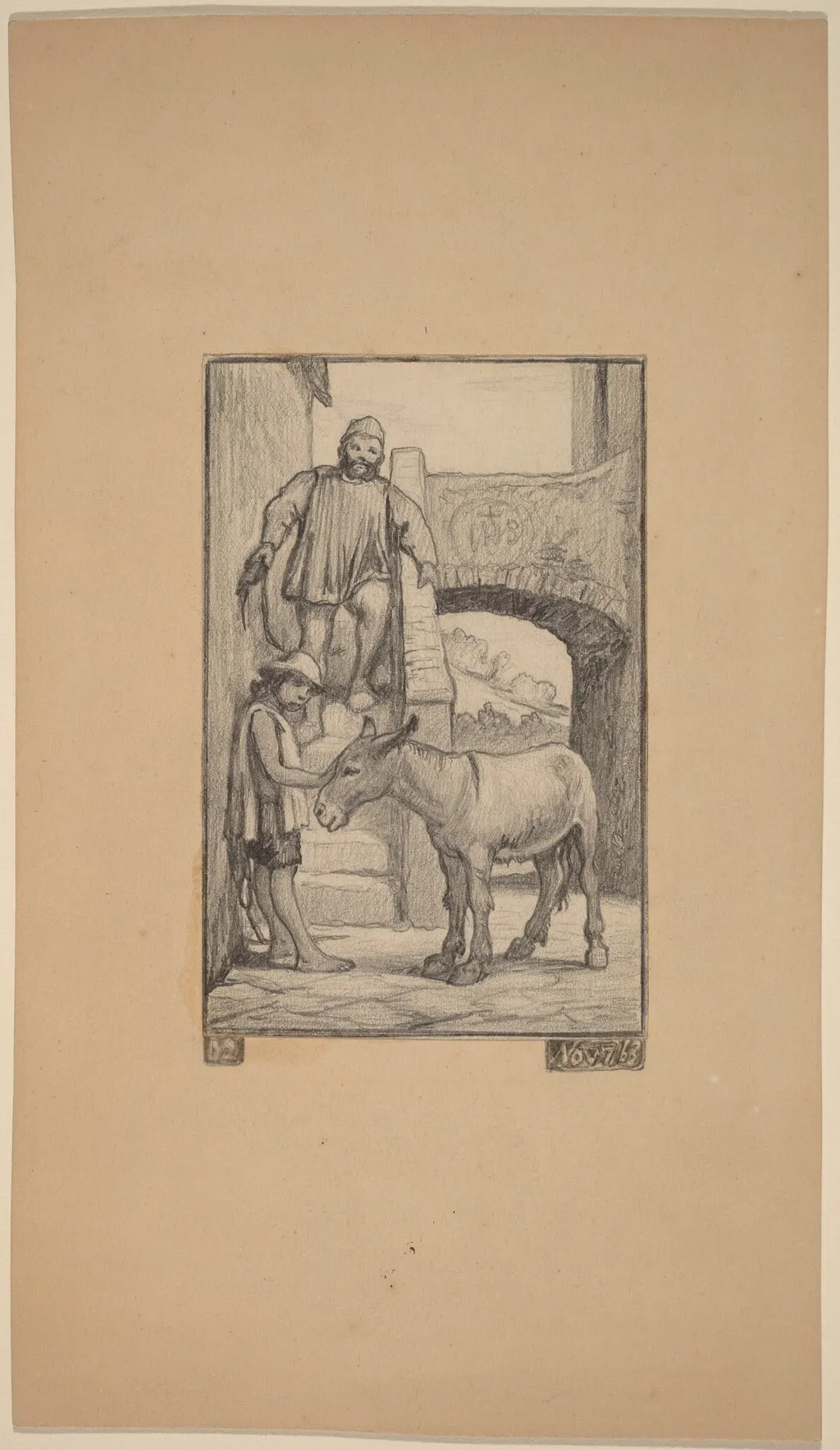
The Son and the Donkey is a graphite drawing by the Impressionist artist Elihu Vedder. It dates from 1863 and is held in the collection of the National Gallery of Art.
About this work
The use of shading and contrast adds depth to the image, drawing the viewer's attention to the figures and their interaction.
This drawing depicts a scene with a man, a boy, and a donkey. The man is standing on a staircase, while the boy is standing next to the donkey on the ground. The setting appears to be an interior space with a staircase and an archway.
The drawing is rendered in graphite on wove paper laid down, showcasing the artist's skill in creating texture and depth. The use of shading and contrast adds depth to the image, drawing the viewer's attention to the figures and their interaction.
The image is an allegory, inviting the viewer to interpret its meaning. For further exploration, consider the works of Vedder, Elihu, who created this piece in 1863.
Overview
Created in 1863, *The Son and the Donkey* is a graphite drawing on wove paper by American artist Elihu Vedder. Executed early in his career, it predates his better-known illustrations for *The Rubaiyat of Omar Khayyam*. The work exemplifies Vedder’s interest in symbolic narratives and his mastery of tonal gradation in pencil, capturing a quiet, enigmatic moment within an architectural interior.
Subject & Meaning
The scene shows a man on a staircase and a boy beside a donkey on the ground, framed by an archway. The spatial separation and stillness suggest a moment of transition or reflection. Though not explicitly narrative, the composition invites allegorical interpretation—possibly evoking themes of guidance, humility, or generational distance. The donkey, a traditional symbol of patience or burden, may deepen the work’s contemplative tone.
Technique & Style
Vedder employed fine graphite strokes to model form and texture with subtle gradations of light and shadow. The paper’s smooth surface allowed for delicate transitions, enhancing the three-dimensionality of the figures and architecture. His restrained use of line and emphasis on chiaroscuro reflect a symbolist tendency to prioritize mood over literal detail, aligning with broader 19th-century European aesthetic currents.
History & Provenance
The drawing was completed in 1863, during Vedder’s formative years as an artist, before his international recognition. It was later mounted on a support backing, a common conservation practice for works on paper. Its provenance traces to American collections, though specific ownership history remains undocumented in public records. The work remains a rare example of Vedder’s early graphic output.
Context
In the early 1860s, Vedder was influenced by European Romanticism and the emerging symbolist movement, which favored introspective themes over realism. While American art of the period often emphasized narrative clarity or national identity, Vedder’s work turned inward, exploring metaphysical and poetic subjects. This drawing reflects his engagement with transatlantic artistic ideas during a time of cultural transition in the United States.
Legacy
Though less known than his later illustrations, *The Son and the Donkey* reveals Vedder’s foundational approach to symbolic imagery and tonal composition. It anticipates the introspective, dreamlike quality of his mature work and stands as a quiet testament to his early experimentation with visual metaphor. The drawing contributes to understanding the development of American symbolist drawing in the 19th century.
Artist & collection

Artist
Elihu Vedder (26 February 1836 – 29 January 1923) was an American symbolist painter, book illustrator and poet from New York City.

 The Fable of the Miller, His Son, and the Donkey
 The Fable of the Miller, His Son, and the Donkey
 The Fable of the Miller, His Son, and the Donkey
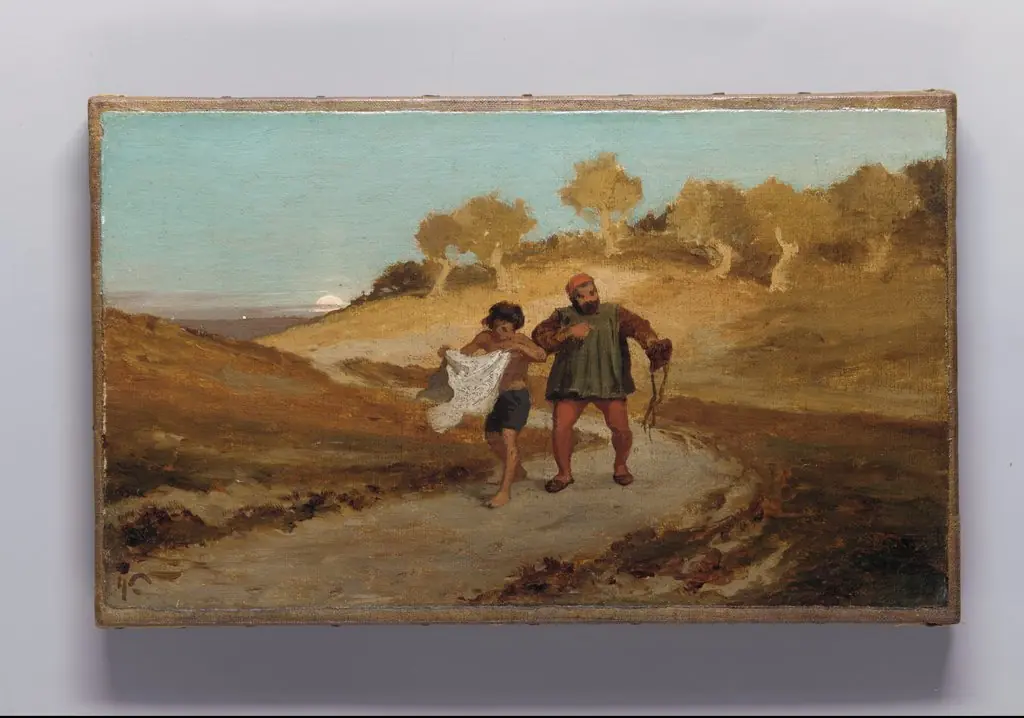 The Fable of the Miller, His Son, and the Donkey
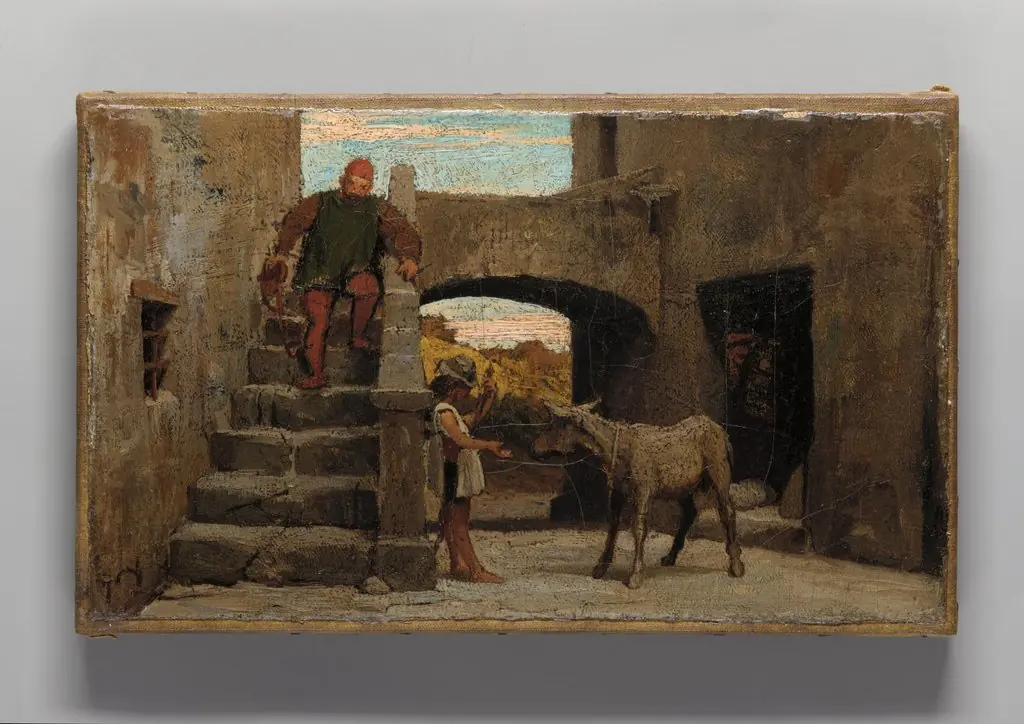 The Fable of the Miller, His Son, and the Donkey
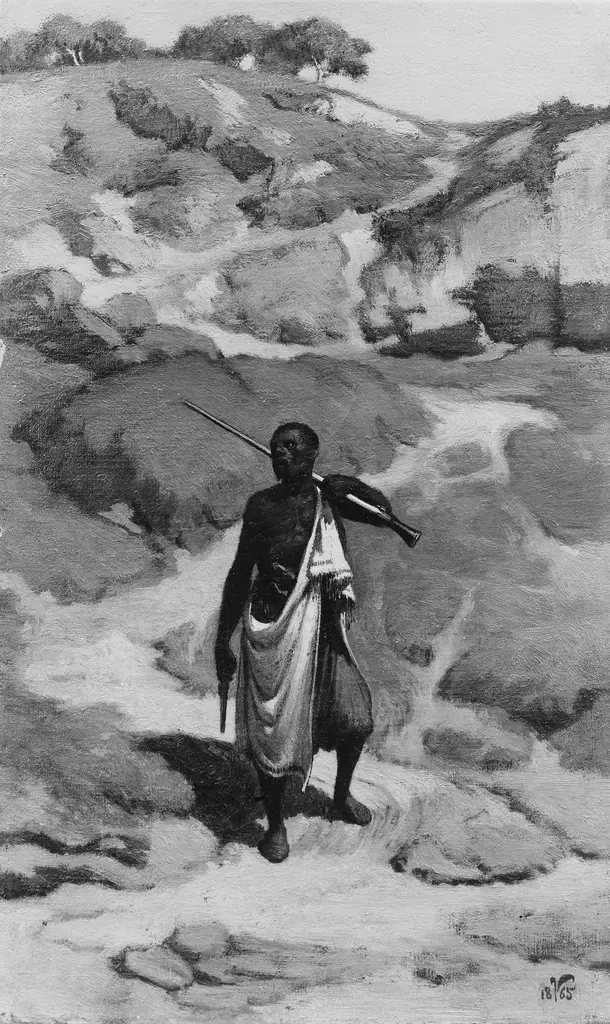 The African Sentinel
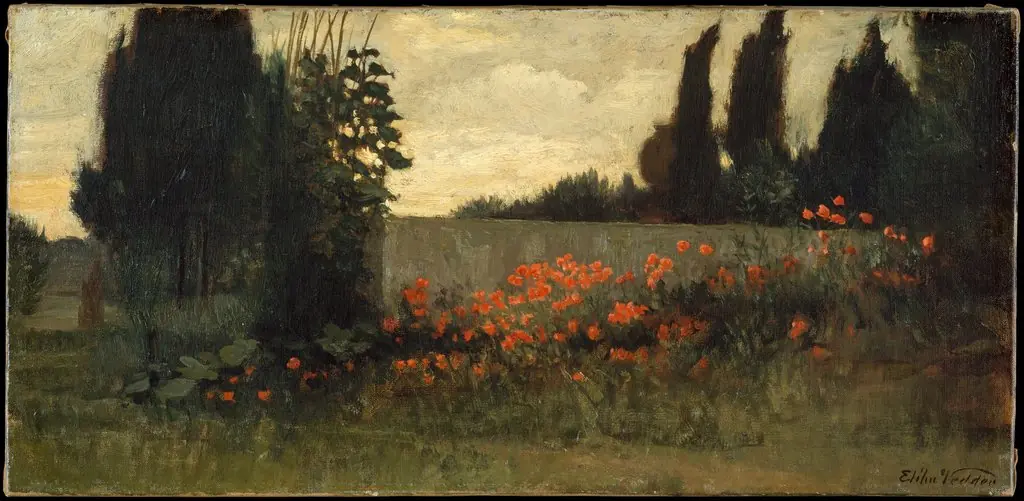 Cypress and Poppies
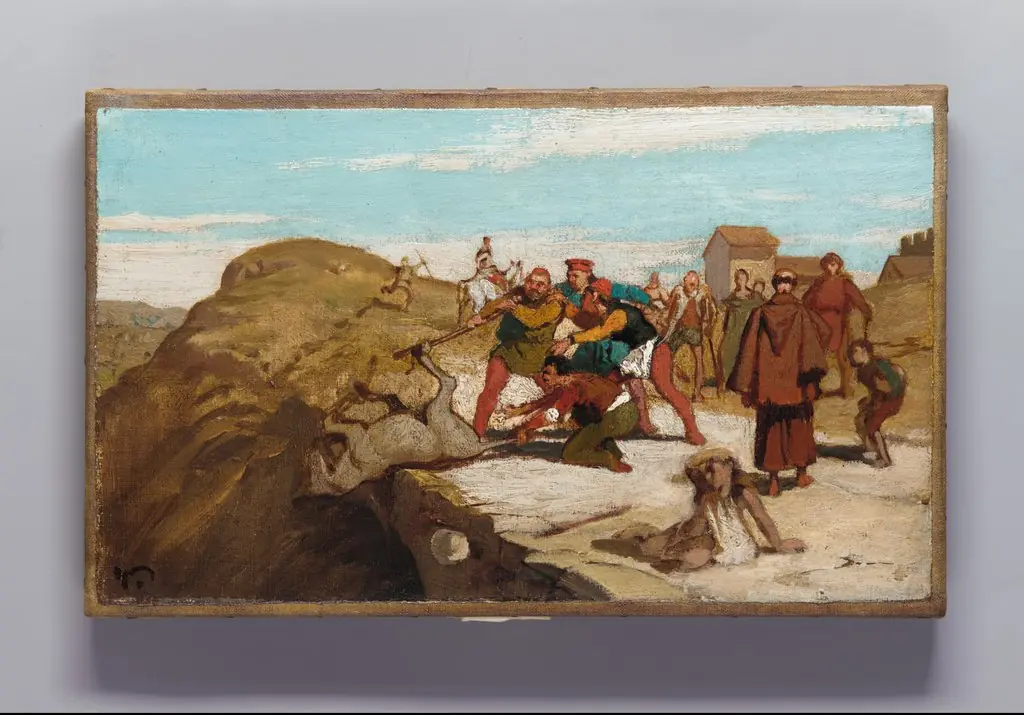 The Fable of the Miller, His Son, and the Donkey
![Haji Sh. El Arishi [?], by Godfrey Thomas Vigne](https://artifactworldgallery.com/img/godfrey-thomas-vigne--haji-sh-el-arishi--4954cf53752ca3e0-w320.webp) Haji Sh. El Arishi [?]
Haji Sh. El Arishi [?] Entrance of Brasseur in "Chilperic" (Entrée de Brasseur dans "Chilpéric")
 Two Standing Courtiers
![Bernini Fountain, Rome [recto], by Felix Octavius Carr Darley](https://artifactworldgallery.com/img/felix-octavius-carr-darley--bernini-fountain-rome-recto--bed0d506722bdbdf-w320.webp) Bernini Fountain, Rome [recto]
Bernini Fountain, Rome [recto] Milkmaid of Boulogne, 3rd plate (Laitiere a Boulogne)
 Cossack Horses in a Courtyard
 Four Standing Warriors
 The Sompnour, the Devil, and the Widow
 Close He Had Come...