Artwork
Old Song (Chanson ancienne)
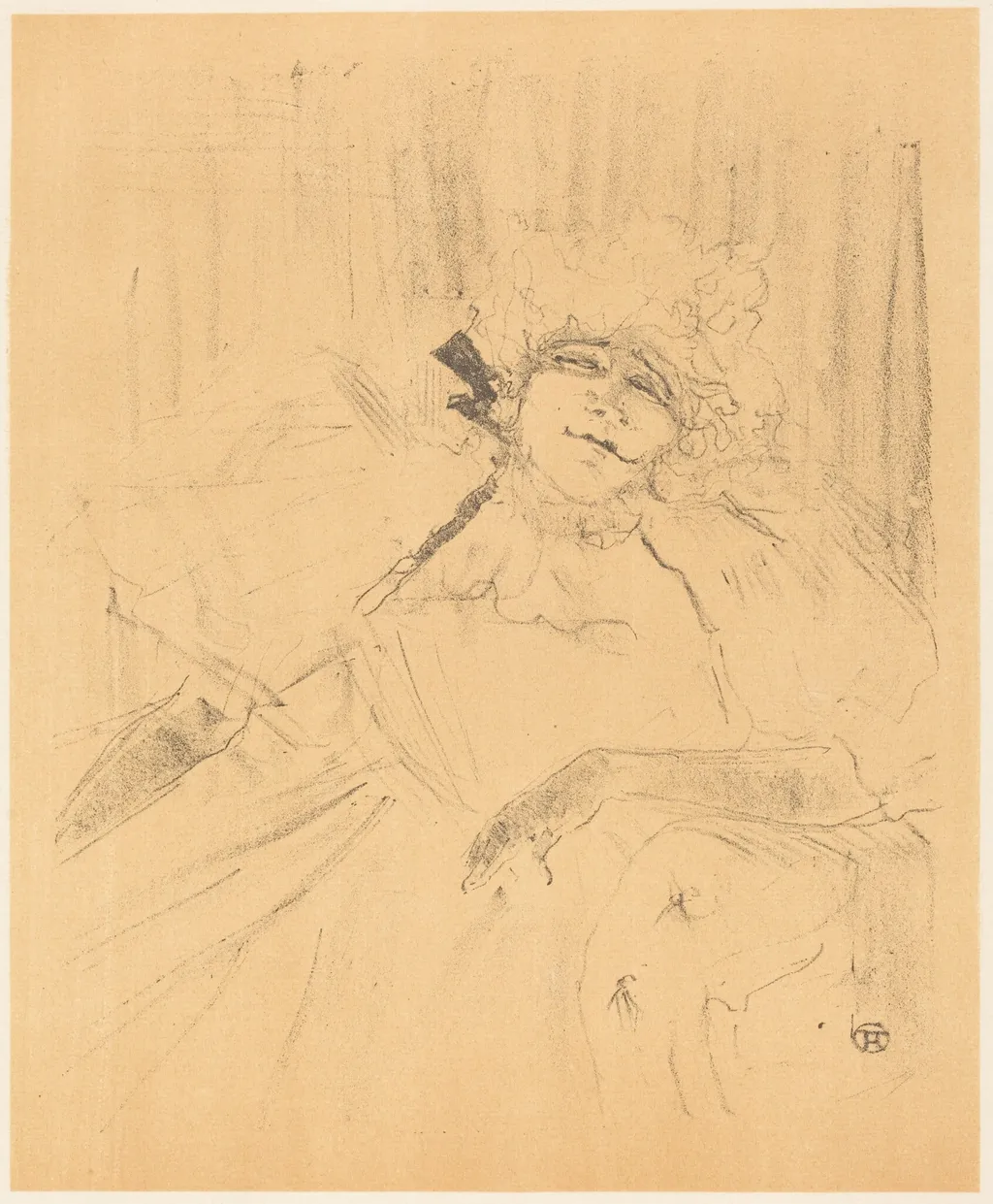
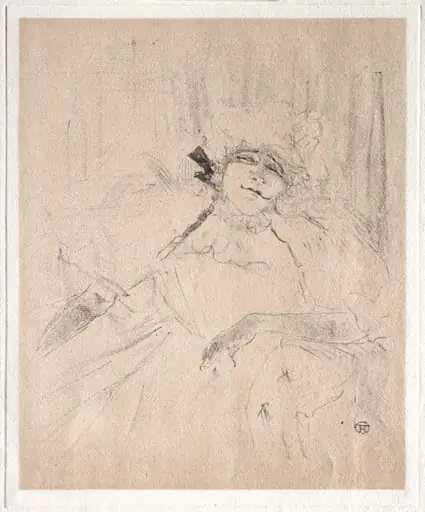
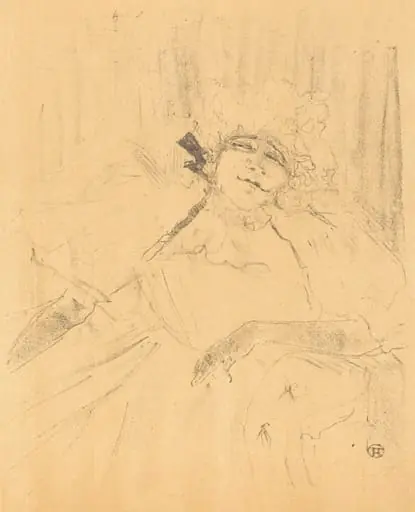
Old Song (Chanson ancienne) is an ink print by the Impressionist artist Henri de Toulouse-Lautrec. It dates from 1898 and is held in the collection of the National Gallery of Art.
About this work
Overview
Created in 1898, Old Song (Chanson ancienne) is a lithograph by Henri de Toulouse-Lautrec, capturing a solitary woman in a moment of quiet contemplation.
Created in 1898, Old Song (Chanson ancienne) is a lithograph by Henri de Toulouse-Lautrec, capturing a solitary woman in a moment of quiet contemplation. Executed in black and beige ink, the work belongs to his mature phase of printmaking, when he increasingly turned to intimate, observational subjects. Unlike his more flamboyant nightclub scenes, this piece focuses on stillness, using minimal detail to evoke mood rather than narrative.
Subject & Meaning
The figure is a woman seated sideways, her face partially obscured by a wide-brimmed hat adorned with a large feather. Her hands rest gently in her lap, suggesting introspection or fatigue. The absence of context or companionship emphasizes solitude. Though her identity is unspecified, her posture and attire hint at a performer or patron of Parisian entertainment venues, reflecting Lautrec’s recurring interest in the private lives of public figures.
Technique & Style
Lautrec employed lithography to achieve a spontaneous, sketch-like quality. Loose, rapid strokes define the dress and hat, while the face and hands are rendered with restrained precision. The background remains unmodeled, a flat beige tone that isolates the figure and enhances the sense of quiet. The roughness of the lines conveys immediacy, aligning with late 19th-century printmaking trends that valued expressive gesture over polished finish.
History & Provenance
Produced in 1898, this print emerged during a period when Lautrec was deeply engaged with commercial lithography, often creating posters and illustrations for theaters and cabarets. While the exact provenance of this specific impression is not widely documented, it was likely part of a small edition intended for collectors or art dealers. Its survival reflects the growing appreciation for artist-made prints beyond mass-produced advertising.
Context
In late 1890s Paris, lithography was a vital medium for artists seeking to reach broader audiences beyond oil painting. Lautrec’s work intersected with the rise of modern graphic design and the fascination with urban anonymity. Old Song reflects a shift in his focus—from the energy of performance to the quiet aftermath, mirroring broader cultural interests in psychological depth and the inner lives of individuals in crowded cities.
Legacy
Though less celebrated than his posters, works like Old Song demonstrate Lautrec’s mastery of economy and emotional nuance in printmaking. His ability to convey presence through minimal means influenced later generations of illustrators and expressionist printmakers. The piece endures as a quiet testament to his skill in transforming everyday moments into resonant visual studies, free from sentimentality or spectacle.
Artist & collection
Artist
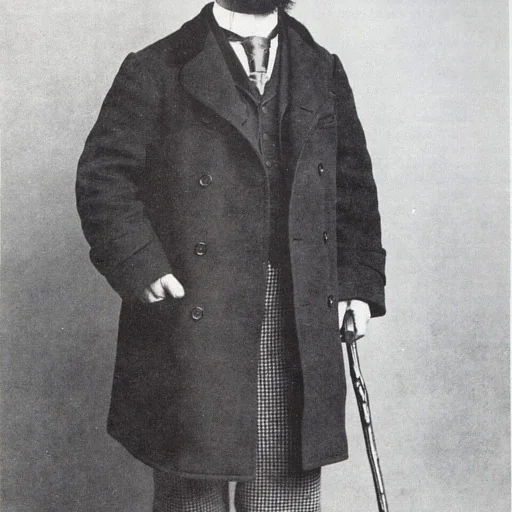
Comte Henri Marie Raymond de Toulouse-Lautrec-Montfa (24 November 1864 – 9 September 1901), known as Toulouse-Lautrec (French: ), was a French painter, printmaker, draughtsman, caricaturist, and illustrator.

 Yvette Guilbert: Chanson Ancienne
 In "La glu" (Dans "La glu")
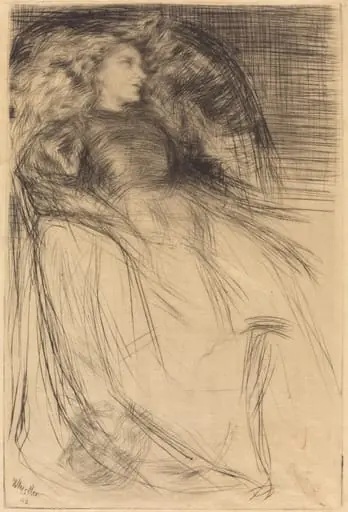 Weary
Weary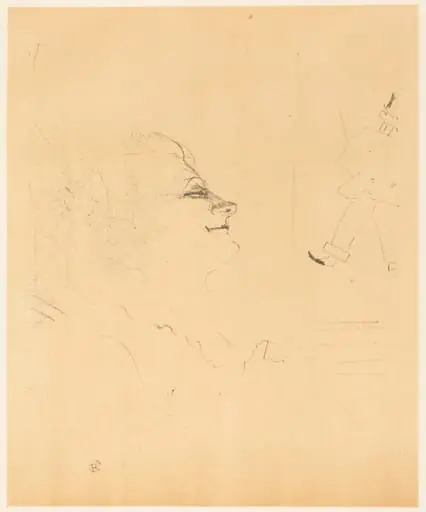 Pessima
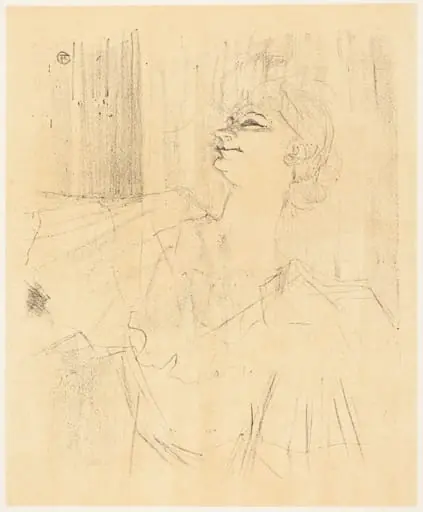 To Menilmontant from Bruant (A Ménilmontant, de Bruant)
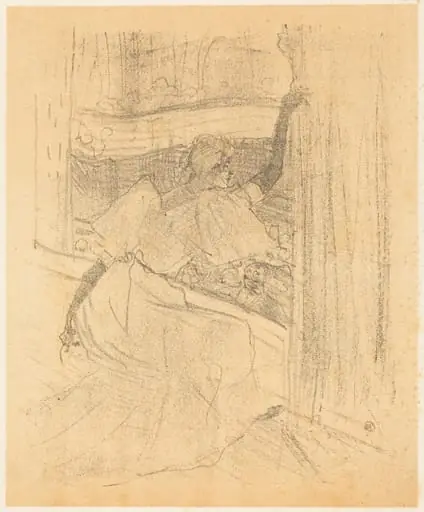 Bowing to the Audience (Saluant le public)
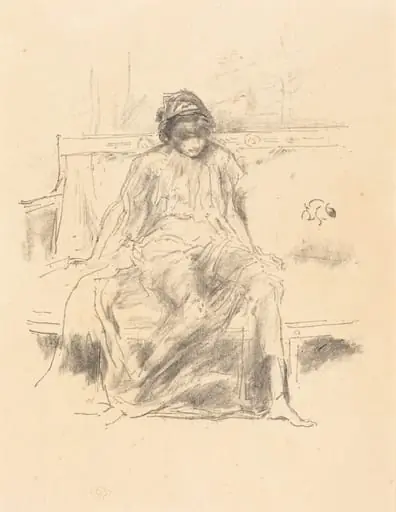 The Draped Figure, Seated
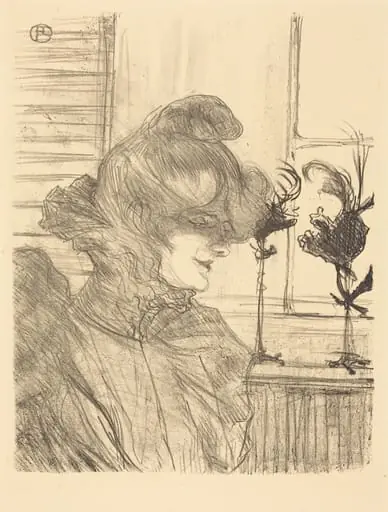 Mme. Le Marguoin, Milliner (Mme. Le Marguoin, modiste)
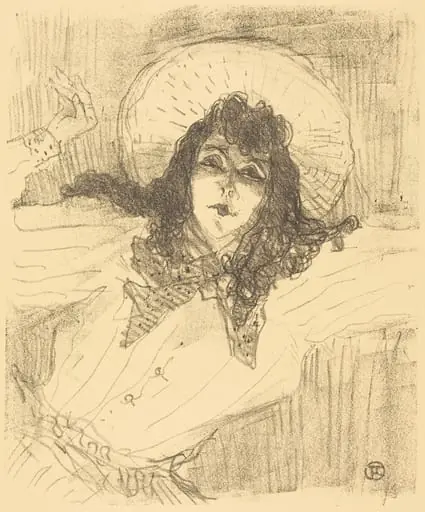 Eva Lavallière
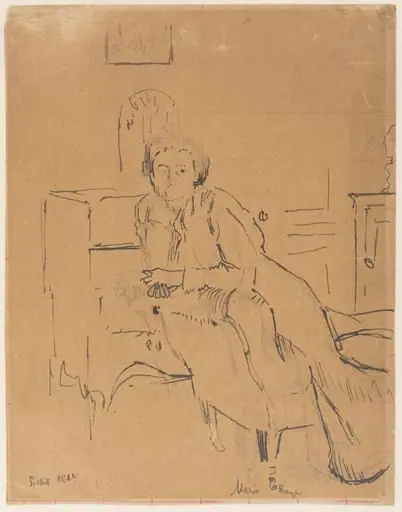 'Marie Hayes'
 On the Stage (Sur la scène)
 Old Song (Chanson ancienne)