Artwork
Jane Avril
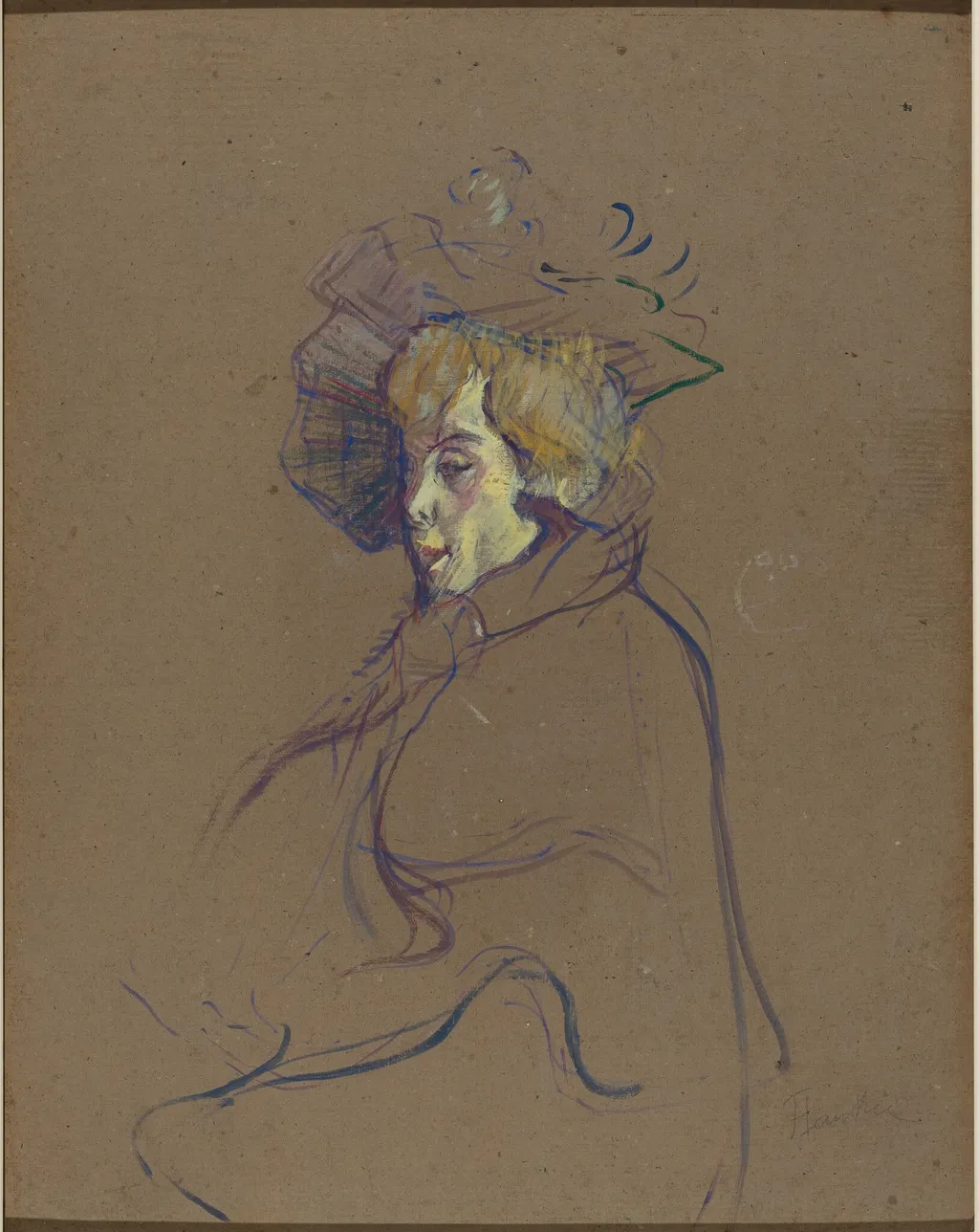
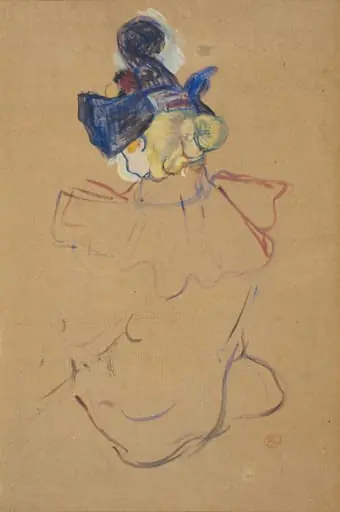
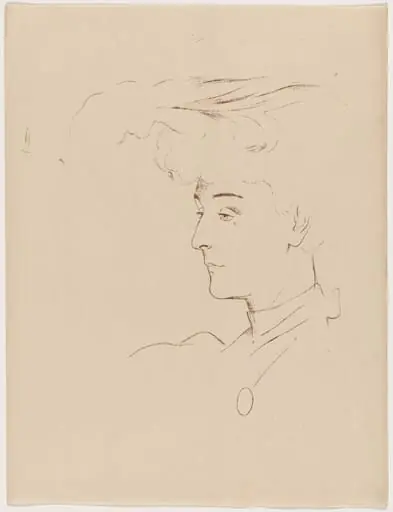
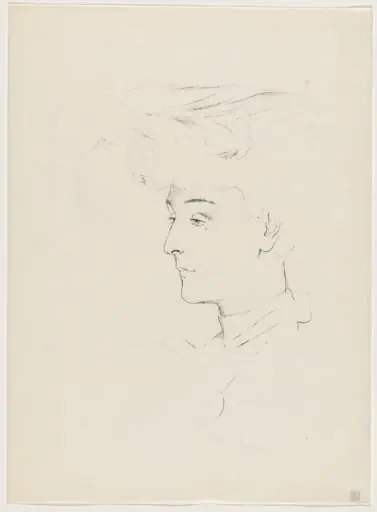
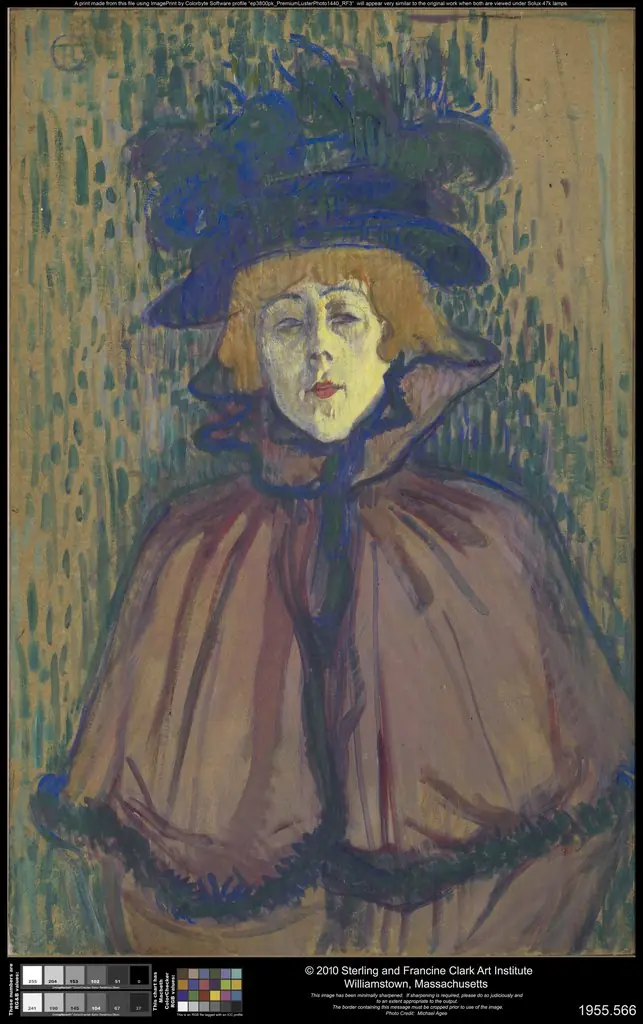
Jane Avril is an oil drawing by the Impressionist artist Henri de Toulouse-Lautrec. It dates from 1892 and is held in the collection of the National Gallery of Art.
About this work
Overview
Painted in 1892, this oil on cardboard mounted on wood portrays Jane Avril, a celebrated dancer of Parisian cabarets. Created by Henri de Toulouse-Lautrec, the work reflects his deep immersion in Montmartre’s entertainment scene. The medium’s modest scale and support suggest a spontaneous, intimate approach, typical of his studies of performers rather than formal commissions.
Subject & Meaning
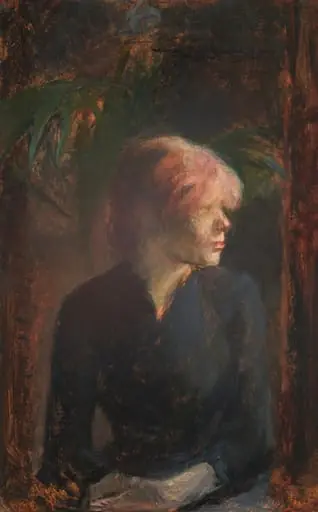
Jane Avril, known for her distinctive dance style and reserved demeanor, was a recurring figure in Toulouse-Lautrec’s work. Here, she is depicted mid-gesture, glancing away with quiet intensity. The portrait avoids theatricality, instead capturing her as a person within her environment—neither idealized nor caricatured—offering a glimpse into the private presence behind the public persona.
Technique & Style
Toulouse-Lautrec employed loose, rapid brushwork to convey movement and texture, particularly in Avril’s face and hat.
Toulouse-Lautrec employed loose, rapid brushwork to convey movement and texture, particularly in Avril’s face and hat. The dark coat and high collar anchor the figure, while the feathered, floral hat introduces ornamental contrast. The plain brown background eliminates distraction, focusing attention on the subject’s posture and expression, echoing his graphic sensibility influenced by Japanese prints.
History & Provenance
The painting was made during Toulouse-Lautrec’s most active period in Montmartre, when he frequented the Jardin de Paris and other venues where Avril performed. It was likely created as a personal study, not a commissioned portrait. Its survival in relatively original condition is notable, as many of his works on cardboard were lost or damaged over time.
Context
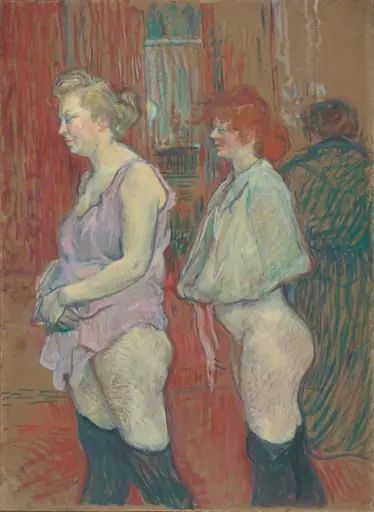
In the 1890s, Parisian cabarets became sites of cultural innovation, where artists, writers, and performers mingled. Toulouse-Lautrec, marginalized by his physical condition, found belonging among these outsiders. His depictions of dancers like Avril reframed public figures as complex individuals, challenging conventional portrayals of women in entertainment at the time.
Legacy
This portrait exemplifies Toulouse-Lautrec’s contribution to modern portraiture: intimate, psychologically attuned, and rooted in real social spaces. His focus on performers as subjects, rendered with empathy rather than spectacle, influenced later artists exploring urban life and identity. The work remains a quiet testament to his ability to capture character beyond the stage.
Artist & collection
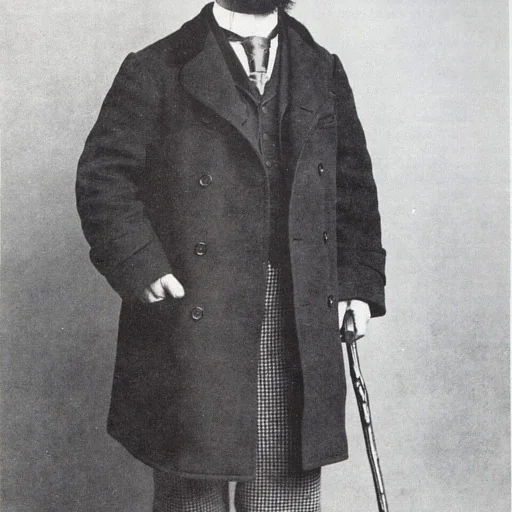
Artist
Comte Henri Marie Raymond de Toulouse-Lautrec-Montfa (24 November 1864 – 9 September 1901), known as Toulouse-Lautrec (French: ), was a French painter, printmaker, draughtsman, caricaturist, and illustrator.