Artwork
La valse des lapins
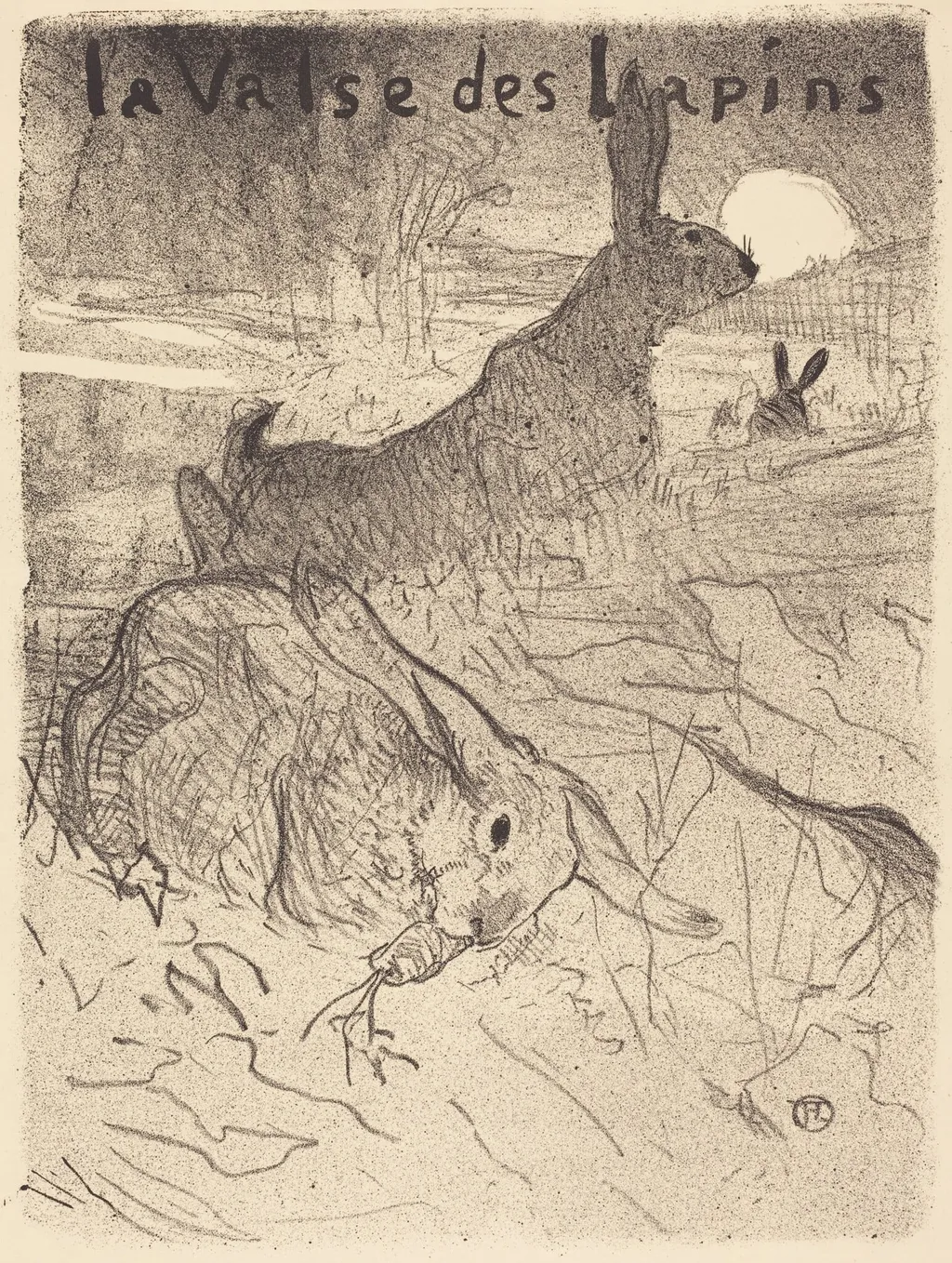
La valse des lapins is an ink print by the Impressionist artist Henri de Toulouse-Lautrec. It dates from 1895 and is held in the collection of the National Gallery of Art.
About this work
This print shows bunnies in frilly dresses dancing in a circle. The animals wear tiny shoes and move fast—it’s playful but a bit off.
Lautrec made this in 1895. He used a special print method called lithography, where ink sticks to greasy marks on stone. It’s black and white but full of energy.
If you like this, check out lithography at the National Gallery of Art, Washington.
Overview
La valse des lapins is a 1895 lithograph by Henri de Toulouse-Lautrec, executed in black ink on velin paper. The work depicts a whimsical scene of rabbits dressed in frilly attire and tiny shoes, dancing in a circular formation with dynamic movement.
Subject & Meaning
The subject of anthropomorphized rabbits, often interpreted as a departure from Toulouse-Lautrec's typical Parisian nightlife themes, introduces a sense of playfulness and surrealism. The 'off' quality may hint at the artist's ability to find eccentricity in various subjects, whether high society or fantastical creatures.
Technique & Style
Technically, the piece showcases Toulouse-Lautrec's mastery of lithography, a method where greasy marks on stone attract ink, allowing for expressive lines. The monochromatic palette in black on velin paper contrasts with the vibrant energy of the dancing rabbits, highlighting the artist's skill in conveying dynamism through minimal color.
History & Provenance
Created in 1895, La valse des lapins reflects Toulouse-Lautrec's broader artistic exploration during the late 19th century. While specific provenance details are not provided, the work is characteristic of the artist's period output, blending observation of life's eccentricities with artistic innovation.
Context
Although differing from Toulouse-Lautrec's more common themes of Parisian nightlife and cabarets, La valse des lapins shares the artist's fascination with capturing the essence of movement and the unconventional. It stands as a unique example within his oeuvre, possibly inspired by the whimsical or the artist's own sense of humor.
Legacy
La valse des lapins contributes to Toulouse-Lautrec's legacy as a versatile artist capable of exploring various themes and techniques. Its uniqueness within his body of work has made it a point of interest for those studying the full range of his artistic expressions and the broader context of late 19th-century printmaking innovations.
Own this work as a print
Artist & collection
Artist
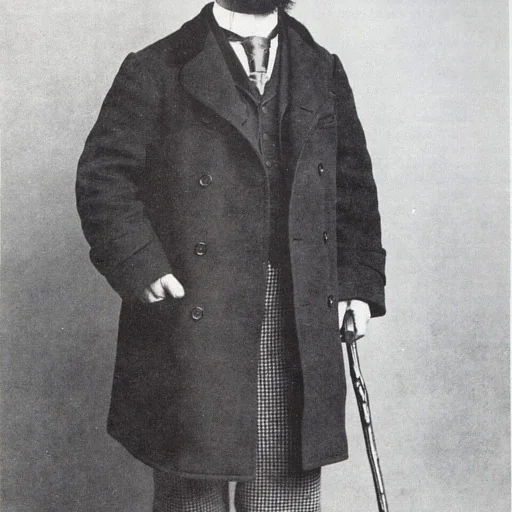
Comte Henri Marie Raymond de Toulouse-Lautrec-Montfa (24 November 1864 – 9 September 1901), known as Toulouse-Lautrec (French: ), was a French painter, printmaker, draughtsman, caricaturist, and illustrator.