Artwork
Fiero monstruo! (Fierce Monster!)
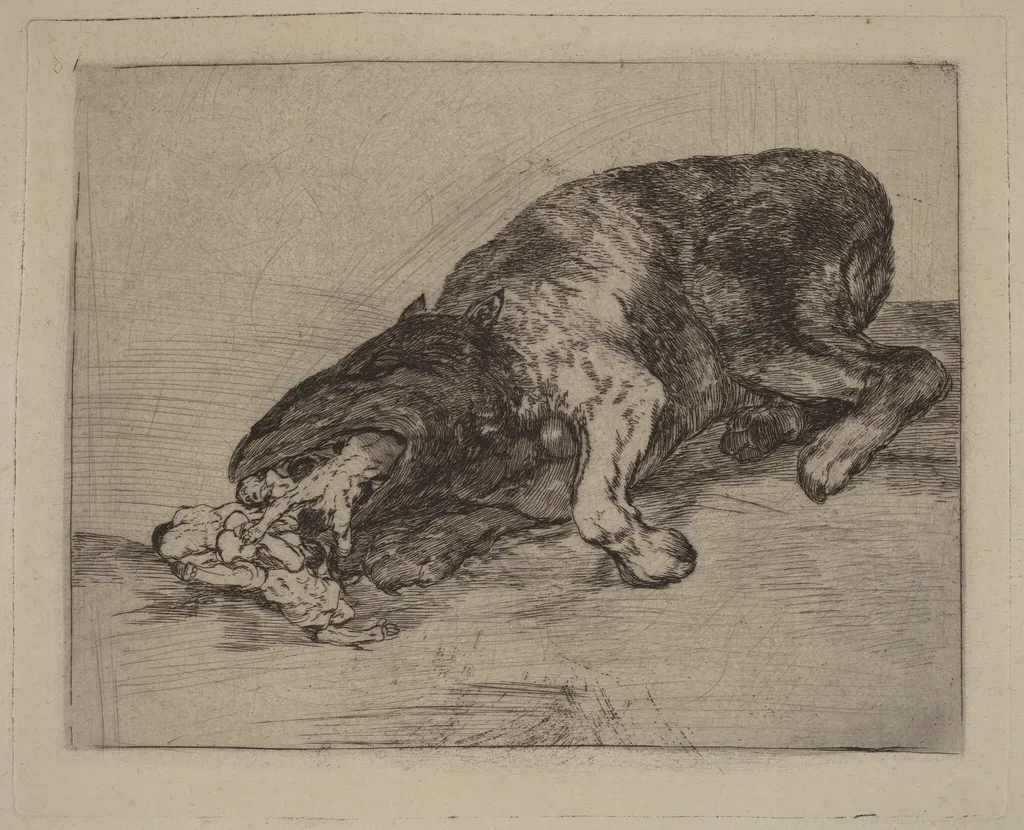
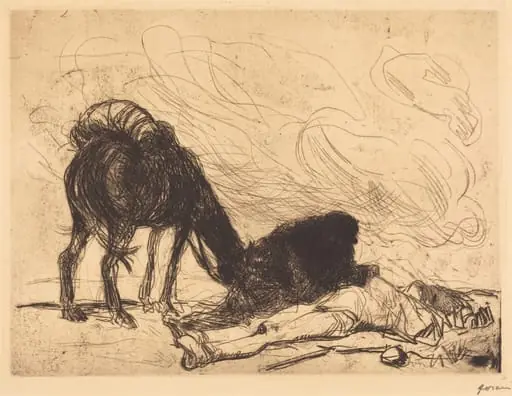
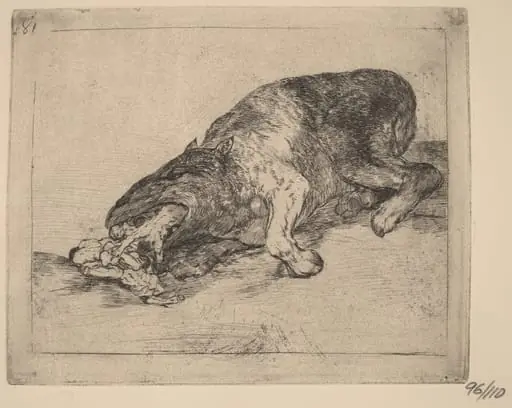
Fiero monstruo! (Fierce Monster!) is an ink print by the Romanticist artist Francisco Goya. It dates from 1815 and is held in the collection of the National Gallery of Art. Fiero monstruo!
About this work
Overview
The work was not published during his lifetime and emerged decades after his death, reflecting the private, unfiltered nature of his later graphic experiments.
Fiero monstruo! is an etching, drypoint, and burin print on laid paper, produced as a posthumous trial proof by the Calcografia Nacional around or after 1870. Originally created by Francisco Goya in 1815, it belongs to his late series of dark, introspective prints. The work was not published during his lifetime and emerged decades after his death, reflecting the private, unfiltered nature of his later graphic experiments.
Subject & Meaning
The image presents a looming, shadowy beast with exaggerated claws and fangs, dominating a dimly lit space. A faint, indistinct human form appears in the background, dwarfed and vulnerable. The creature’s ambiguous nature—neither clearly mythological nor literal—suggests an inner dread or societal threat. Goya’s focus on psychological unease, rather than narrative clarity, points to a meditation on fear, power, and the fragility of the individual.
Technique & Style
Goya employed aggressive drypoint and burin lines to carve deep, textured shadows, while etching provided subtle tonal gradations. The heavy ink saturation and rough, irregular marks amplify the sense of chaos and menace. The lack of fine detail in the background figures and the dominance of dark masses reflect his shift toward expressive, almost abstract mark-making, prioritizing emotional impact over classical precision.
History & Provenance
Created in 1815, the print remained unpublished during Goya’s life, likely part of his private collection of uncommissioned works. After his death in 1828, the Calcografia Nacional, Spain’s official print repository, produced trial proofs from his original plates in the late 19th century. These posthumous impressions were made to preserve and study his graphic legacy, ensuring access to works never intended for public circulation.
Context
This image emerged amid Spain’s political instability following the Peninsular War and the restoration of Ferdinand VII’s absolutist regime. Goya, disillusioned by violence and repression, turned inward in his art, producing works that conveyed anxiety and moral ambiguity. Fiero monstruo! reflects this climate—not as direct commentary, but as a visceral expression of collective unease and the erosion of reason.
Legacy
The print exemplifies Goya’s role in transforming printmaking into a vehicle for psychological depth and social critique. Its raw, unpolished aesthetic anticipated 19th- and 20th-century movements that valued emotional intensity over idealized form. Though obscure in his time, such works later influenced expressionist and surrealist artists drawn to his unflinching confrontation with darkness and the unconscious.
Artist & collection
Artist
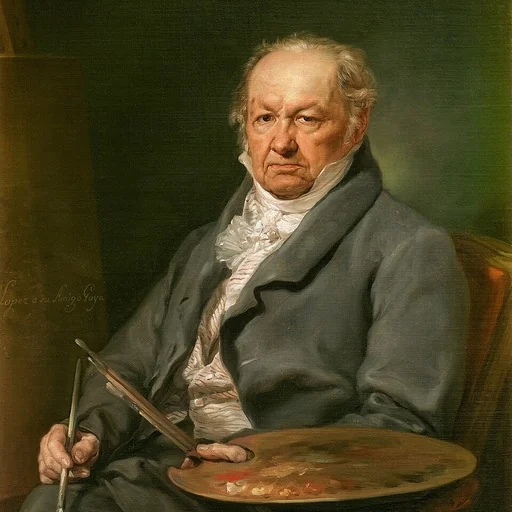
Francisco José de Goya y Lucientes (; Spanish: ; 30 March 1746 – 16 April 1828) was a Spanish romantic painter and printmaker.

 Le bon samaritain (The Good Samaritan)
 Sleeping Puppy
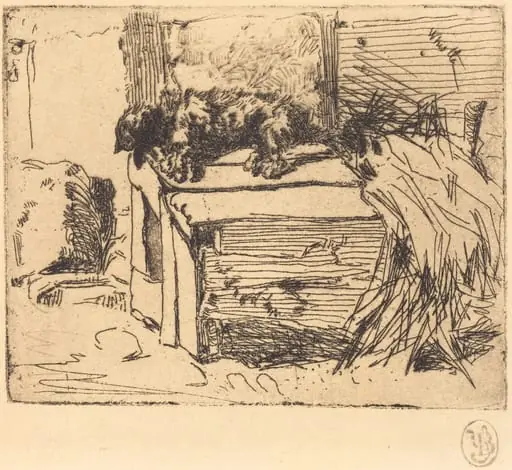 The Dog on the Kennel
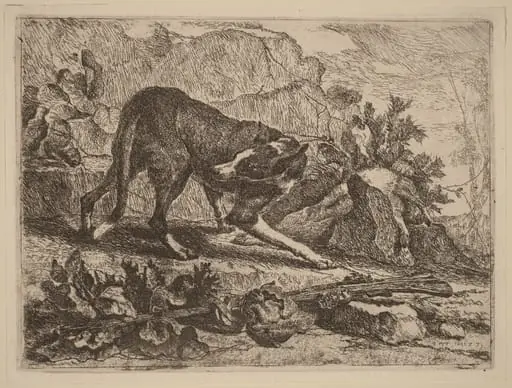 Landscape with Greyhound and Rifle
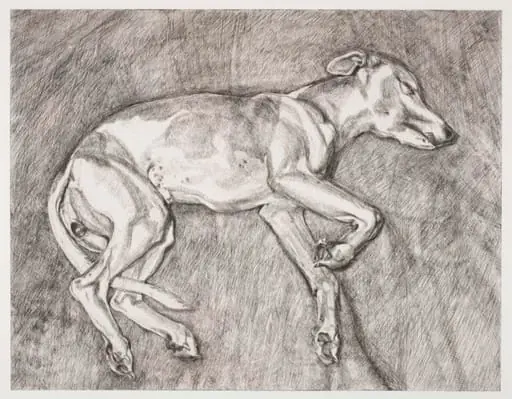 Eli
Eli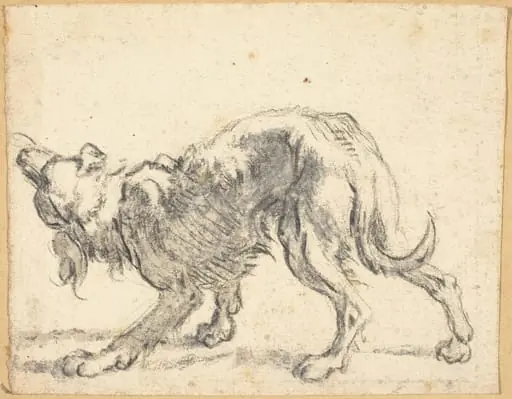 A Dog
A Dog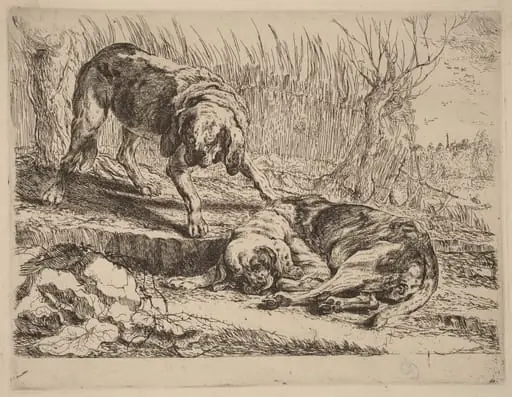 Two Beagles, One Sleeping
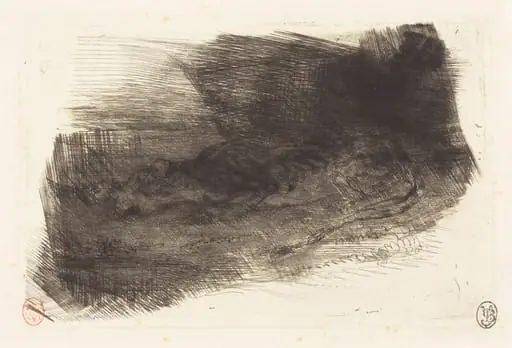 Tiger Sleeping at the Entrance to its Lair (Tigre couché à l'entrée de son antre)
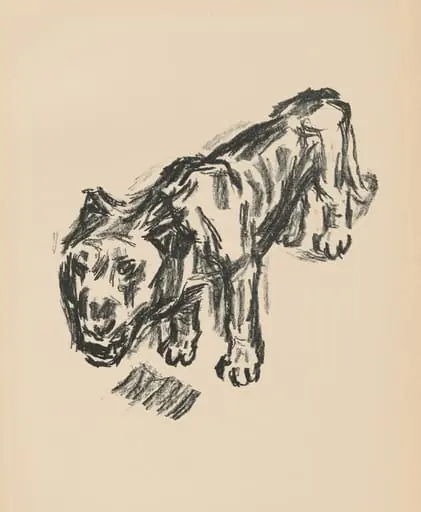 Löwe (Lion) from Deutsche Graphiker der Gegenwart (German Printmakers of Our Time)
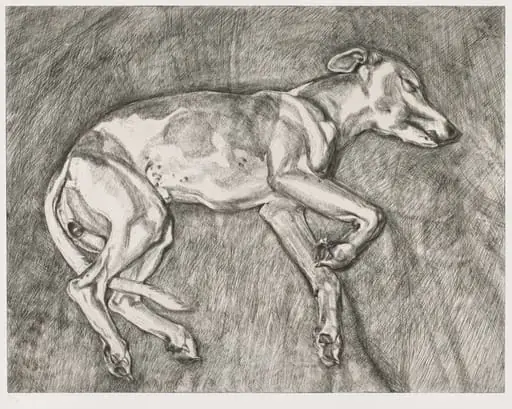 Untitled
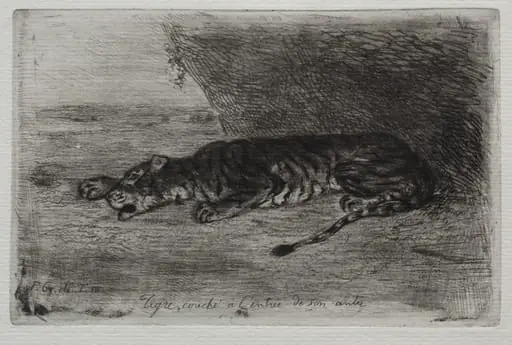 Tiger Sleeping at the Entrance to His Lair
 Fiero monstruo! (Fierce Monster!)