Artwork
Nib or the Amateur Photographer (Nib ou le photographe-amateur) [right recto]
![Nib or the Amateur Photographer (Nib ou le photographe-amateur) [right recto], by Henri de Toulouse-Lautrec, ink, 1895](https://artifactworldgallery.com/img/henri-de-toulouse-lautrec--nib-or-the-amateur-photographer-nib-ou-le-photographe-amateu--88d19b11b1b1d379-w1024.webp)
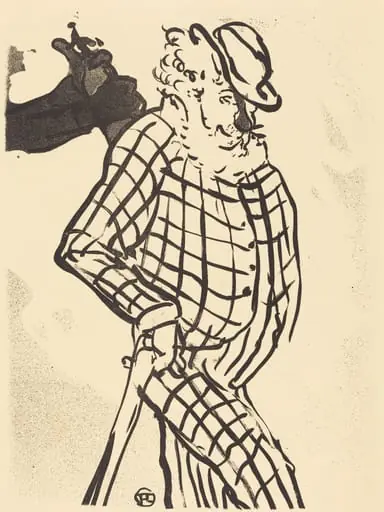
Nib or the Amateur Photographer (Nib ou le photographe-amateur) [right recto] is an ink print by the Impressionist artist Henri de Toulouse-Lautrec. It dates from 1895 and is held in the collection of the National Gallery of Art.
About this work
Overview
Created in 1895, this lithograph by Henri de Toulouse-Lautrec captures a moment of everyday Parisian life through the lens of a casual observer.
Created in 1895, this lithograph by Henri de Toulouse-Lautrec captures a moment of everyday Parisian life through the lens of a casual observer. Executed in the artist’s signature linear style, the work belongs to a series of prints that document the city’s emerging social rituals. The image’s simplicity belies its keen observation of modern behavior, particularly the novelty of amateur photography among the middle class.
Subject & Meaning
The figure, labeled 'Nib,' is depicted as a man absorbed in his new camera, standing on a city sidewalk with a posture of awkward concentration. His hat and stance suggest a bourgeois amateur, unfamiliar with the technical demands of the device. The inclusion of a distant boat hints at the Seine’s presence, grounding the scene in a recognizable Parisian context. The title and inscription imply a playful critique of the man’s self-importance in capturing fleeting moments.
Technique & Style
Toulouse-Lautrec employed lithography to achieve bold, fluid lines and tonal contrasts with minimal detail. The image relies on economical strokes to define form—his quick, confident marks convey movement and character without embellishment. The stark separation between foreground and background, along with the typographic emphasis of 'NIB,' reflects his background in poster design and his interest in visual immediacy over realism.
History & Provenance
This print was produced during a period when Toulouse-Lautrec was deeply engaged with commercial printmaking, often collaborating with publishers to distribute his work widely. It likely appeared in a limited run, intended for collectors or as part of a broader portfolio documenting Parisian life. Its survival in museum collections today reflects its status as a representative example of his graphic output from the mid-1890s.
Context
In the 1890s, portable cameras became increasingly accessible, transforming photography from a professional craft into a popular pastime. Toulouse-Lautrec, like many artists of his time, observed how this new technology altered social interactions. His depiction of 'Nib' reflects a broader cultural moment: the rise of the amateur as both participant and subject in urban life, often with unintended irony.
Legacy
The lithograph endures as a quiet commentary on modernity’s encroachment into private behavior. While not among his most famous works, it exemplifies Toulouse-Lautrec’s ability to distill complex social dynamics into a single, resonant image. Its influence can be seen in later artists who used graphic media to explore the intersection of technology and everyday ritual.
Artist & collection
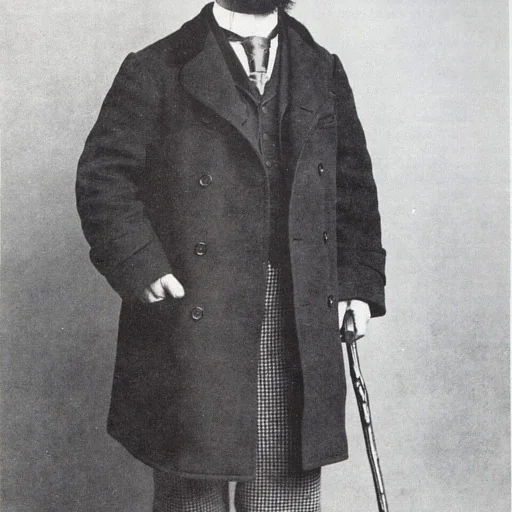
Artist
Comte Henri Marie Raymond de Toulouse-Lautrec-Montfa (24 November 1864 – 9 September 1901), known as Toulouse-Lautrec (French: ), was a French painter, printmaker, draughtsman, caricaturist, and illustrator.

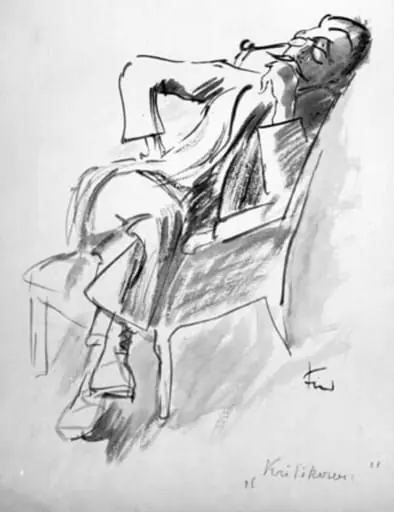 Kunsthistorikeren Carl V. Petersen siddende
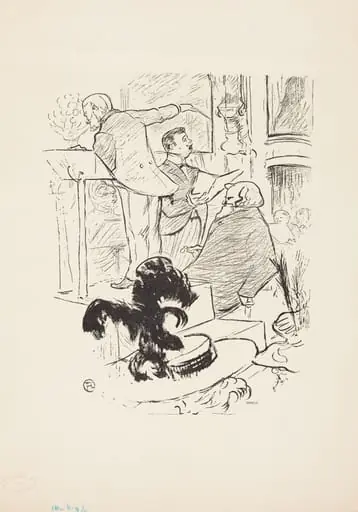 Les grands concerts de l'opera
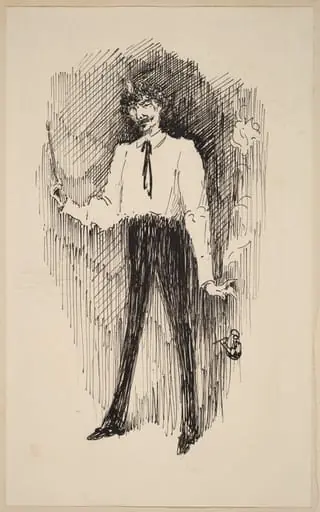 Portrait of Whistler with a Paintbrush
 Woman Sitting by a Pond
 Le mari veut qu'on regarde sa couche ...
 Drawing Book
 Untitled
 Sleepless Night (Nuit blanche)
 At The House of Gold (A la maison d'or)
 Sir Max Beerbohm
 Portret Iser
 American Singer (Chanteur américain)