Artwork
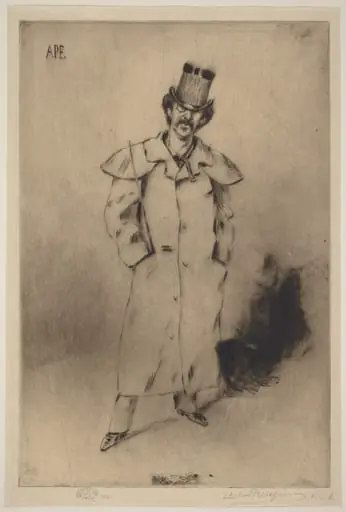
Portrait of Whistler with a Paintbrush
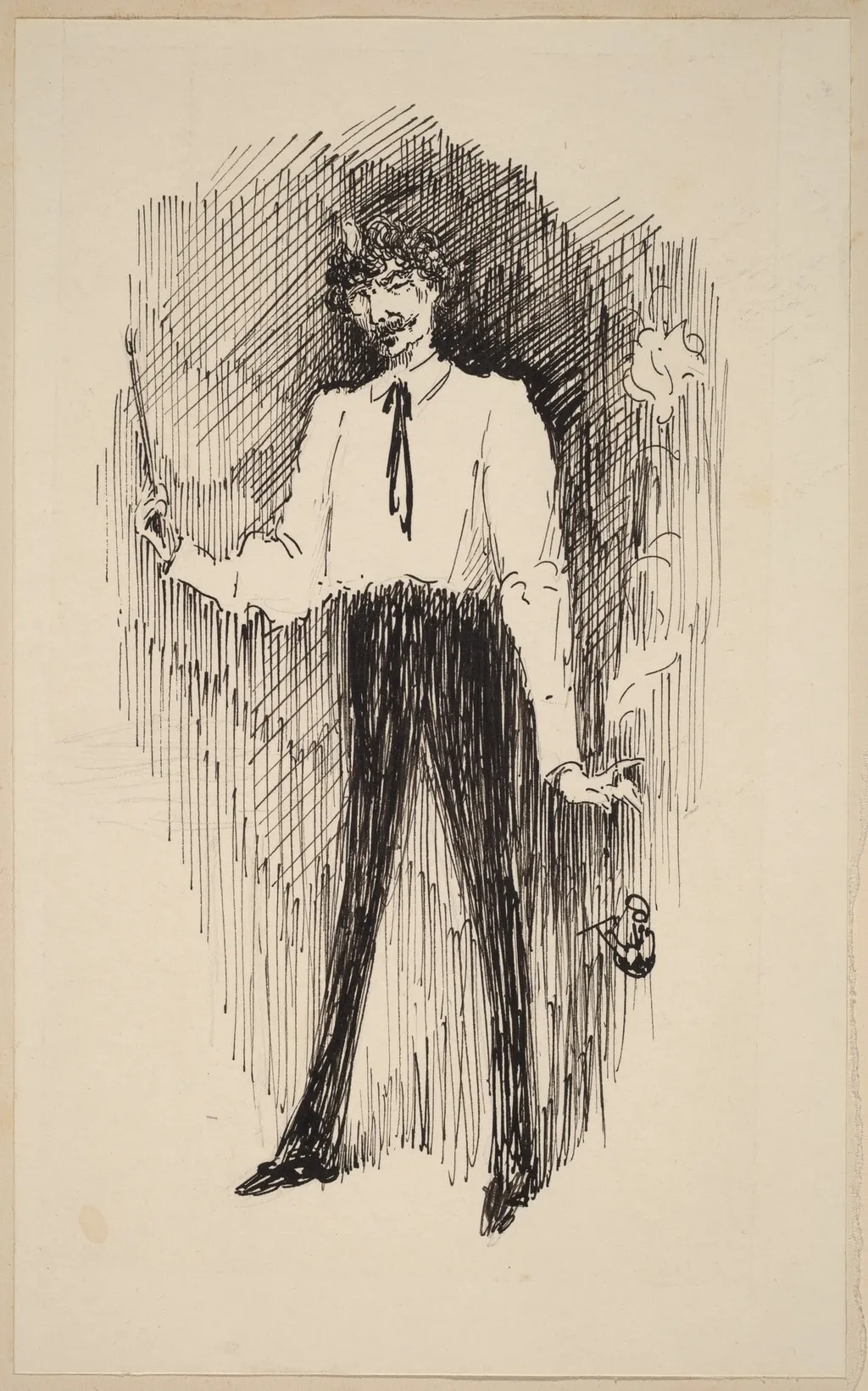
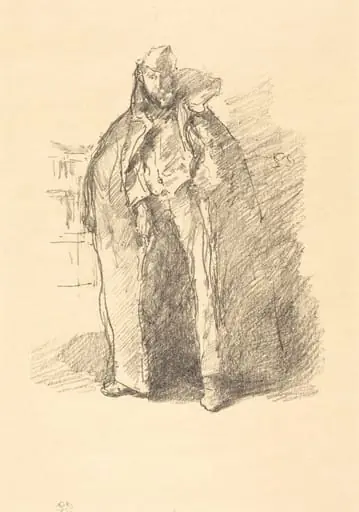
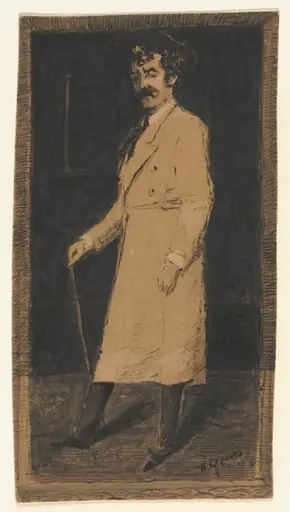
Portrait of Whistler with a Paintbrush is a graphite drawing by the Impressionist artist Harper Pennington. It dates from 1886 and is held in the collection of the National Gallery of Art.
About this work
Overview
Created in 1886, this drawing by Harper Pennington depicts the American artist James McNeill Whistler in a candid, informal pose. Executed in pen and ink over graphite on white wove paper, the work was later mounted onto a second sheet for stability. The medium and rapid execution suggest a spontaneous study, capturing Whistler’s presence rather than a formal likeness.
Subject & Meaning
Whistler is shown standing, one hand tucked into his pocket, the other holding a paintbrush—a quiet emblem of his identity as a painter. His disheveled hair and relaxed attire convey an unguarded moment, emphasizing his role as a working artist rather than a polished public figure. The gesture suggests contemplation or readiness, aligning the image with the creative process itself.
Technique & Style
Pen and ink lines are layered in loose, energetic strokes, creating texture through overlapping marks rather than precise contours. The background and fabric are built with dense, scratchy cross-hatching that implies volume without detail. Graphite underdrawing guides the composition, but the ink dominates with a raw, gestural quality that conveys movement and immediacy.
History & Provenance
The drawing was made during Pennington’s time in London, where he was part of the circle of artists surrounding Whistler. It remained in private hands for decades before entering a public collection. Its survival as a working sketch, rather than a finished portrait, reflects its function as a personal record rather than a commissioned work.
Context
In the late 19th century, informal sketches of artists by their peers were common, serving as both documentation and tribute. Pennington’s approach aligns with the Aesthetic Movement’s preference for expressive line over academic precision. The drawing stands apart from formal portraits of the era, favoring atmosphere and personal insight over idealized representation.
Legacy
This drawing endures as a candid glimpse into Whistler’s daily presence among fellow artists. Its unpolished vigor offers a counterpoint to his more refined paintings, revealing the human scale behind his public persona. As a work of observational drawing, it exemplifies the value placed on spontaneity and direct response in artistic circles of the time.
Artist & collection