Artwork
Design for a Turtle-Shaped Pendant
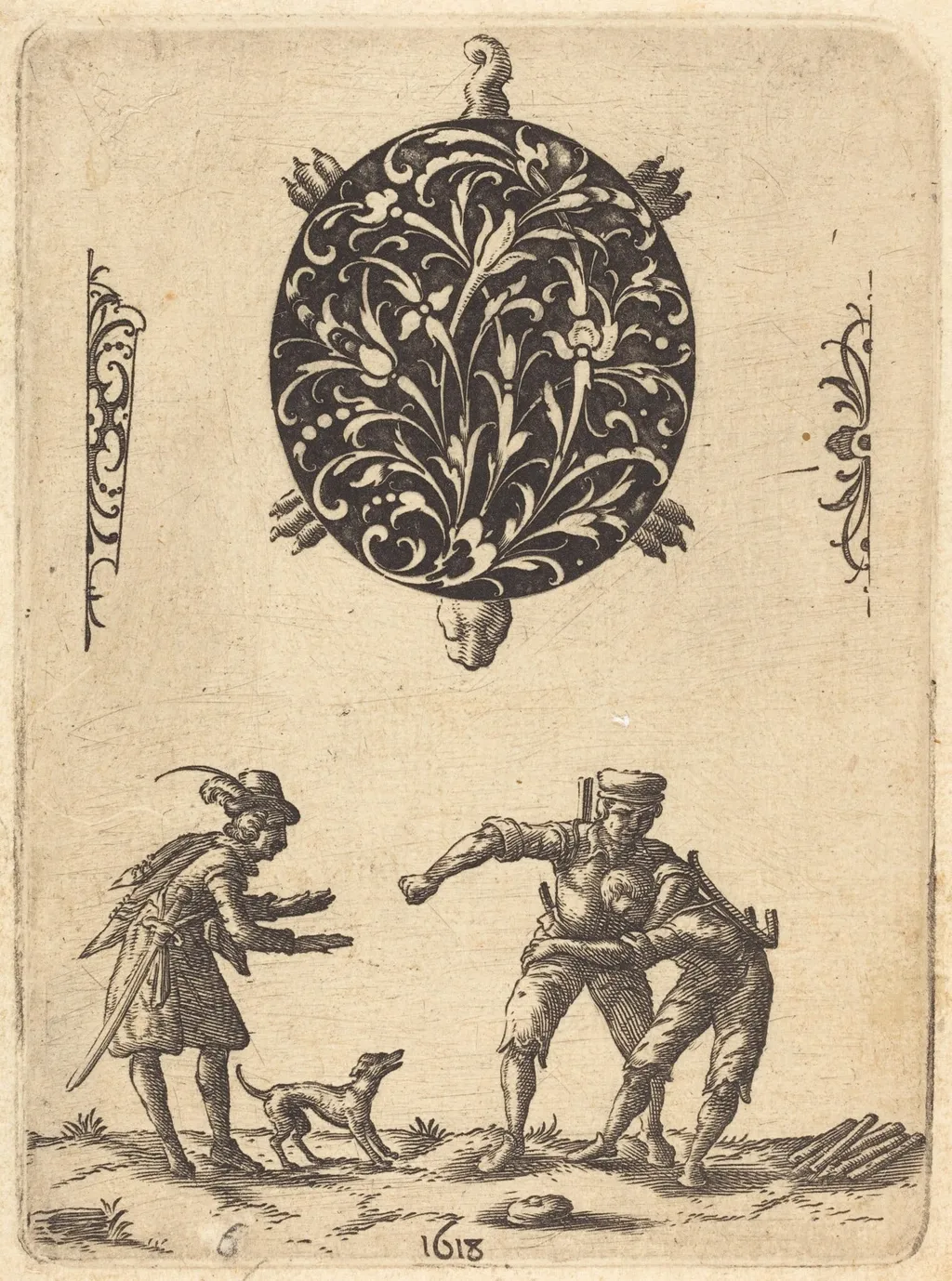
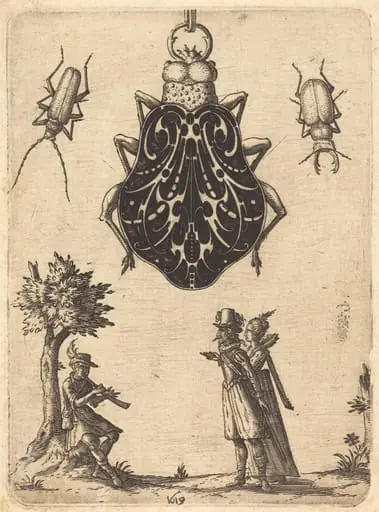
Design for a Turtle-Shaped Pendant is an ink print by the Baroque artist Jean Toutin. It dates from 1618 and is held in the collection of the National Gallery of Art.
About this work
Overview
The medium reflects the precision required in goldsmithing, where engraved plates served as guides for crafting intricate adornments in precious materials.
Created in 1618 by Jean Toutin, this engraving on laid paper presents a preparatory design for a turtle-shaped jewelry pendant. Unlike a finished object, the work functions as a template for metalworkers, capturing the contours and decorative details intended for a wearable piece. The medium reflects the precision required in goldsmithing, where engraved plates served as guides for crafting intricate adornments in precious materials.
Subject & Meaning
The turtle, a symbol of longevity and stability in early modern Europe, was chosen for its association with endurance and protection. Its shell, rendered with careful linear detail, suggests both naturalism and stylized ornamentation. As a pendant design, it likely carried personal or symbolic significance for its wearer, possibly reflecting values of patience, resilience, or spiritual grounding within its intended context.
Technique & Style
Toutin employed engraving, a method involving incised lines carved into a metal plate with a burin. The resulting print captures fine, controlled strokes that define the turtle’s form and shell patterns. The composition is tightly focused, with minimal background, emphasizing clarity and reproducibility. The style is restrained and precise, typical of French goldsmithing designs of the period, prioritizing function over decorative flourish.
History & Provenance
The engraving originates from Toutin’s workshop in Paris, where he produced designs for royal and aristocratic jewelry. As a leading goldsmith to the French court, his drawings were circulated among artisans to guide production. This particular sheet likely passed through the hands of craftsmen before being archived, possibly within a collection of design studies preserved by royal workshops or private collectors.
Context
In early 17th-century France, engraved designs like this were essential tools in the production of luxury objects. Goldsmiths relied on such templates to ensure consistency and quality across commissioned pieces. The turtle motif aligns with broader Renaissance and Mannerist interests in natural forms adapted for ornament, reflecting a cultural fascination with symbolic animals and the intersection of art, nature, and craftsmanship.
Legacy
Toutin’s design survives as a rare example of a functional artistic intermediary—neither purely fine art nor finished jewelry, but a bridge between the two. It offers insight into the collaborative nature of early modern craft, where designers, engravers, and metalworkers operated in tandem. Such works illuminate the often-overlooked role of preparatory drawings in the creation of decorative arts.
Artist & collection