Artwork
Gentleman and His Page
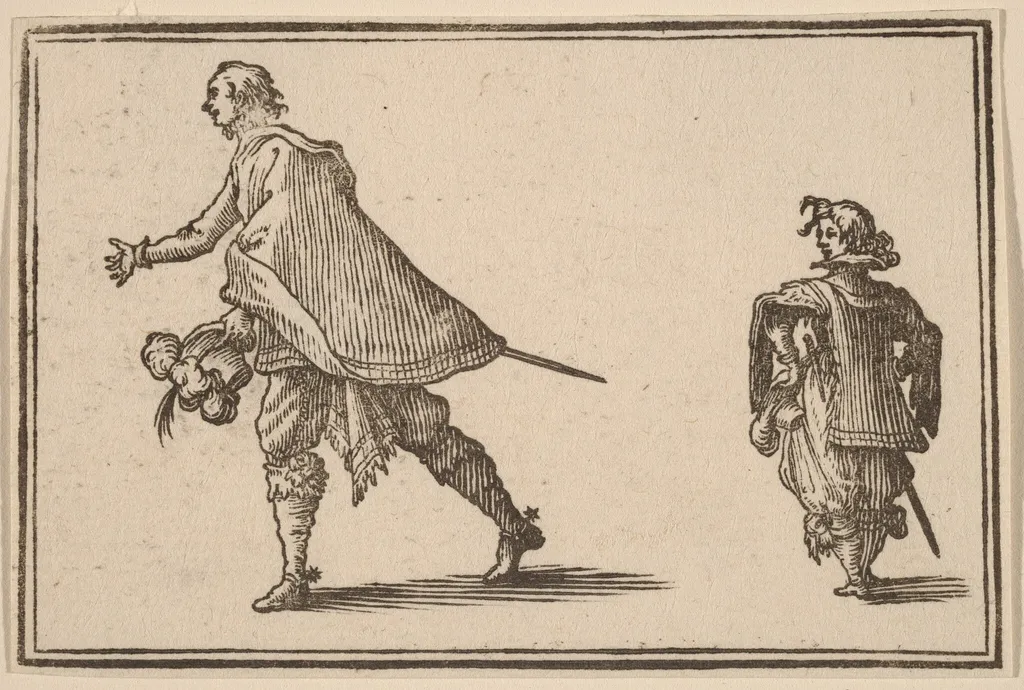
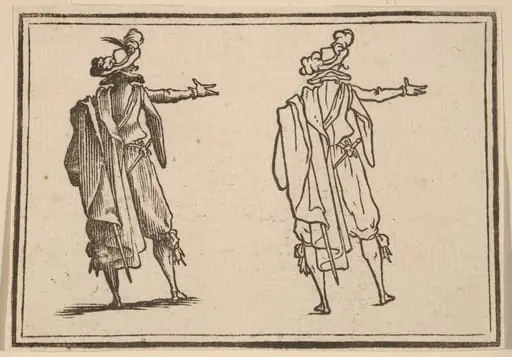
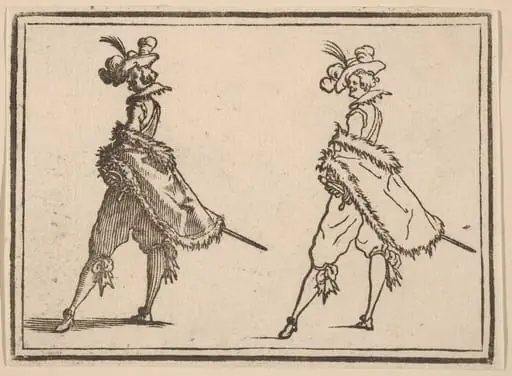
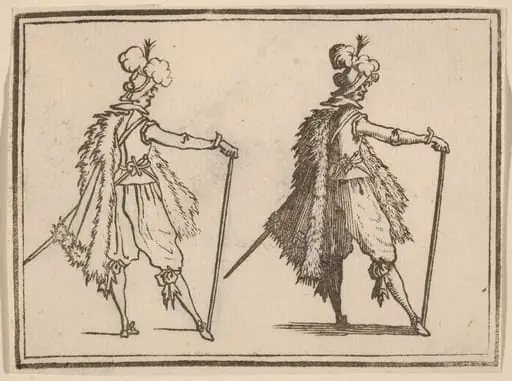
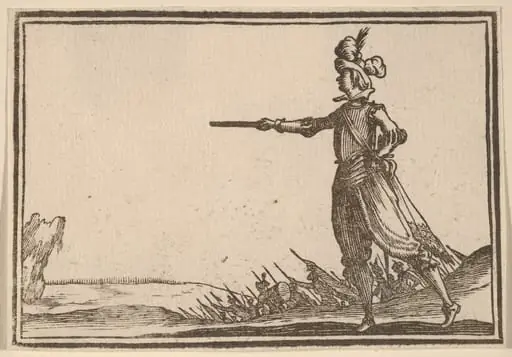
Gentleman and His Page is an ink print by the Baroque artist Edouard Eckman. It dates from 1621 and is held in the collection of the National Gallery of Art.
About this work
Overview
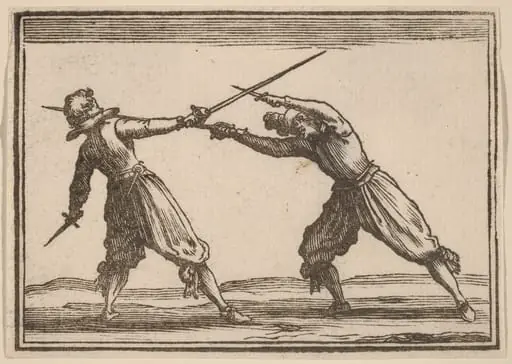
Gentleman and His Page is a woodcut print executed on laid paper in 1621 by the Dutch artist Edouard Eckman. The image presents two figures in period costume, rendered in stark black and white, and measures within the typical dimensions of early seventeenth‑century prints.
Subject & Meaning
The composition depicts a senior gentleman, distinguished by a long cape, hat and a sword, extending a set of keys while gesturing with his other hand. Beside him stands a younger attendant, or page, in a shorter coat and also armed with a sword. The interaction suggests a formal exchange of authority or service rather than a simple portrait.
Technique & Style
Eckman employed the woodcut method, carving the design into a wooden block and printing the relief image onto laid paper. The technique produces crisp, linear contours and pronounced shadows, evident in the sharply defined folds of the garments and the contrast between light and dark areas.
History & Provenance
Created in the early 1620s, the print reflects the period’s interest in genre scenes that combine narrative suggestion with decorative detail. While specific ownership records are scarce, the work is catalogued among Eckman’s surviving prints and is held in several European museum collections.
Artist & collection