Artwork
Large Pendant, Lower Left and Right Two Winged "Devils" Sitting on Pedestals
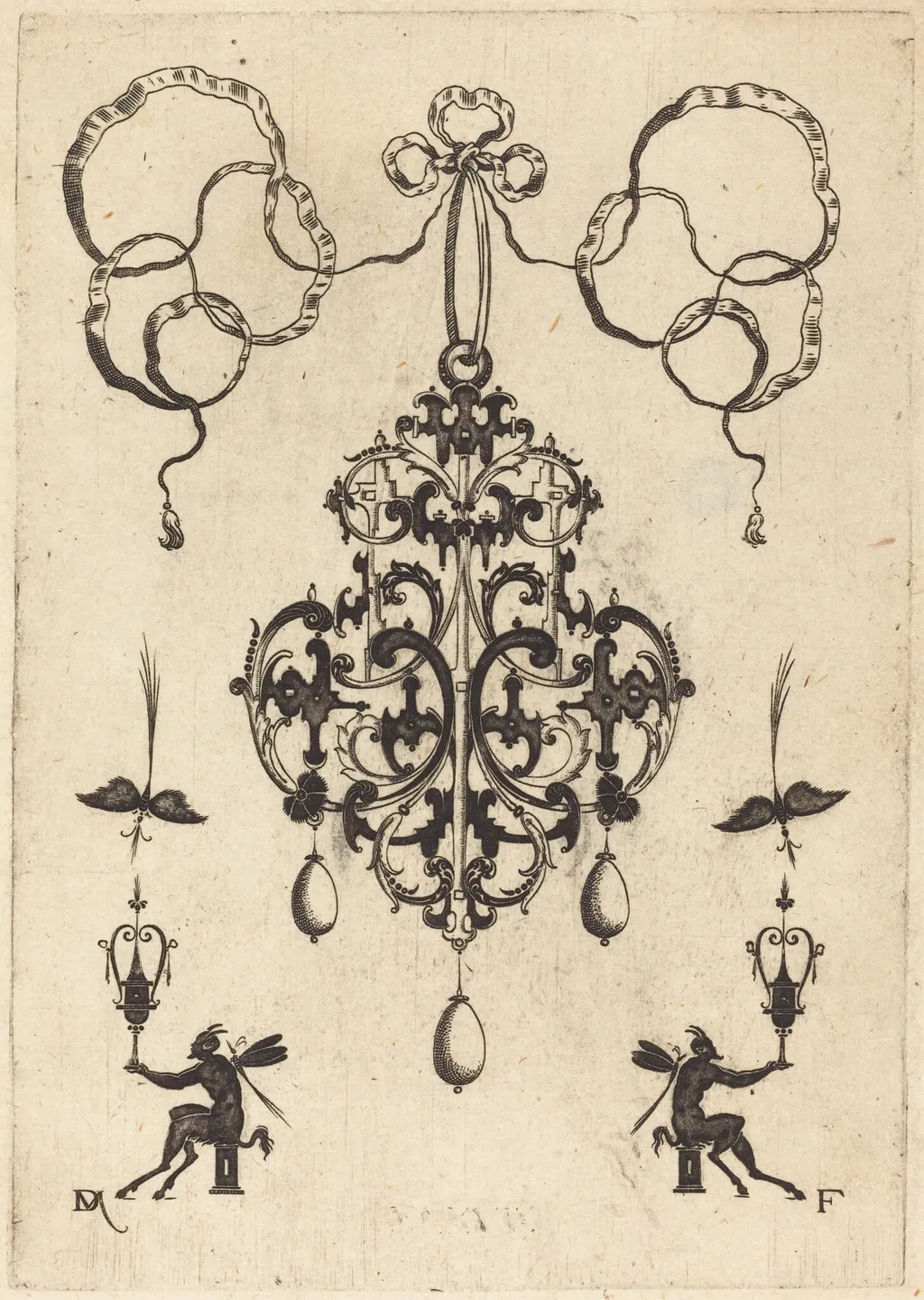
Large Pendant, Lower Left and Right Two Winged "Devils" Sitting on Pedestals is an ink print by the Renaissance artist Daniel Mignot. It dates from 1596 and is held in the collection of the National Gallery of Art.
About this work
Overview
This 1596 engraving by Daniel Mignot depicts two winged, demon-like figures seated on stone pedestals. Executed in fine linear detail, the work belongs to a series of pendant prints, likely intended as paired decorative elements. The composition emphasizes symmetry and intricate surface rendering, characteristic of late Renaissance printmaking in Northern Europe.
Subject & Meaning
The absence of contextual scenes leaves interpretation open, inviting viewers to infer meaning from their imposing posture and detailed anatomy.
The figures resemble traditional depictions of devils, with animalistic features and outstretched wings, but their specific identity or narrative role remains undocumented. Their placement on pedestals suggests a symbolic or allegorical function, possibly representing moral vices or guardians of thresholds. The absence of contextual scenes leaves interpretation open, inviting viewers to infer meaning from their imposing posture and detailed anatomy.
Technique & Style
Mignot employed engraving to achieve precise, controlled lines that define texture in the creatures' skin, feathers, and the carved surfaces of the pedestals. The dense cross-hatching and fine stippling create depth and shadow, reflecting the influence of Flemish and German print traditions. The style prioritizes craftsmanship over dramatic narrative, focusing on the tactile quality of form and surface.
History & Provenance
The print was produced in 1596, during a period when engraved pendants were popular among collectors for domestic display. While no early ownership records are widely known, similar works by Mignot appear in European print collections from the 17th century. Its survival suggests it was valued for its technical skill rather than religious or political significance.
Context
In late 16th-century Northern Europe, engravings of fantastical or demonic figures were common in private collections, often serving as visual curiosities or moral reminders. Mignot’s work aligns with a broader trend of mythological and allegorical prints produced for educated audiences. These images reflected contemporary interests in the occult, natural philosophy, and the boundaries between the human and the monstrous.
Legacy
Though not widely exhibited today, the engraving remains a representative example of Mignot’s precision-driven style and the late Renaissance appetite for intricate, symbolic imagery. It contributes to the understanding of how demonic motifs were rendered in non-religious contexts, preserving a quiet but deliberate aesthetic tradition in print culture of the period.
Artist & collection


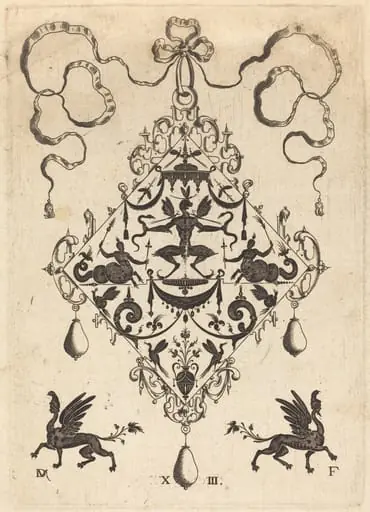 Large Pendant, Winged Fantasy Creature Holding Two Snakes
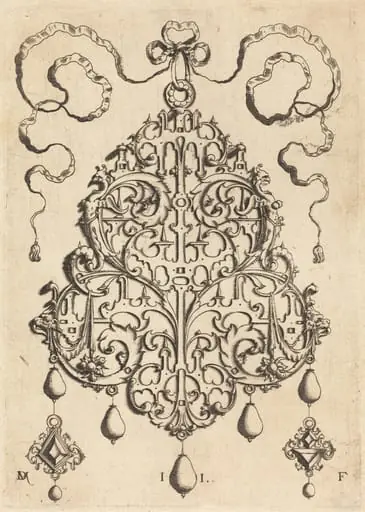 Large Strapwork Pendant with Two Hangers as Earrings at Left and Right
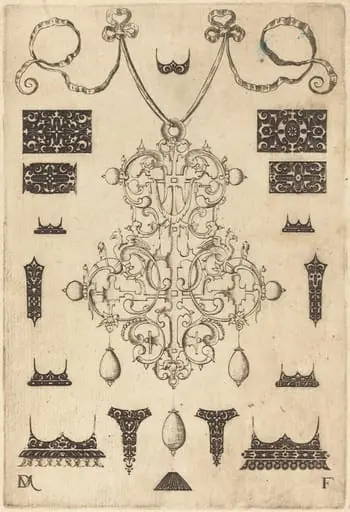 Large Pendant with Three Drops Below, Surrounded by Fifteen Different Studs
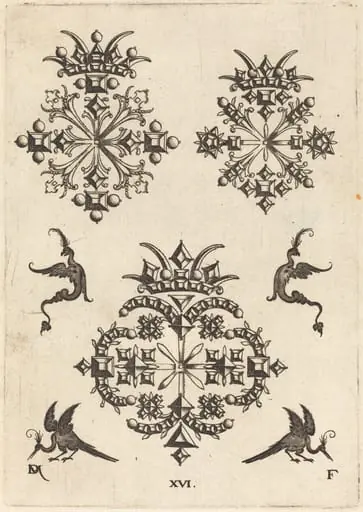 Three Brooches with Fantasy Birds at Left, Right, and Bottom
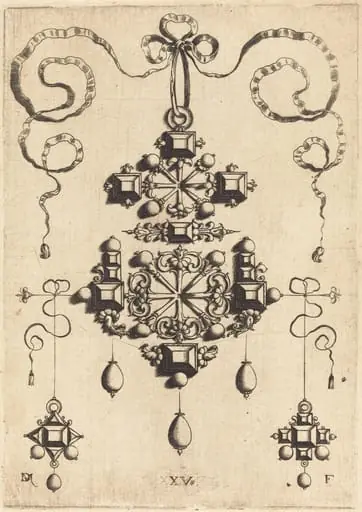 Pendant with Two Double Crosses, Surrounded by Four Diamond-Shaped Stones, Five Table-Stones, and Thirteen Pearls
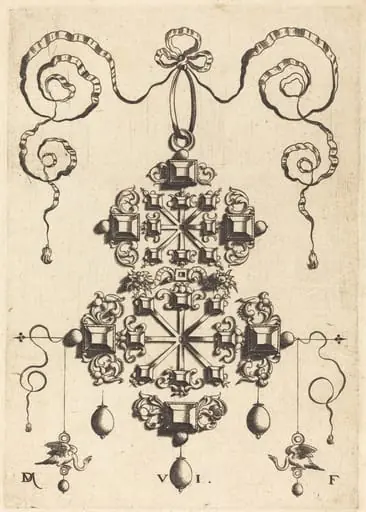 Large Pendant with Two Double Crosses, Surrounded by Six Large and Sixteen Small Table-Stones
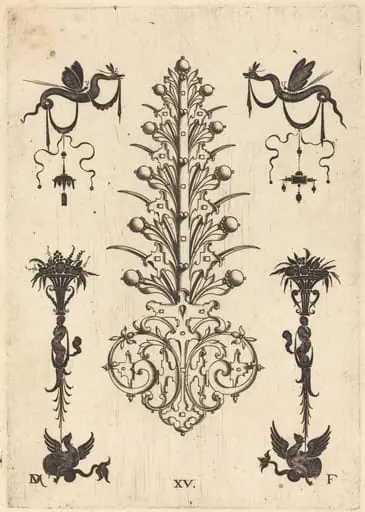 Hyacinth-Shaped Brooch with Winged Snakes at Top and Winged Animals at Bottom
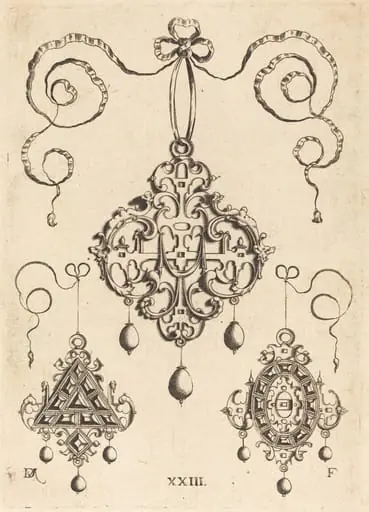 Three Strapwork Pendants, The Lower Ones Triangular and Oval
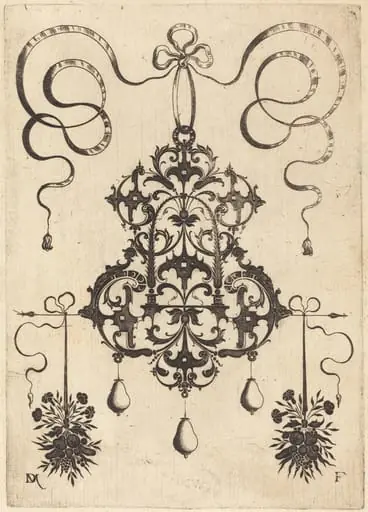 Large Pendant, Lower Left and Right Two Bunches of Grass, Flowers, and Fruit
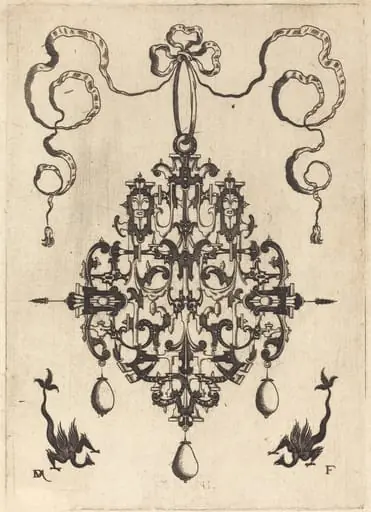 Large Pendant, Two Fantasy Creatures with Long Tails at Bottom
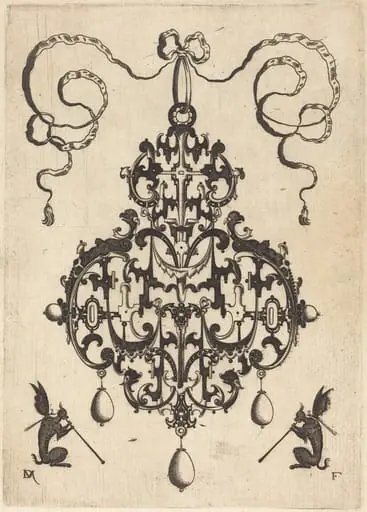 Large Pendant, Two Winged Fantasy Creatures with Trumpets at Bottom
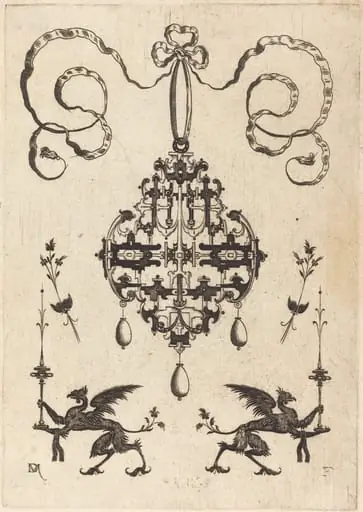 Large Pendant, Lower Left and Right Two Griffins Carrying Fantasy Candlesticks
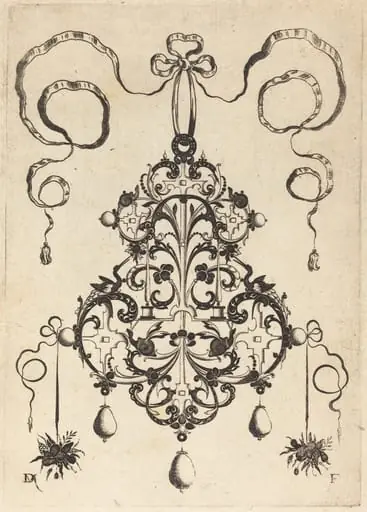 Large Pendant, Lower Left and Right Two Bunches of Grass and Fruit
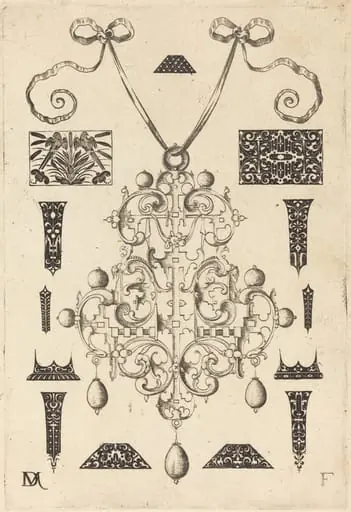 Large Pendant, Surrounded by Thirteen Studs
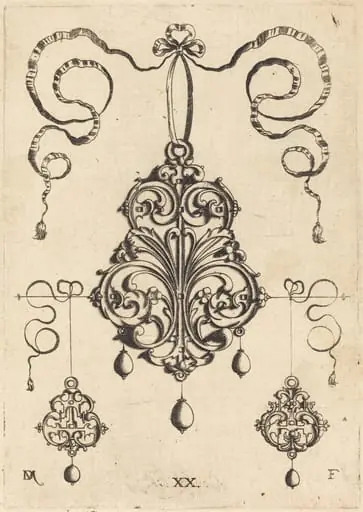 One Large and Two Smaller Strapwork Pendants
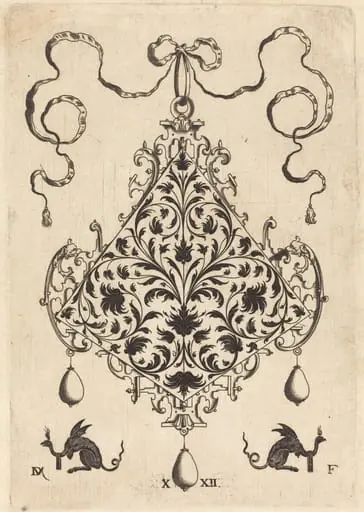 Large Pendant, Ornamental Foliage Design
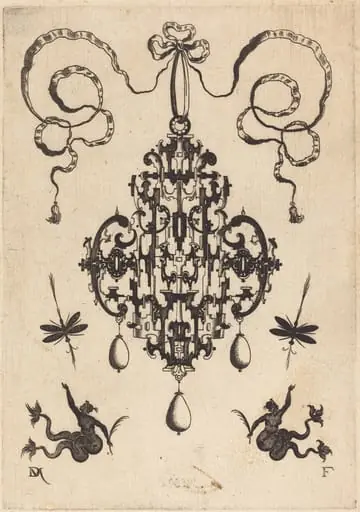 Large Pendant, Lower Left and Right Two Creatures of the Sea
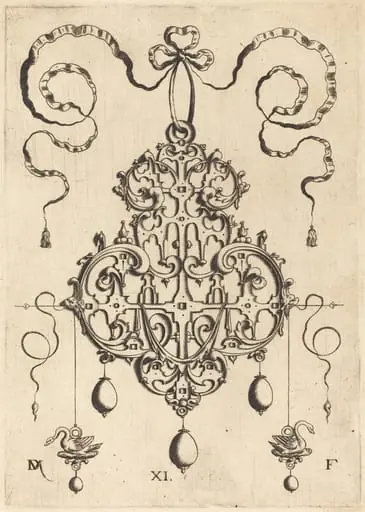 Strapwork Pendant with Two Swans as Earrings at Left and Right
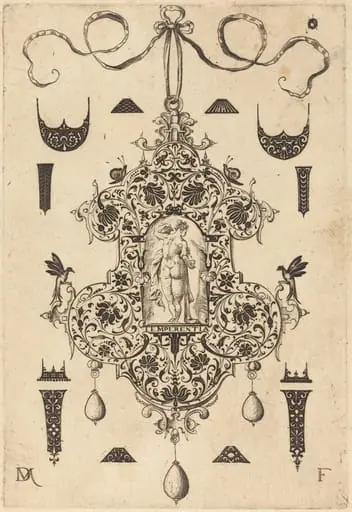 Large Pendant, Temperance Standing at Centre