Artwork
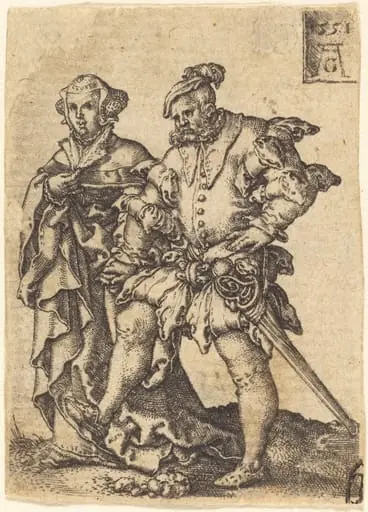
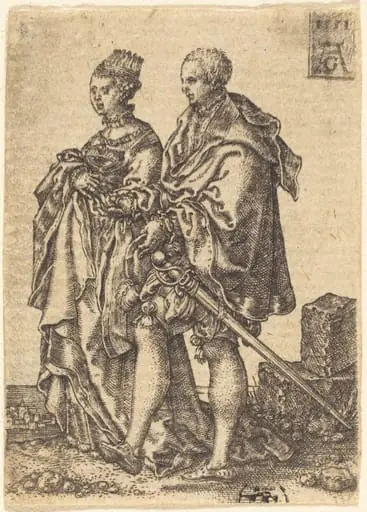
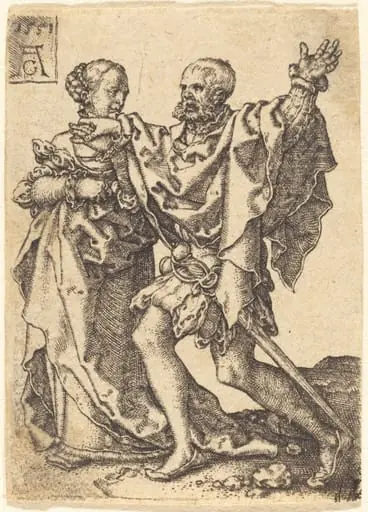
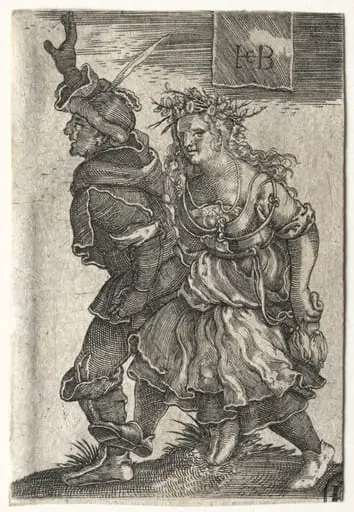
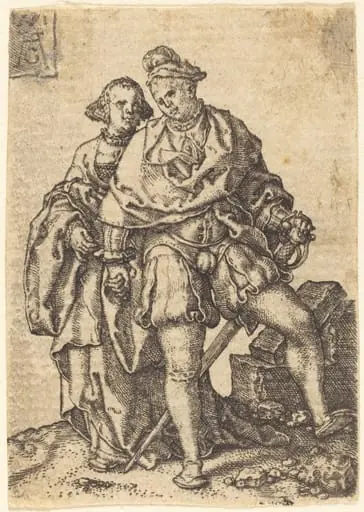
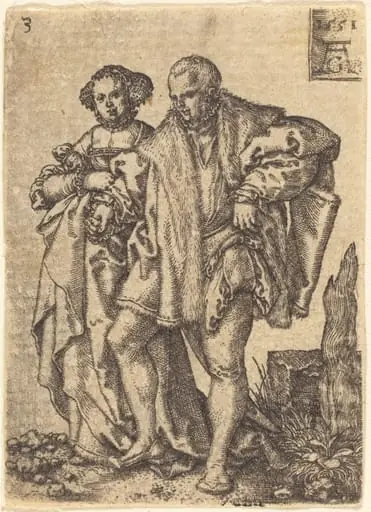
Dancing Couple, Facing Left
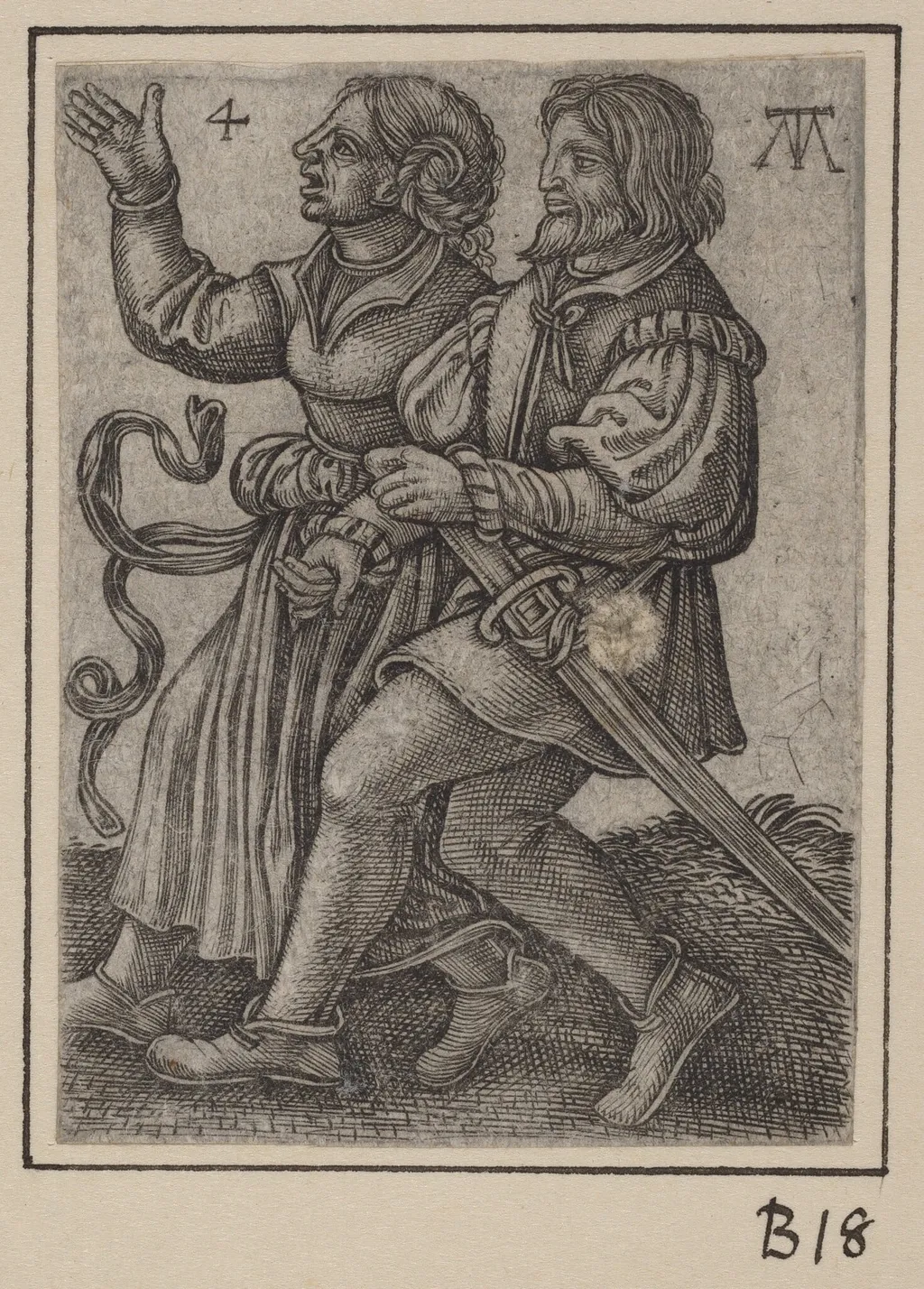
Dancing Couple, Facing Left is an ink print by the Renaissance artist Martin Treu. It dates from 1540 and is held in the collection of the National Gallery of Art.
About this work
Overview
Dancing Couple, Facing Left is an early‑16th‑century engraving executed on laid paper, attributed to the German printmaker Martin Treu and dated to around 1540. The work presents a pair of figures in motion, rendered in the linear precision characteristic of the period’s graphic arts.
Subject & Meaning
The image shows a man and a woman engaged in a dance; the woman occupies the left side, her right arm lifted, while the man on the right grasps a sword in his right hand. Their attire, with elaborate folds and period details, signals a Renaissance setting, suggesting a courtly or ceremonial scene rather than a purely domestic pastime.
Technique & Style
Treu employs fine cross‑hatching to model the bodies and clothing, creating a sense of volume and texture on the flat paper surface. The engraving’s line work demonstrates the meticulous draftsmanship typical of Northern European printmaking in the mid‑1500s, with careful attention to the interplay of light and shadow.
History & Provenance
The print is part of the National Gallery of Art’s collection in Washington, D.C. Its acquisition history traces back to the museum’s early 20th‑century purchases of European prints, though earlier ownership records remain limited.
Context
Created during the height of the Northern Renaissance, the engraving reflects contemporary interests in courtly dance, chivalric symbolism, and the integration of martial elements—here represented by the sword—into social rituals. Such motifs were common in prints that circulated as visual records of aristocratic culture.
Artist & collection