Artwork
Château de Bourlémont
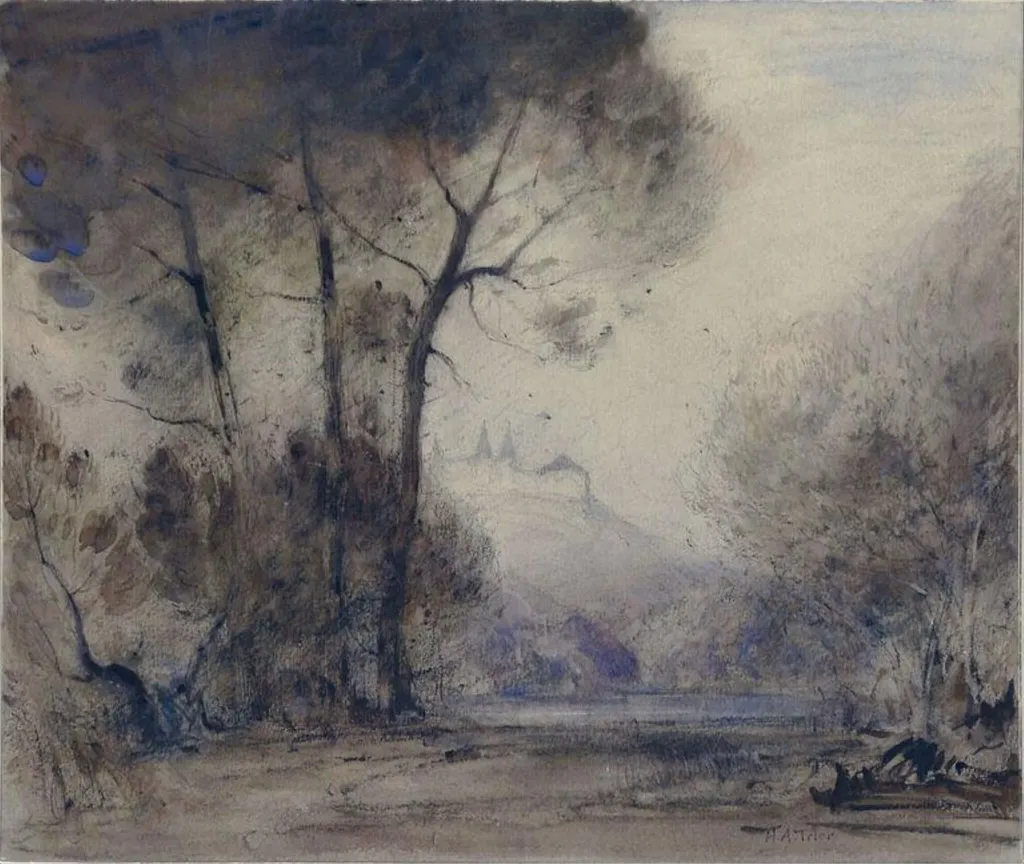
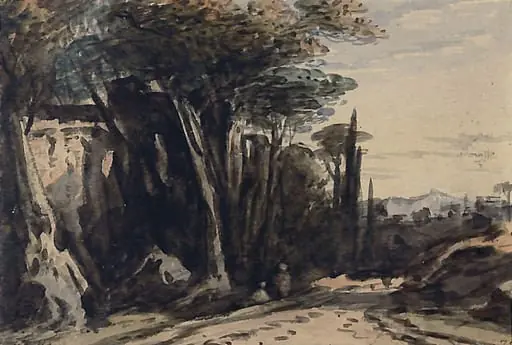
Château de Bourlémont is a watercolor work on paper by the Impressionist artist Hans Trier. It dates from 1890 and is held in the collection of the Victoria and Albert Museum.
About this work
Overview
This watercolour portrays Château de Bourlémont, a medieval fortress nestled in the Vosges Mountains of northeastern France.
This watercolour portrays Château de Bourlémont, a medieval fortress nestled in the Vosges Mountains of northeastern France. Rendered in delicate washes, the scene captures the structure partially obscured by atmospheric haze. The artist’s signature appears on the work, affirming authorship. The composition emphasizes mood over architectural precision, reflecting a sensitivity to transient natural conditions.
Subject & Meaning
The castle, though present, is not the central focus. Instead, the painting conveys a quiet, contemplative atmosphere—mist clings to the ground, and the ruins blend into the surrounding landscape. Bare trees frame the view, suggesting autumn or early spring. The subdued palette and soft edges evoke solitude and the passage of time, inviting reflection rather than narrative.
Technique & Style
The artist employed loose, fluid brushwork and layered watercolour washes to suggest form without definition. Colours are restrained—grays, muted browns, and faint greens—creating a tonal harmony that mimics natural light filtering through fog. The lack of sharp detail and the emphasis on atmospheric diffusion align with emerging 19th-century approaches to landscape that prioritized sensory impression over topographical accuracy.
History & Provenance
The work’s documented history is limited, but its subject suggests it was created during a period of renewed interest in regional heritage sites in France. Likely painted in the mid- to late 1800s, it may have been produced during a sketching trip through the Vosges. Its survival as a standalone watercolour indicates it was intended as a personal study or gift, not a commercial piece.
Context
This piece emerged alongside broader artistic shifts in France, where painters increasingly turned to outdoor sketching and transient effects of light. Though not formally part of the Impressionist circle, its handling of atmosphere and light shares affinities with contemporaneous landscape studies. The focus on a modest, unidealized ruin reflects a growing cultural appreciation for regional history and quiet natural beauty.
Legacy
While not widely exhibited or reproduced, the watercolour contributes to a quieter strand of 19th-century French landscape art—one that valued subtlety and emotional resonance over grandeur. It stands as an example of how artists used watercolour to capture fleeting moments in nature, influencing later generations interested in mood-driven representation over detailed realism.
Own this work as a print
Artist & collection
Artist
Hans Trier painted watercolours of French châteaux around 1890–1920, capturing stone towers and leafy grounds with delicate brushstrokes.

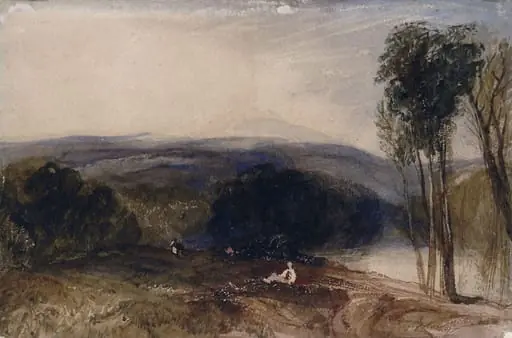 Landscape with river and mountain
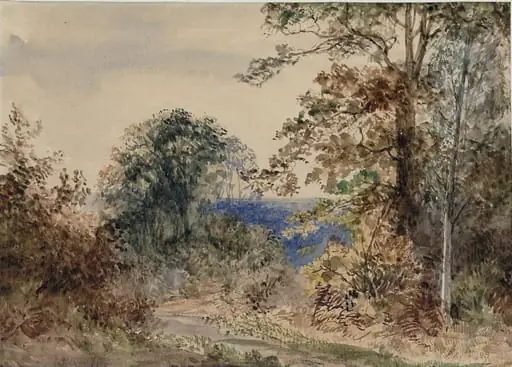 Study from Nature
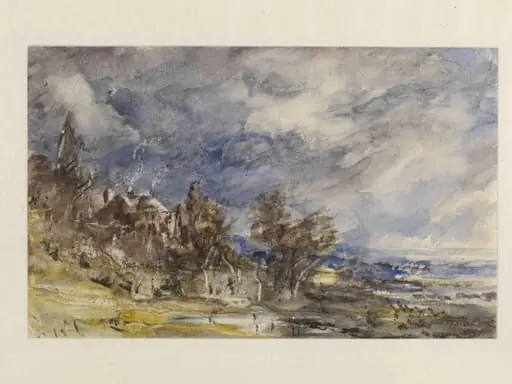 Hampstead Heath, from near Well Walk
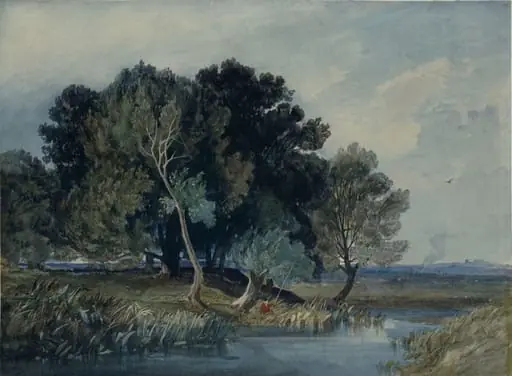 Gunton Park, Norfolk
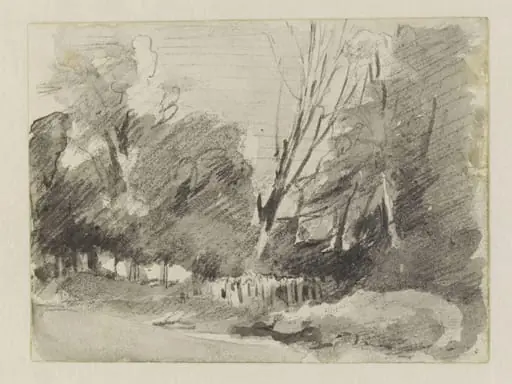 Two sketches on one sheet: a countryman walking, and a group of people beside two donkeys.
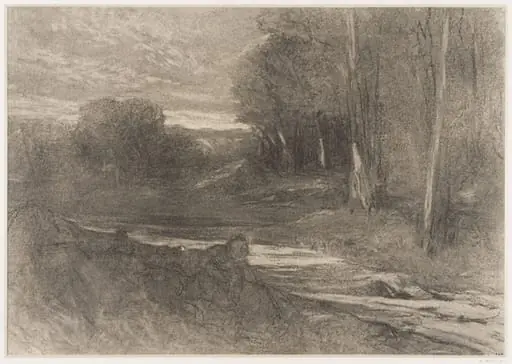 By the Waters of Babylon.
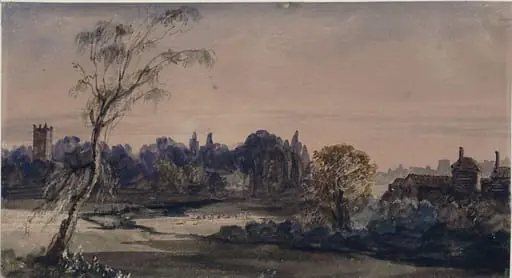 Landscape with buildings and trees
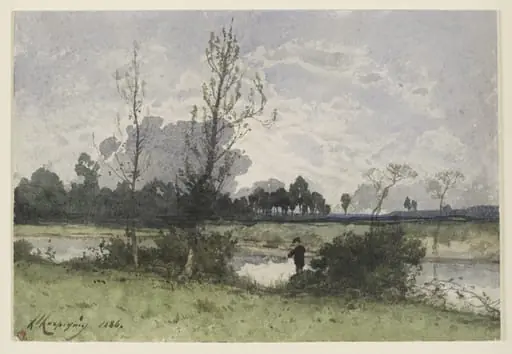 The fisherman
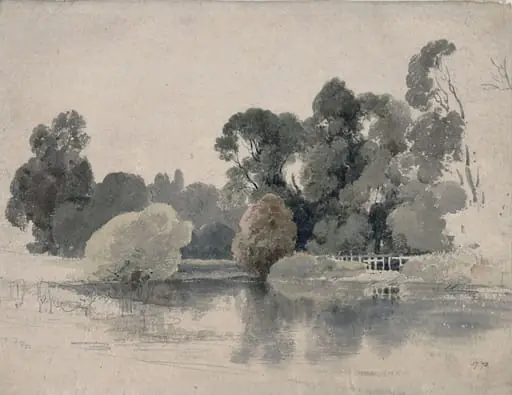 View near Sandhurst
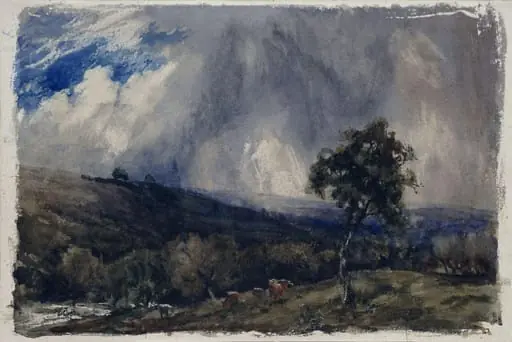 In the Wharfedale, Yorkshire
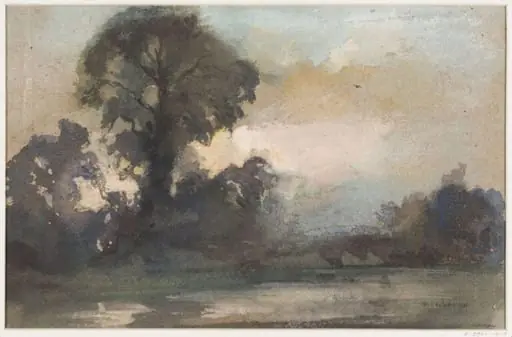 Untitled
 Landscape with road and trees