Artwork
View near Sandhurst
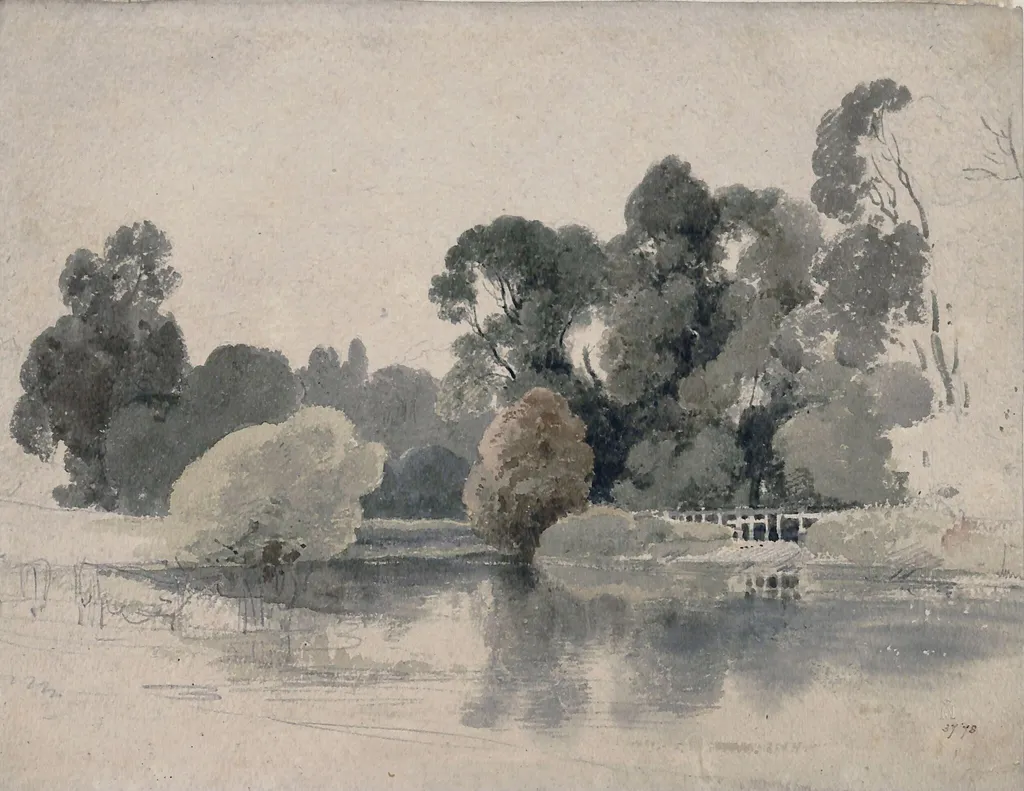
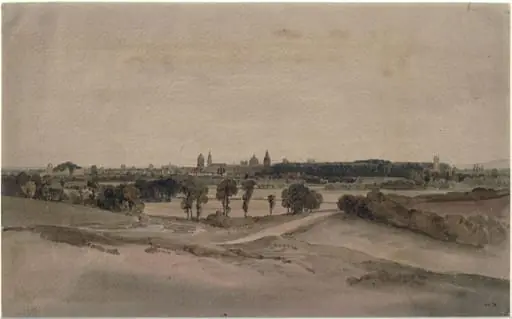
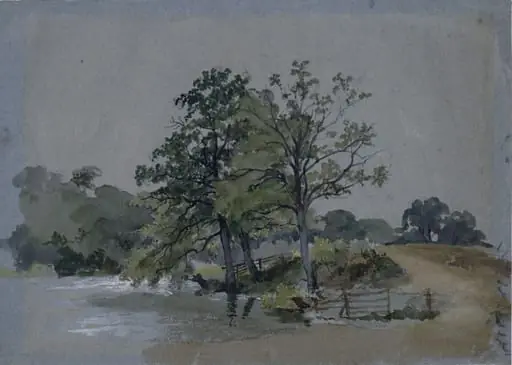
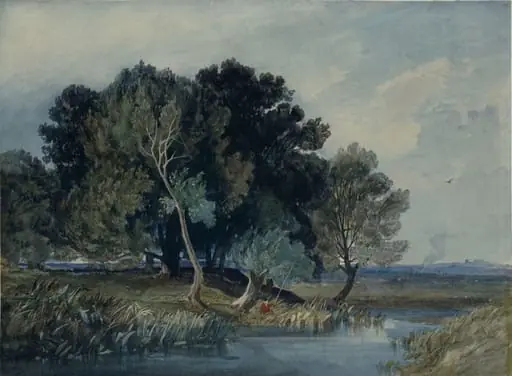
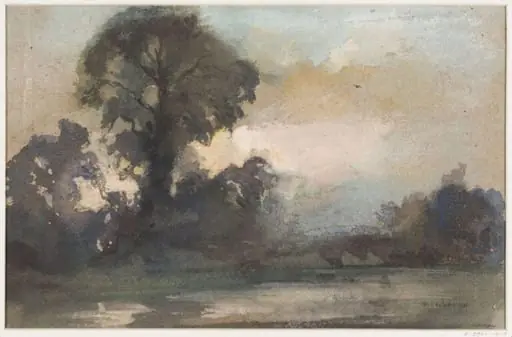
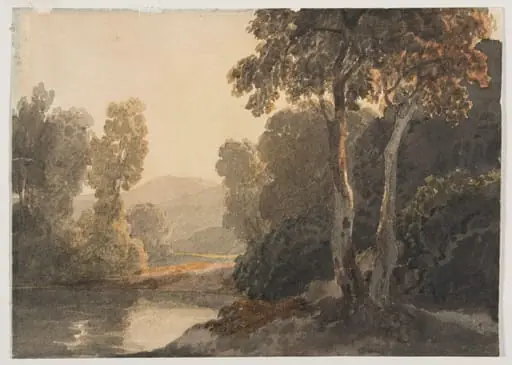
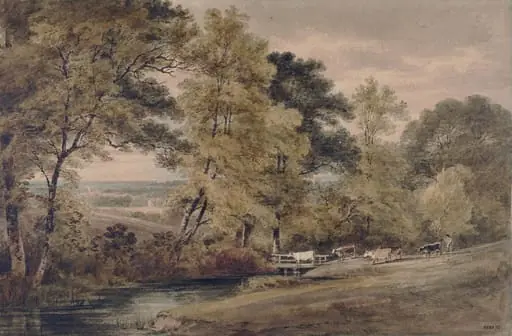
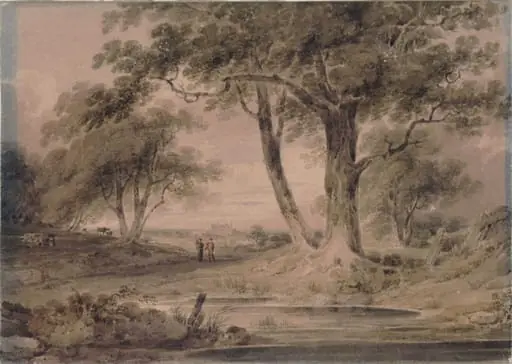
View near Sandhurst is a watercolor work on paper by the British Romanticist artist Andrew Wilson. It dates from 1805 and is held in the collection of the Victoria and Albert Museum.
About this work
Overview
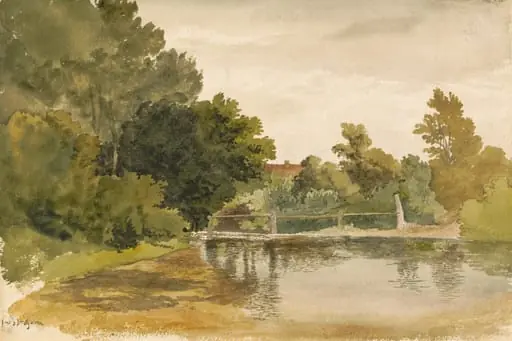
Painted in 1805 by Andrew Wilson, this watercolour captures a tranquil riverside landscape near Sandhurst. Executed with delicate washes and minimal detail, the work reflects the artist’s interest in atmospheric landscape studies. Its quiet composition and restrained palette align with early 19th-century British watercolour practices, emphasizing mood over narrative.
Subject & Meaning
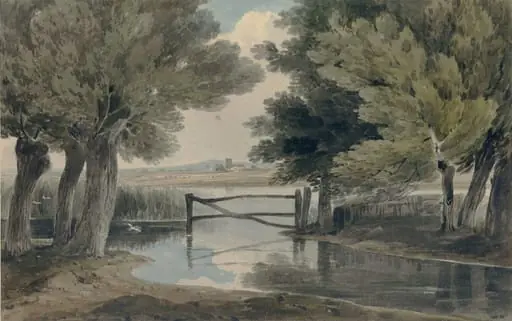
The scene features a calm stretch of water flanked by dense trees on the left and a solitary, leafless tree near the center. A distant bridge or path suggests human presence without disrupting the solitude. The absence of figures and the subdued tones evoke a contemplative stillness, characteristic of Romantic-era landscape sensibilities that valued nature’s quiet dignity.
Technique & Style
Wilson employed loose, fluid brushwork and translucent watercolour layers to create a soft, hazy effect. Colors blend seamlessly, avoiding sharp edges, while the sketch-like quality suggests immediacy. The technique prioritizes light and atmosphere over precise detail, reflecting the influence of contemporary watercolourists who favored expressive spontaneity.
History & Provenance
The work is documented as part of Wilson’s series of topographical watercolours from the early 1800s. It entered the Victoria and Albert Museum’s collection through established channels typical of British institutional acquisitions of the period, though its specific provenance prior to museum ownership remains unrecorded in public archives.
Context
Wilson’s work emerged during a period when watercolour was gaining recognition as a serious medium for landscape study in Britain. Artists like him often documented rural scenes as both artistic exercises and records of place, responding to growing public interest in natural scenery amid industrialization.
Legacy
Though not widely exhibited today, Wilson’s watercolours contribute to the broader understanding of early 19th-century British landscape practice. His approach influenced later artists who valued atmospheric suggestion over detailed realism, helping to shape the evolution of watercolour as a distinct artistic tradition.
Own this work as a print
Artist & collection
Artist
This British watercolor artist worked around 1805–1848, painting detailed views of landscapes and castles across England and Wales.