Artwork
Joconde: Le pardon
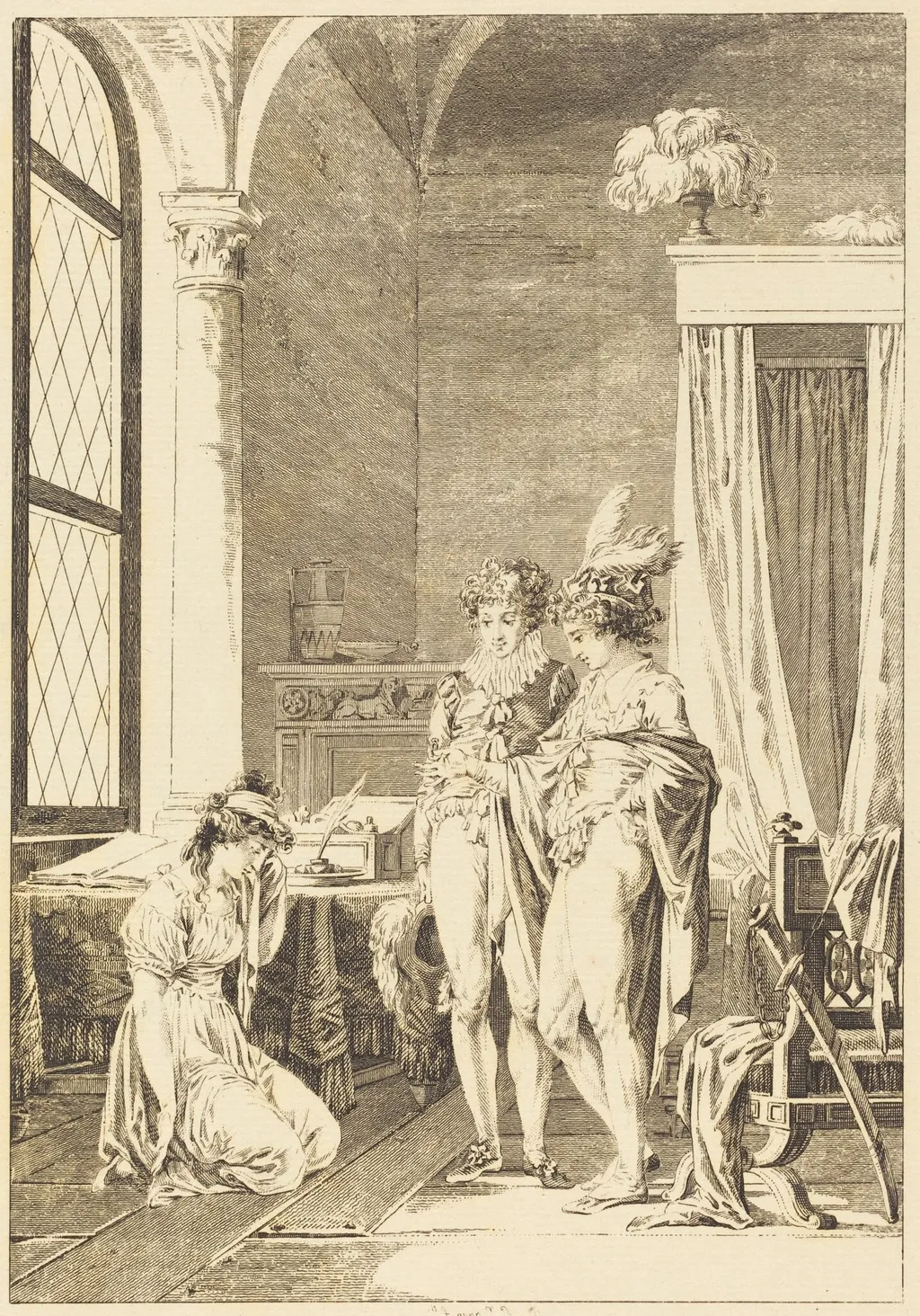
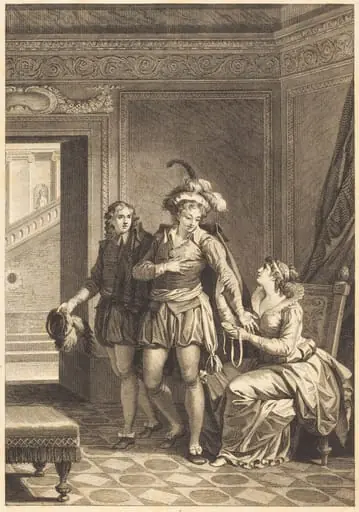
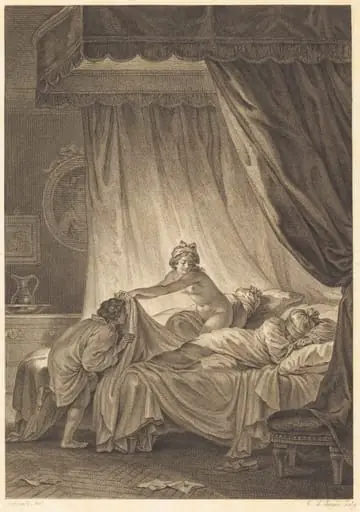
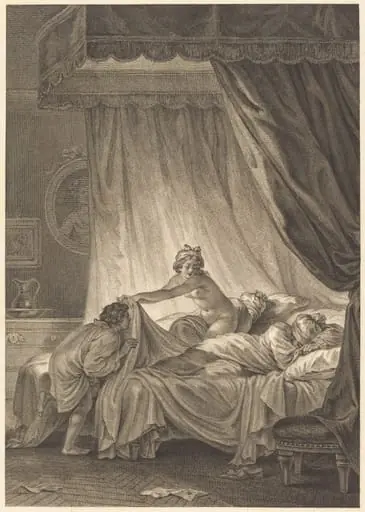
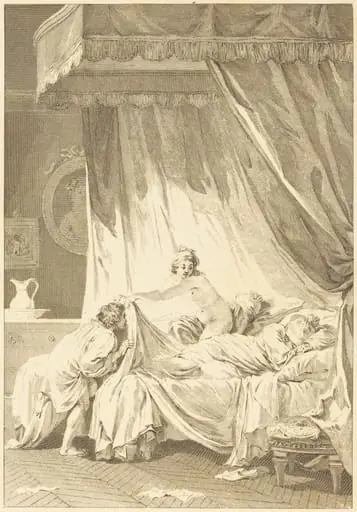
Joconde: Le pardon is an ink print by the Romanticist artist Philippe Triere. It dates from 1786 and is held in the collection of the National Gallery of Art.
About this work
Overview
Its composition suggests narrative tension without overt drama, inviting contemplation rather than declaration.
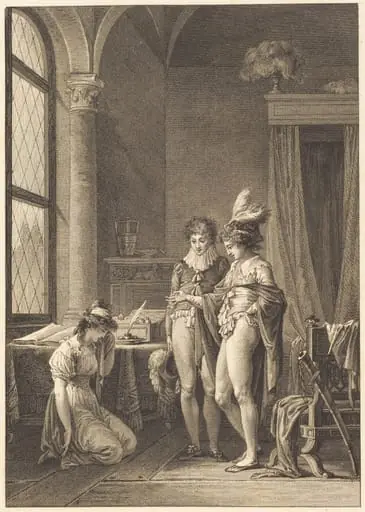
Created in 1786 by Philippe Triere, Joconde: Le pardon is an etching that captures a quiet, emotionally charged moment among three women in an intimate interior. The work belongs to the printmaking tradition of late 18th-century France, where etching was used to explore psychological nuance and domestic scenes with refined detail. Its composition suggests narrative tension without overt drama, inviting contemplation rather than declaration.
Subject & Meaning
The scene depicts three women in a moment of stillness that implies reconciliation or supplication. The standing figure, adorned in elaborate attire and a feathered hat, appears authoritative, while the kneeling woman bows her head, suggesting submission or plea. The third woman, observing through a small optical device, may represent detachment or surveillance. The setting, rich yet somber, frames an unspoken interpersonal dynamic, possibly reflecting social hierarchies or private moral reckonings.
Technique & Style
Triere employed etching to achieve fine linear detail and subtle tonal gradations. The dark, atmospheric room is rendered with controlled hatching and cross-hatching, emphasizing texture in wood, fabric, and stone. Light pools selectively on the figures’ faces, drawing attention to their expressions. The use of chiaroscuro enhances depth and emotional weight, while the precise rendering of objects—books, candle, telescope—anchors the scene in tangible reality.
History & Provenance
The etching was produced in 1786, during a period when printmaking flourished as a medium for both artistic expression and social commentary in France. Though little is documented about its early ownership, its survival suggests it was valued by collectors interested in intimate genre scenes. No major institutional records trace its path before the 20th century, but its craftsmanship aligns with private print circles of the late Ancien Régime.
Context
In the years preceding the French Revolution, domestic scenes in print form often encoded subtle critiques of class and gender roles. Triere’s work reflects this trend, using the language of aristocratic interiors to imply power imbalances within private life. The presence of scientific instruments like the telescope hints at Enlightenment interests, while the candle and papers suggest intellectual or bureaucratic activity, grounding the scene in its historical moment.
Legacy
Joconde: Le pardon remains a quiet example of late 18th-century French etching, valued for its psychological restraint and technical precision. Though not widely exhibited, it contributes to the broader understanding of how printmakers used domestic settings to explore complex human relationships. Its preservation offers insight into the visual culture of a society on the brink of upheaval, where personal gestures carried unspoken weight.
Artist & collection