Artwork
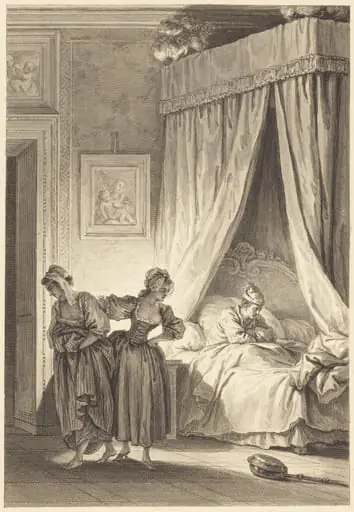
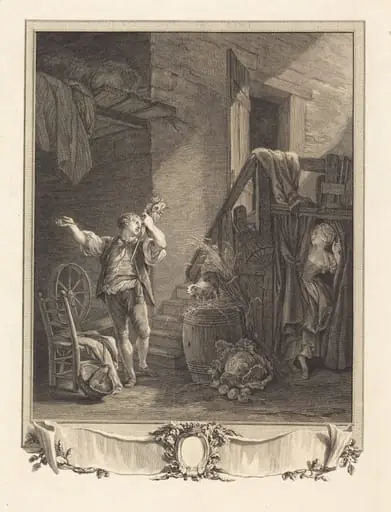
Lison dormait
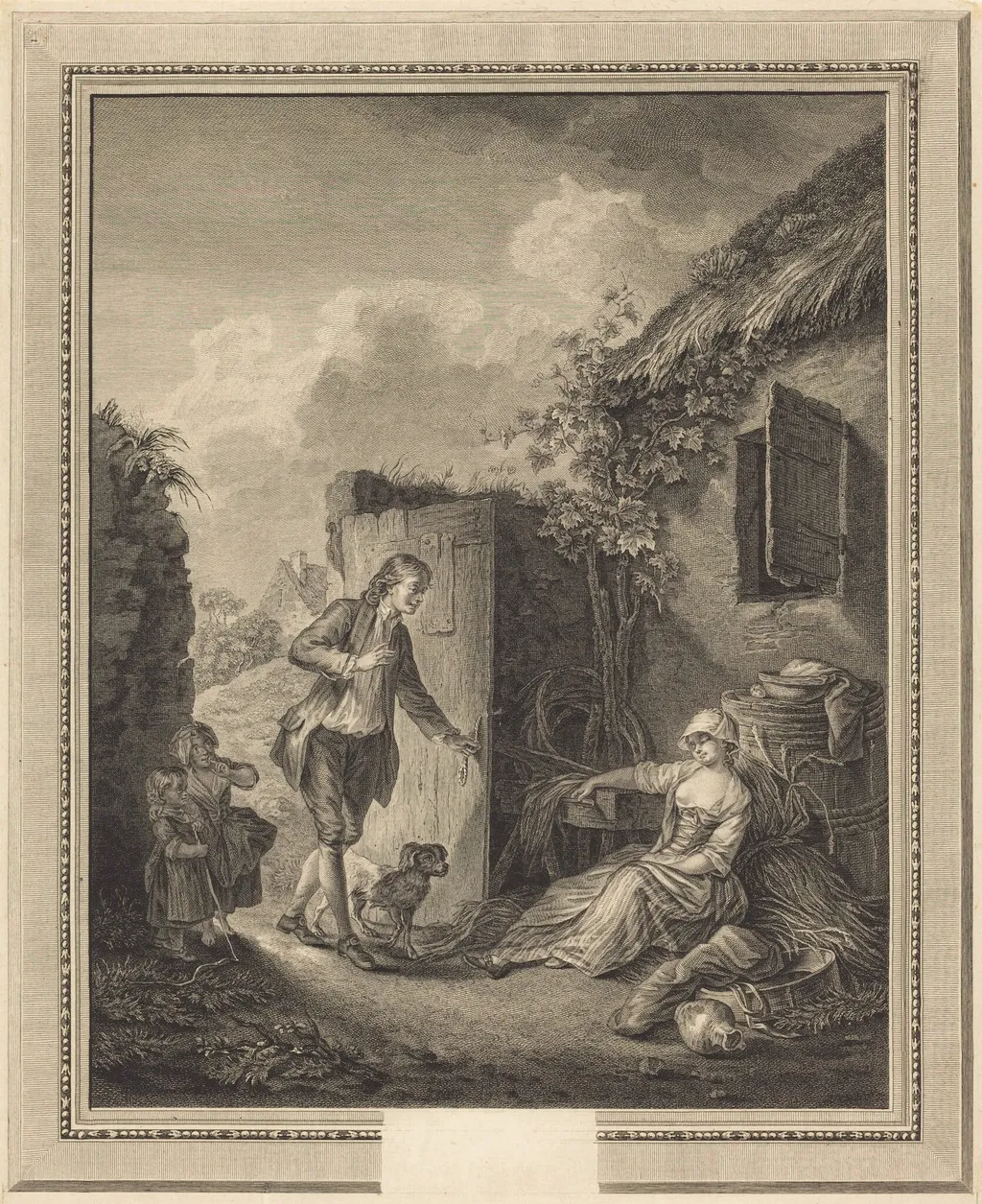
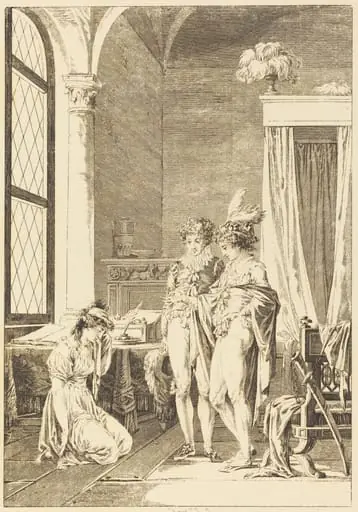
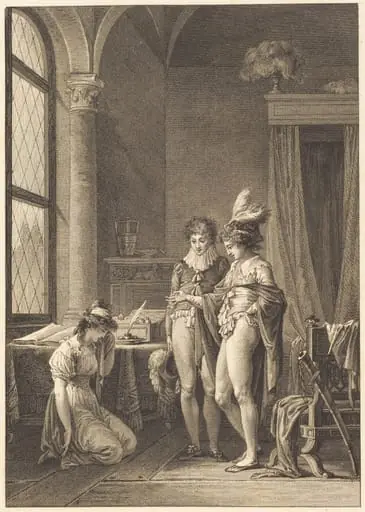
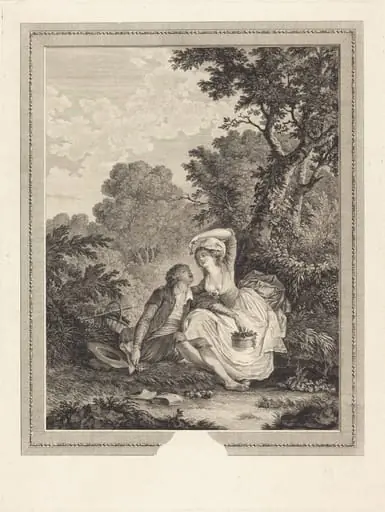
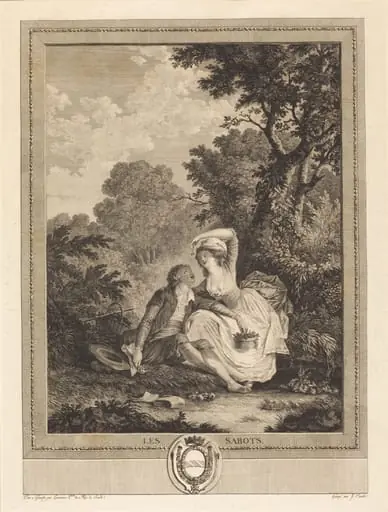
Lison dormait is an ink print by the Romanticist artist Philippe Triere. It dates from 1786 and is held in the collection of the National Gallery of Art.
About this work
Overview
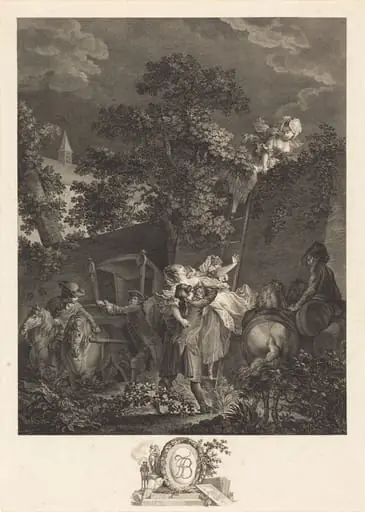
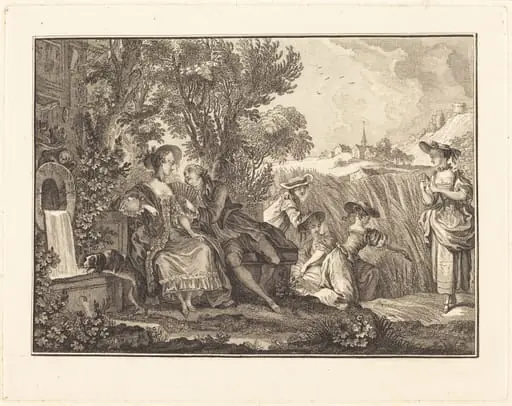
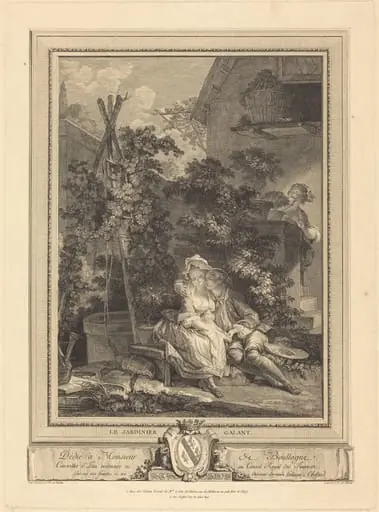
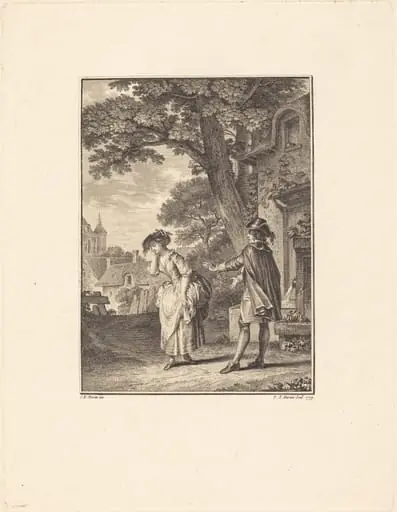
Philippe Trière’s 1786 print titled Lison dormait is an etching and engraving that captures a quiet rural tableau. Executed on paper, the work measures the modest dimensions typical of 18th‑century French prints and presents a scene of everyday life with a calm, domestic atmosphere.
Subject & Meaning
The composition shows a young woman reclining against a bundle of hay, dressed in a long gown and hat, with a basket at her side. A gentleman in contemporary attire holds a door ajar while extending a hand toward her, and nearby two children and a dog add to the domestic setting. The scene suggests a moment of repose and familial intimacy within a countryside environment.
Technique & Style
Trière combined etching with engraving, using the former for broader tonal areas and the latter for finer line work and detail. The interplay of light and shadow is rendered through delicate cross‑hatching, while the figures are delineated with precise, controlled lines that convey both texture—such as the straw and clothing—and the softness of the surrounding landscape.
Context
Created in the late eighteenth century, the print reflects the period’s interest in genre scenes that idealized rural life. Although predating the Romantic movement, its emphasis on simple, bucolic subject matter anticipates later artistic preoccupations with nature and the everyday, aligning it with contemporary French print traditions that celebrated domestic virtue.
History & Provenance
The work is known from catalogues of Trière’s oeuvre and has appeared in several collections of French prints from the 1780s. No specific ownership record beyond its inclusion in museum holdings of 18th‑century graphic art is documented, indicating it has circulated primarily within scholarly and institutional contexts.
Artist & collection