Artwork
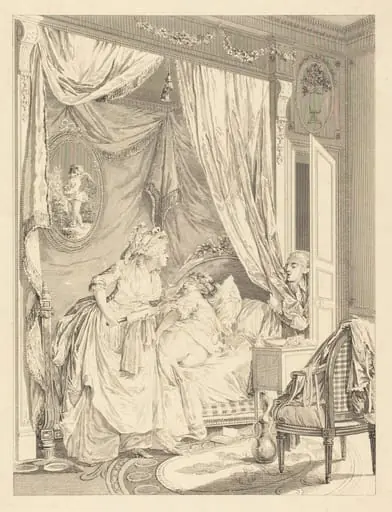
La gageure des trois commeres: La servante
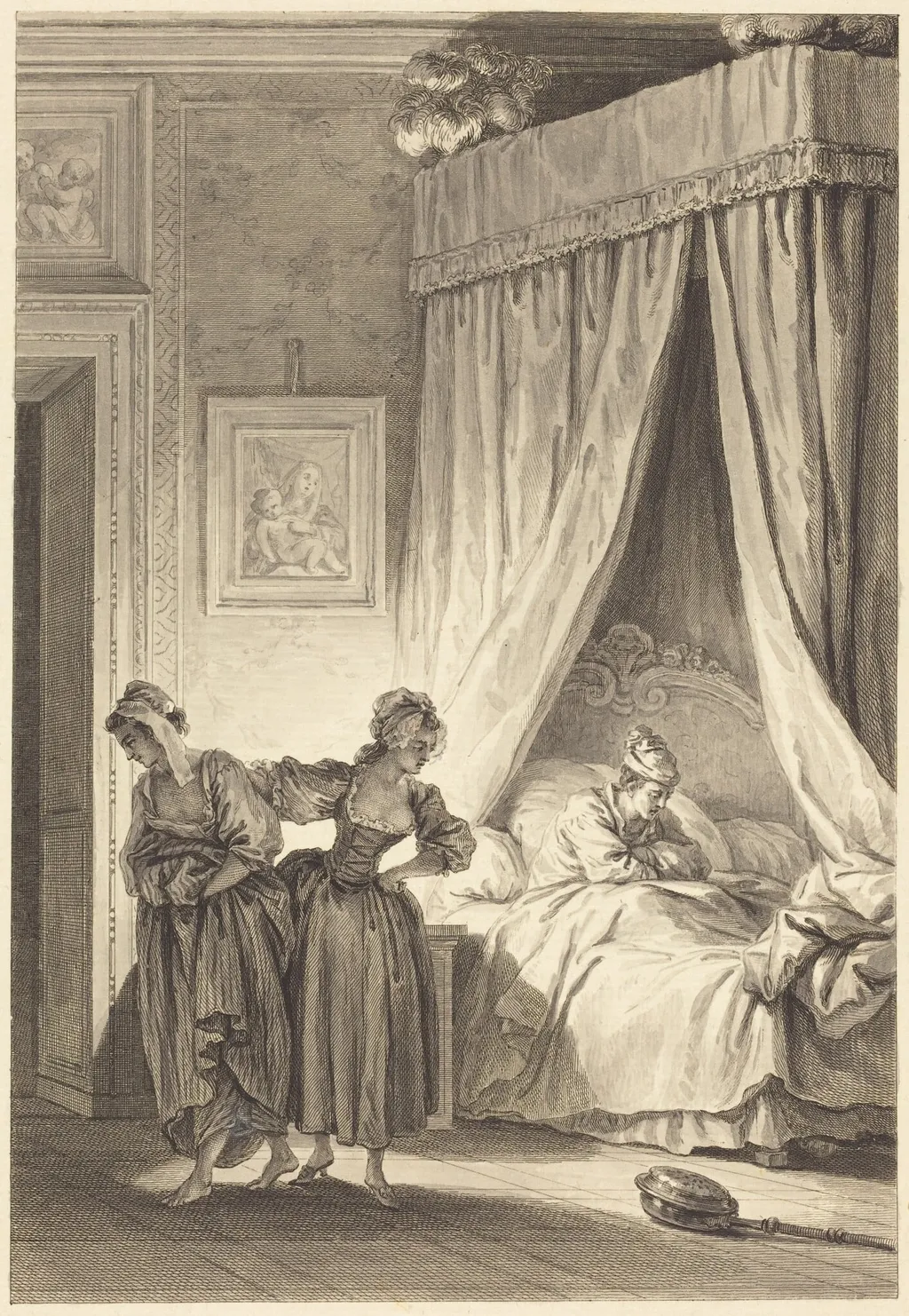
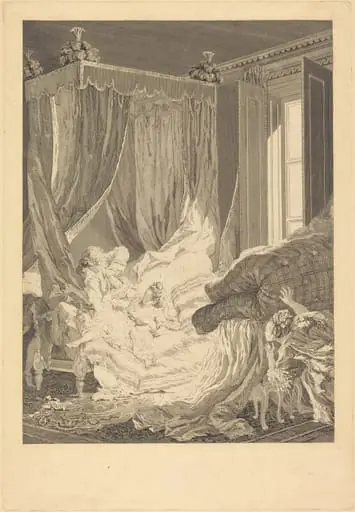
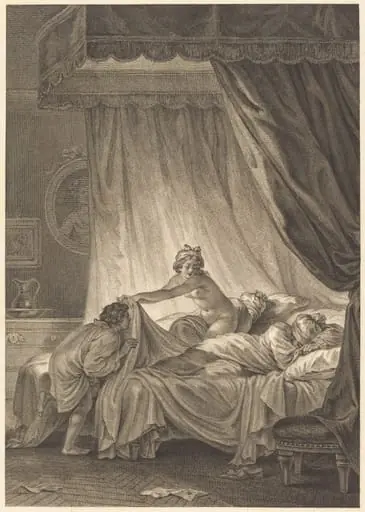
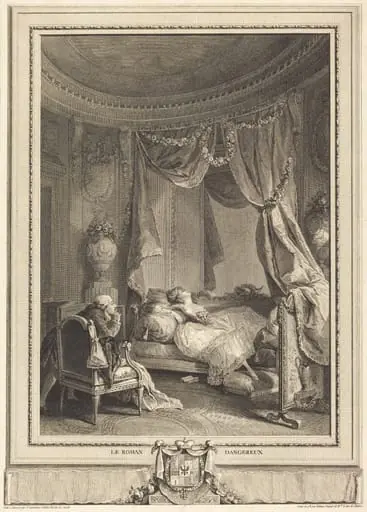
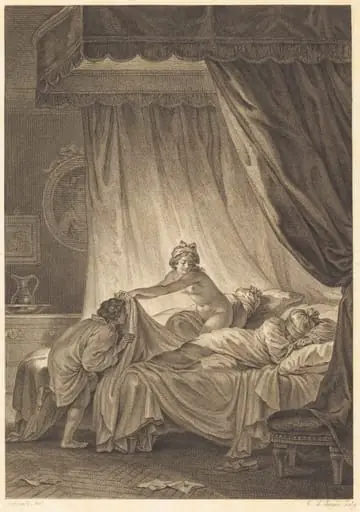
La gageure des trois commeres: La servante is an ink print by the Romanticist artist Philippe Triere. It dates from 1786 and is held in the collection of the National Gallery of Art. Philippe Trière’s 1786 print, titled *La gageure des trois commères: La servante*, is an etching executed with touches of China ink.
About this work
Overview
Philippe Trière’s 1786 print, titled *La gageure des trois commères: La servante*, is an etching executed with touches of China ink. The composition depicts an interior scene populated by three women within an opulently appointed bedroom, rendered in fine linear detail characteristic of late‑18th‑century French printmaking.
Subject & Meaning
The image presents a domestic tableau: a standing figure adjusts the dress of a second woman, while a third reclines on the bed, gazing downward. The presence of a hat and fan on the floor, together with the intimate gestures, suggests a moment of private conversation or a modest intrigue among the three companions.
Technique & Style
Trière employed delicate, closely spaced lines to model the folds of fabric, the contours of faces, and the ornamental architecture of the room. Select areas are deepened with China ink, creating contrast and emphasizing texture. This approach aligns with the prevailing French etching practice of the 1780s, which favored precise line work and subtle tonal modulation.
History & Provenance
Created in 1786, the print belongs to the later period of Trière’s career, when he focused on genre scenes and domestic interiors. While specific ownership records are scarce, the work has circulated among collections of French 18th‑century prints and appears in catalogues of Trière’s oeuvre as an example of his narrative etchings.
Artist & collection