Artwork
River Bank with Cattle
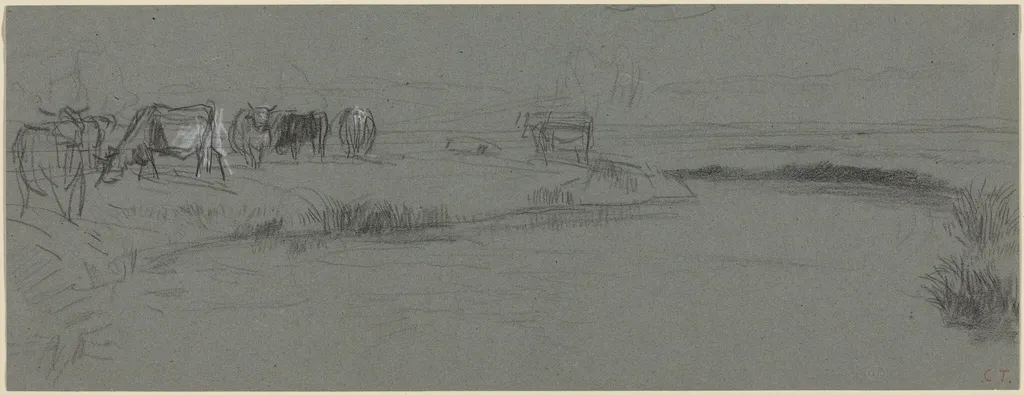
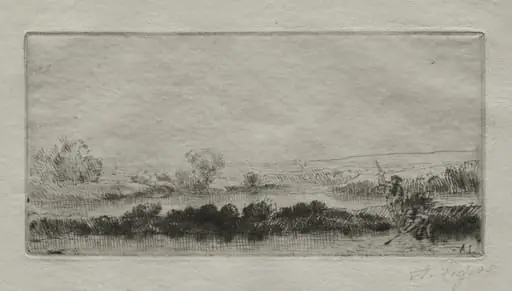
River Bank with Cattle is a chalk drawing by the Impressionist artist Constant Troyon. It dates from 1850 and is held in the collection of the National Gallery of Art. Created circa 1850, this drawing presents a tranquil riverside scene populated by a small herd of cattle.
About this work
Overview
Created circa 1850, this drawing presents a tranquil riverside scene populated by a small herd of cattle. Executed in monochrome chalk on a blue-woven paper support, the composition balances the figures against a gently undulating landscape, emphasizing the quiet rhythm of rural life. The work exemplifies the artist’s interest in depicting everyday agricultural settings.
Subject & Meaning
The image focuses on domesticated cattle gathered near a water’s edge, suggesting a moment of rest during grazing. By placing the animals within a natural environment, the drawing conveys a harmonious relationship between livestock and the countryside, reflecting mid‑nineteenth‑century French attitudes toward pastoral simplicity and the value of agrarian labor.
Technique & Style
Rendered with black and white chalk, the artist exploits the medium’s capacity for tonal variation, using delicate hatching and cross‑hatching to model form and suggest atmospheric depth. The blue wove paper provides a subtle tonal ground that enhances the contrast of the chalk, while the loose yet controlled line work aligns the piece with the realist tendencies of the Barbizon circle.
History & Provenance
The drawing was produced by Constant Troyon, a French painter linked to the Barbizon school, during a period when he was transitioning from pure landscape work to a greater emphasis on animal subjects. Though specific ownership records are limited, the piece is documented as part of Troyon’s oeuvre that marks his mid‑career shift toward depicting livestock.
Artist & collection

Artist
Constant Troyon (French pronunciation: ; August 28, 1810 – February 21, 1865) was a French painter of the Barbizon school.

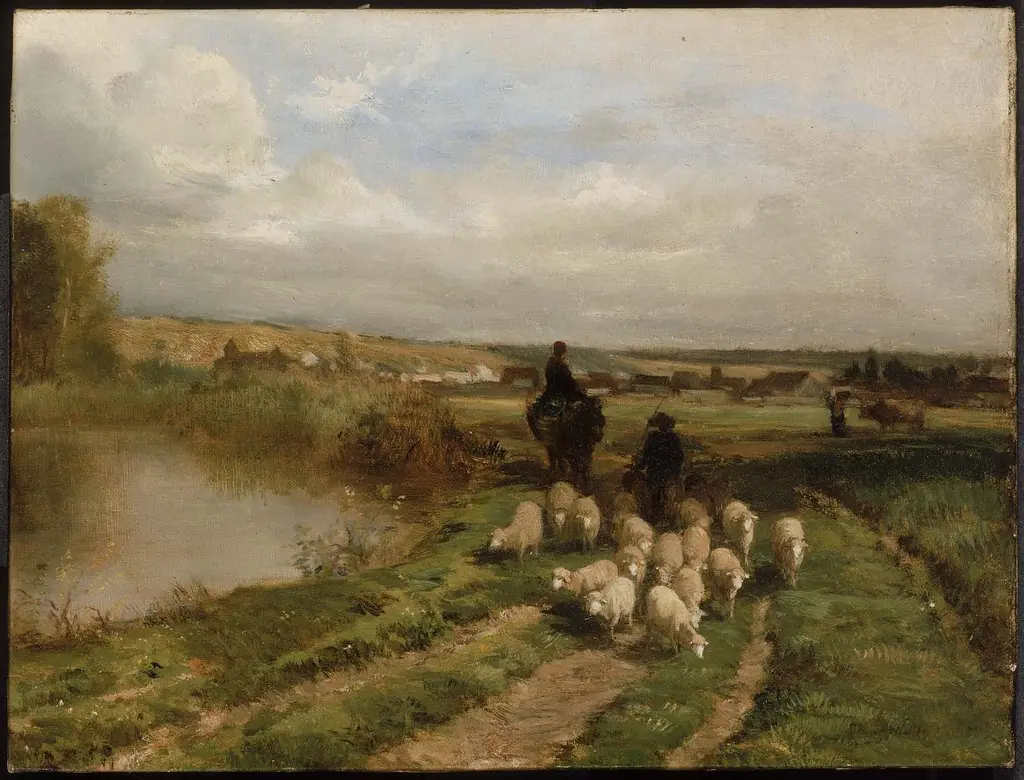
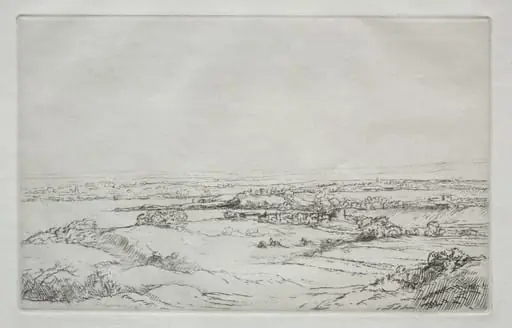 The Meadow near the Lake (La Plaine Près Du Lac)
 A View near Lowther
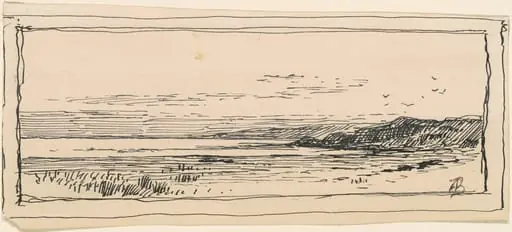 The Shore
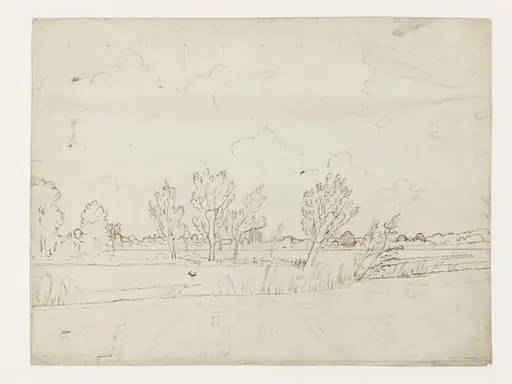 Water meadows near Salisbury
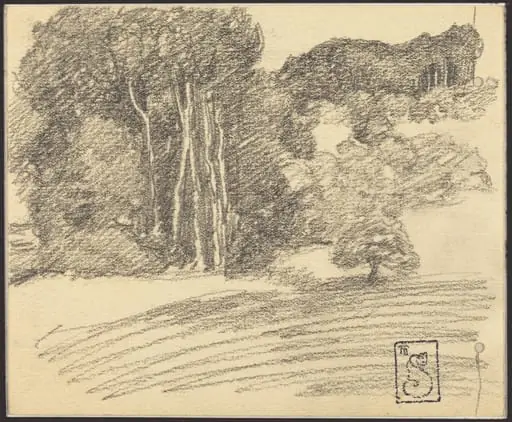 The Forest at Courdemanche
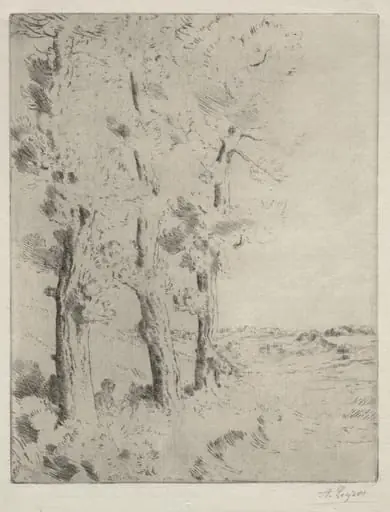 The Reader: The Lecture under the Trees
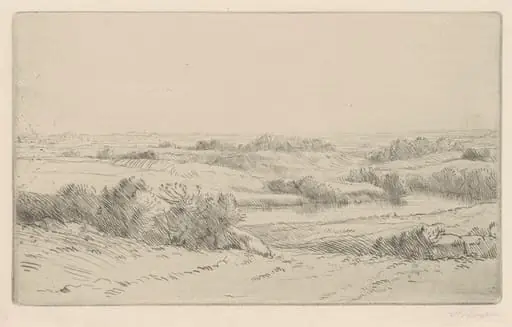 Banks of the Yanne (Les Bord de la Yanne)
 Abandoned Village
 Landscape near Vourlis
 The Abandoned Village
 Landscape I
 Landscape with Peat-bog: In the Marsh