Artwork
The Forest at Courdemanche
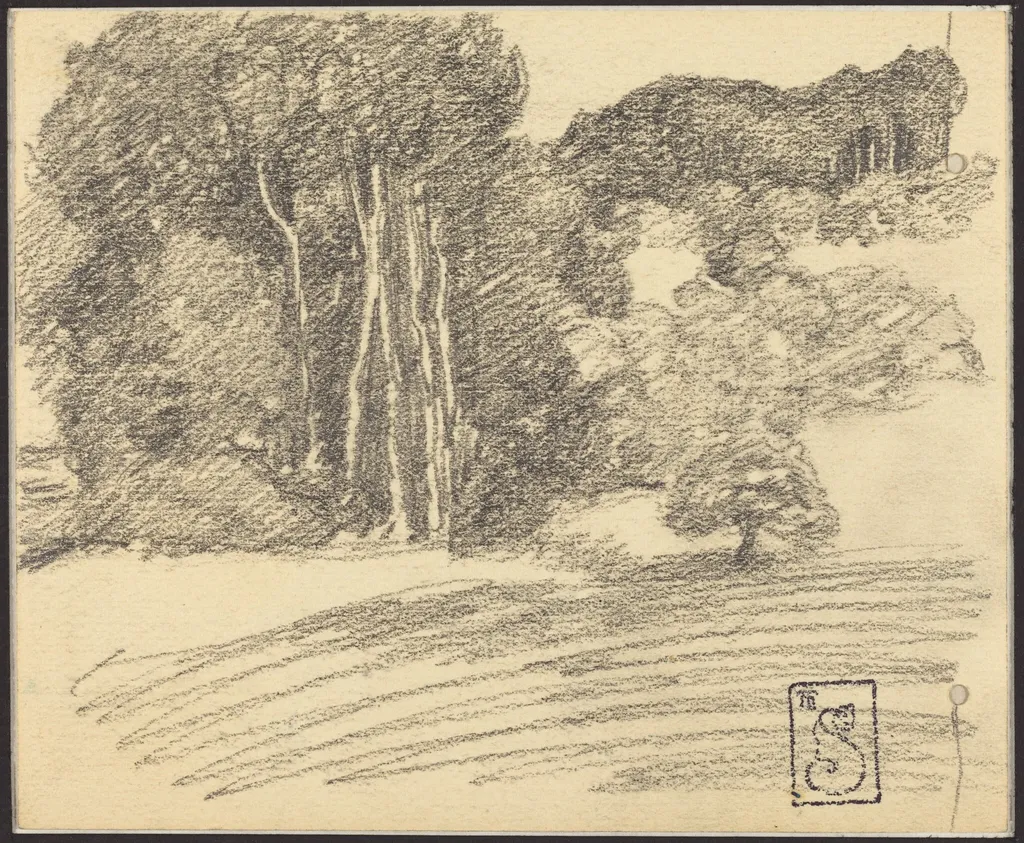
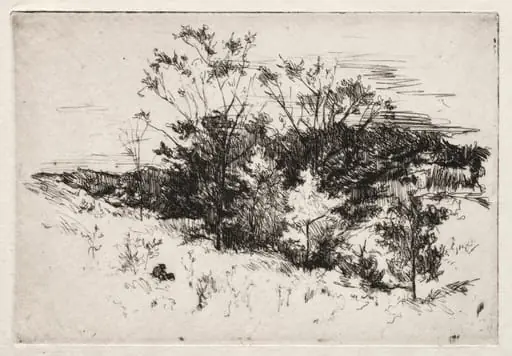
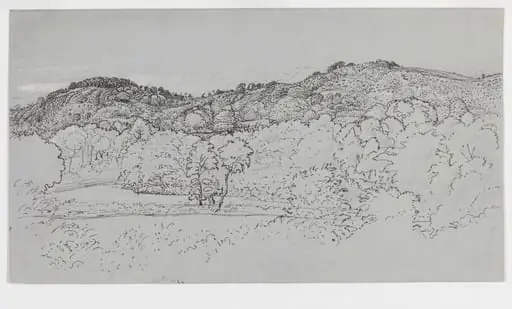
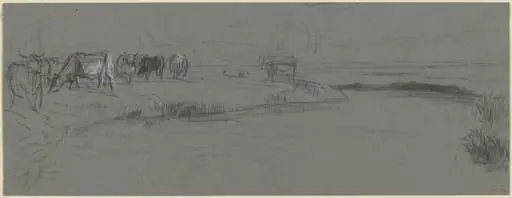
The Forest at Courdemanche is a graphite drawing by the Impressionist artist Théophile Alexandre Steinlen. It dates from 1895 and is held in the collection of the National Gallery of Art.
About this work
Overview
Though best known for his political illustrations, Steinlen turned to natural landscapes in this work, capturing a quiet woodland scene with minimal means.
Created in 1895, *The Forest at Courdemanche* is a graphite drawing on wove paper by Théophile Alexandre Steinlen. Though best known for his political illustrations, Steinlen turned to natural landscapes in this work, capturing a quiet woodland scene with minimal means. The piece exemplifies his ability to convey atmosphere through subtle tonal variations and loose, expressive mark-making, avoiding ornamentation in favor of direct observation.
Subject & Meaning
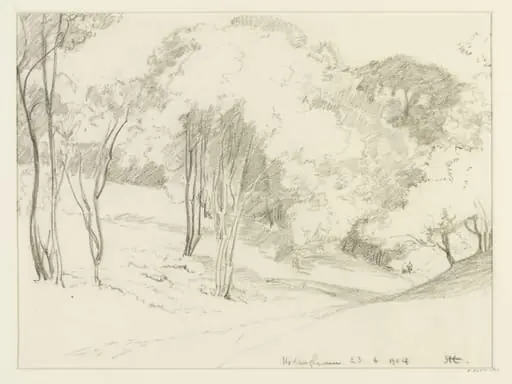
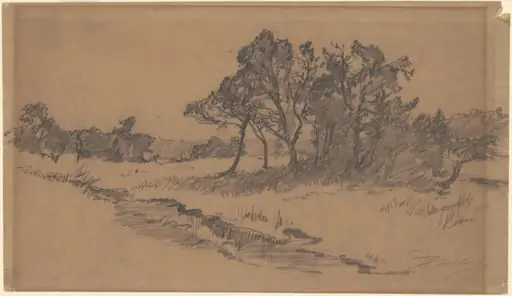
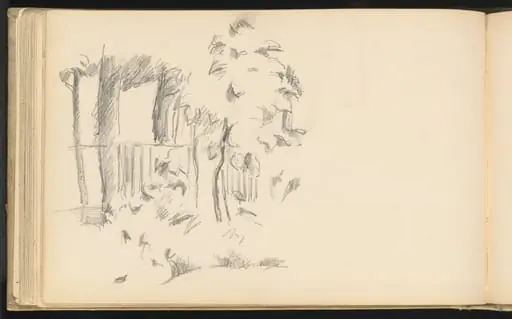
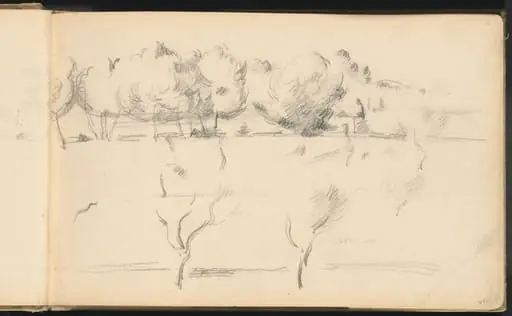
The drawing depicts a secluded forest path, lined with slender trees and undergrowth rendered in fine, rhythmic strokes. There is no human presence, suggesting a moment of stillness rather than narrative. The winding trail invites the viewer’s gaze inward, emphasizing solitude and the quiet rhythm of nature. Steinlen’s choice of subject reflects a personal retreat from his public political work, focusing instead on the meditative qualities of the natural world.
Technique & Style
Steinlen employed graphite to build texture through layered, uneven strokes, creating a sense of depth without shading or blending. The ground is suggested by dense, short marks, while the trees are defined by sparse, vertical lines that contrast with the lighter paper. Shadows fall diagonally across the path, enhancing spatial depth. The sketchlike quality—intentionally rough and unpolished—aligns with a direct, observational approach rooted in drawing as a record of perception.
History & Provenance
The drawing was made during a period when Steinlen was increasingly drawn to landscapes, following his earlier focus on urban life and social commentary. It likely originated from sketches made during walks in the Courdemanche region of France. While its early ownership is undocumented, it entered institutional collections in the 20th century as interest grew in Steinlen’s non-commercial works, distinguishing them from his widely circulated posters and prints.
Context
In the mid-1890s, French artists were exploring natural subjects beyond academic tradition, influenced by Japanese prints and the rise of plein air practices. Steinlen’s drawing aligns with this trend, though it lacks the polish of Impressionist landscapes. Instead, it shares affinities with the introspective drawings of contemporaries like Degas or Toulouse-Lautrec, emphasizing structure and mood over finish, and reflecting a broader shift toward personal expression in graphic art.
Legacy
Though less known than his posters, *The Forest at Courdemanche* illustrates Steinlen’s range as a draftsman and his commitment to quiet, unadorned observation. It contributes to a broader understanding of his artistic practice beyond political illustration, revealing an artist attuned to the subtleties of light and form in nature. The work remains a quiet example of how modern draftsmen redefined realism through immediacy and restraint.
Artist & collection
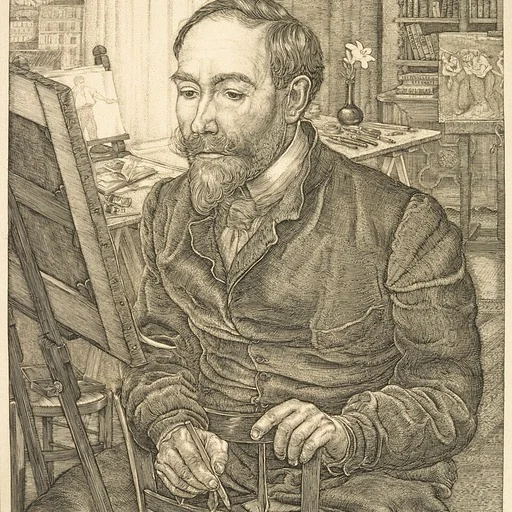
Artist
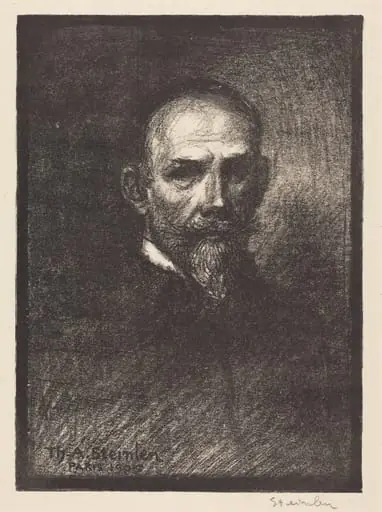
Théophile Alexandre Steinlen (November 10, 1859 – December 13, 1923), was a Swiss-born French Art Nouveau painter and printmaker. He was politically engaged and collaborated with the anarchist and socialist press.

![Trees [verso], by David Cox](https://artifactworldgallery.com/img/david-cox--trees-verso--2f59ba73e183df09-w320.webp)