Artwork
Neitsyt Maria, Jeesus-lapsi ja lahjoittajat
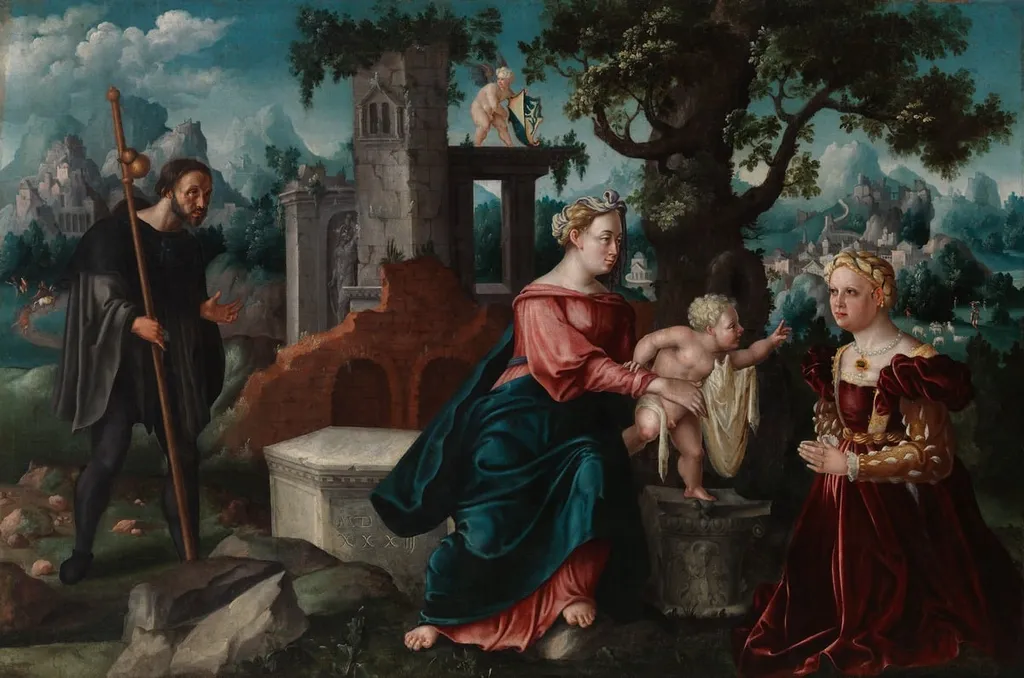
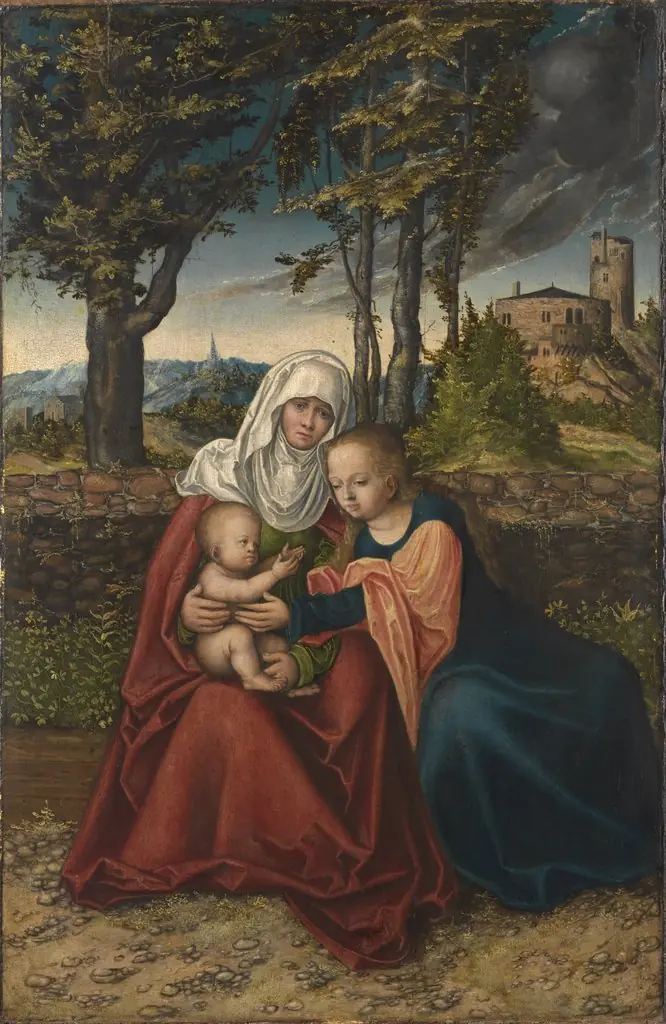
Neitsyt Maria, Jeesus-lapsi ja lahjoittajat is an unspecified painting by Unknown. It is held in the collection of the Finnish National Gallery. This painting depicts the Virgin Mary with the infant Jesus and two attendants in a rugged, atmospheric landscape.
About this work
Overview
Light and shadow are carefully modulated to model forms and deepen spatial depth, suggesting a quiet reverence for the sacred moment.
This painting depicts the Virgin Mary with the infant Jesus and two attendants in a rugged, atmospheric landscape. The figures are arranged in a quiet, intimate group against a backdrop of ancient ruins and dense vegetation. The scene blends naturalism with symbolic elements, creating a contemplative mood. Light and shadow are carefully modulated to model forms and deepen spatial depth, suggesting a quiet reverence for the sacred moment.
Subject & Meaning
The central figures represent the Virgin Mary and the Christ Child, surrounded by two witnesses: a standing female figure, possibly a saint or donor, and a bearded man, likely a shepherd or wise man. The presence of ruins and a statue-topped tree may allude to the decline of the old order and the arrival of a new spiritual era. The calm demeanor of Mary and the reverent posture of the others convey a moment of divine stillness amid decay.
Technique & Style
The artist employs chiaroscuro to define volume and spatial relationships, with soft transitions between light and shadow enhancing the three-dimensionality of the figures. The landscape is rendered with attention to geological detail and organic textures, while the figures are rendered with restrained elegance. The composition avoids dramatic action, favoring quietude and symbolic harmony between humanity and the natural world.
History & Provenance
The painting’s origin is tied to late medieval or early Renaissance devotional traditions, likely commissioned for private worship. Its style suggests influence from Northern European art, with attention to naturalistic detail and symbolic landscape elements. While its exact provenance remains unverified, its iconography aligns with regional altarpieces from the 15th century, often created for domestic or monastic settings.
Context
Created during a period when religious imagery increasingly incorporated earthly settings, this work reflects a shift toward integrating sacred narratives into tangible, lived environments. The ruins symbolize the obsolescence of pagan antiquity, while the lush, untamed landscape suggests divine presence in nature. Such compositions responded to growing devotional practices emphasizing personal connection with holy figures.
Legacy
The painting exemplifies a transitional phase in religious art, where emotional restraint and symbolic landscape became vehicles for spiritual contemplation. Its quiet composition influenced later devotional works that prioritized introspection over spectacle. Though not widely known today, it stands as a quiet testament to the fusion of naturalism and sacred symbolism in pre-modern European painting.
Artist & collection

 Domestic Scene
 Giacomo and Cardinal Marco, investing Andrea, Abbot of San Zeno, with his Benefice
 The Nymph of Fontainebleau
 Portrait of a Woman
 Madonna and Child with Saints in the Enclosed Garden
 Venus and Minerva
 Family Group of Four on Sofa
 Wall painting from Room H of the Villa of P. Fannius Synistor at Boscoreale
 Das Urteil Salomonis
 The Virgin Mary and Child, the Infant St.John and two angels
 Rest on the Flight into Egypt
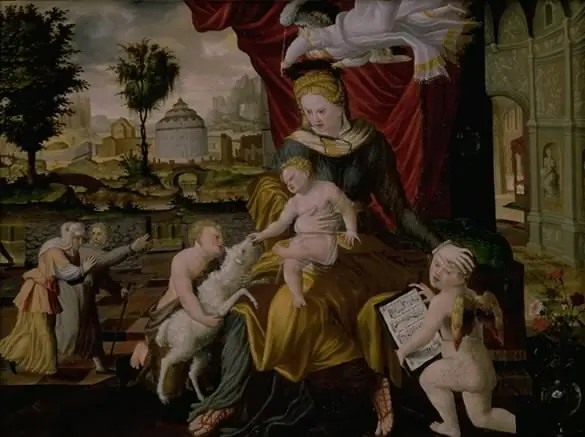 The Virgin Mary and Child, the Infant St.John and two angels
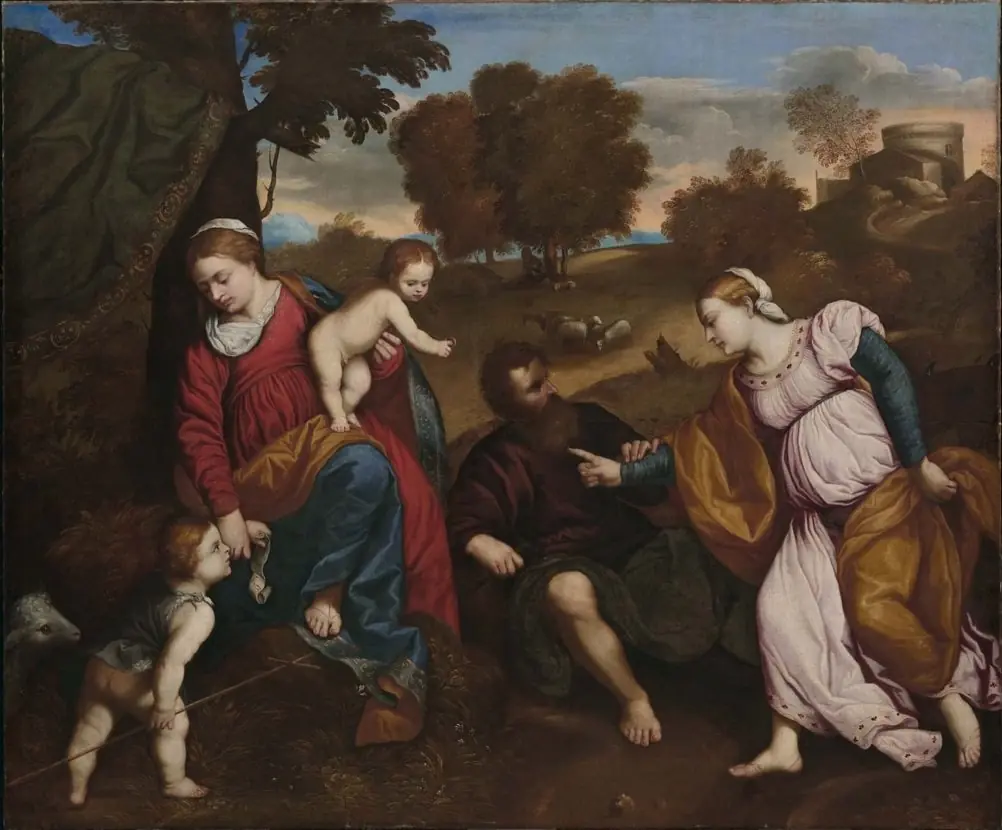 The Mystic Marriage of Saint Catherine
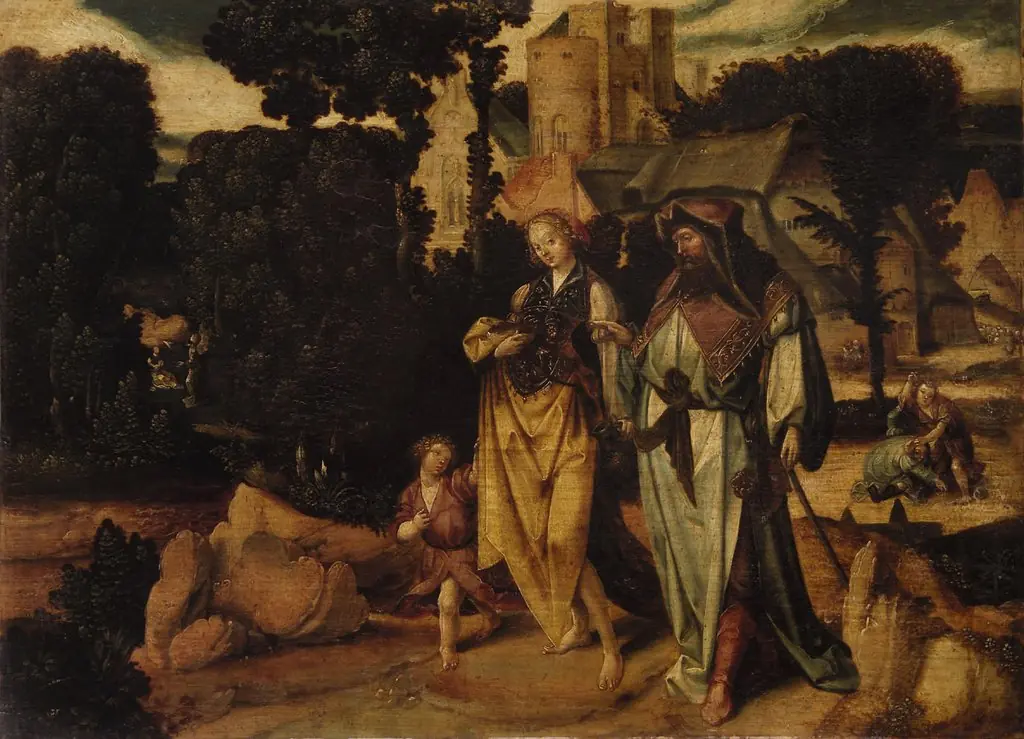 Rejection of Hagar
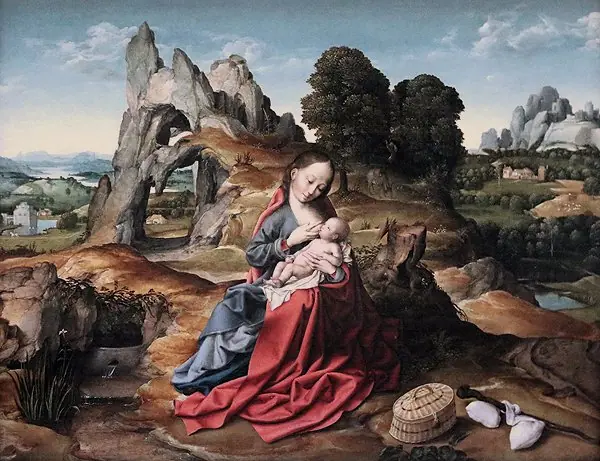 Rest on the flight to Egypt
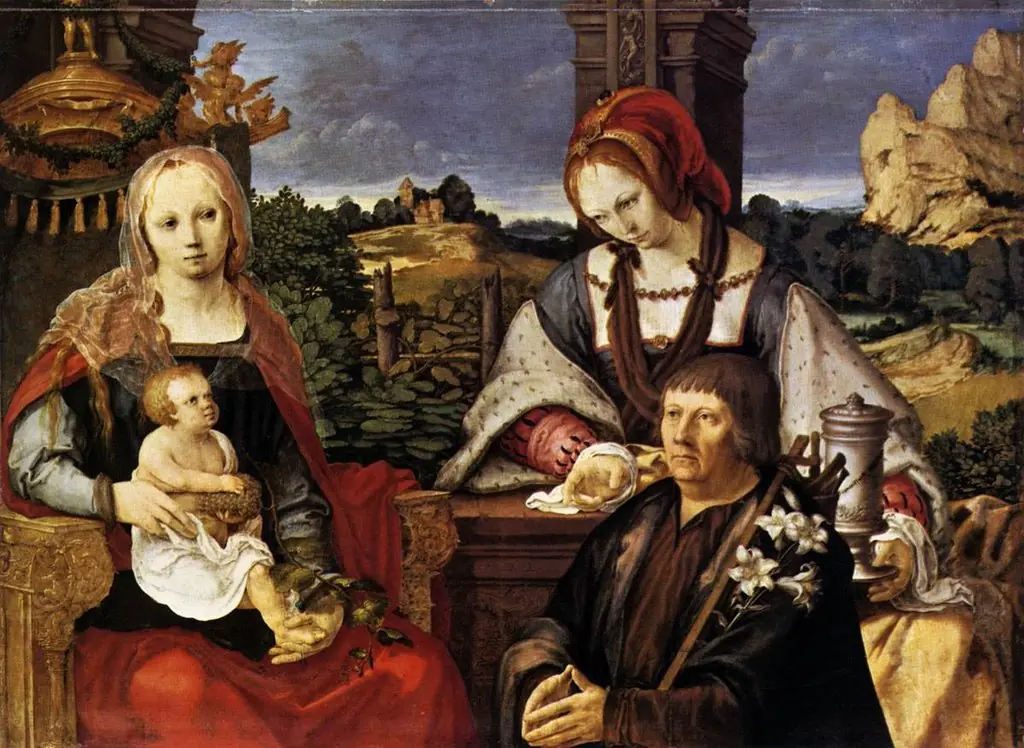 Mary with Child, St. Maria Magdalena and founder (separate outside, Inv. No. 7713)
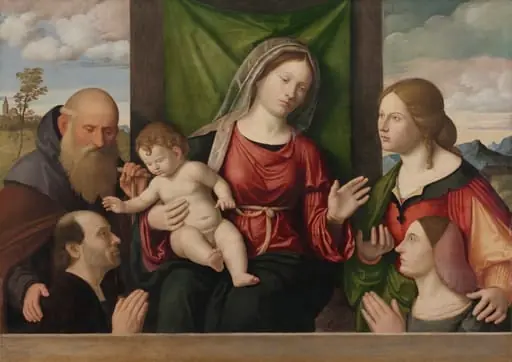 Virgin and Child with Saints and Donors
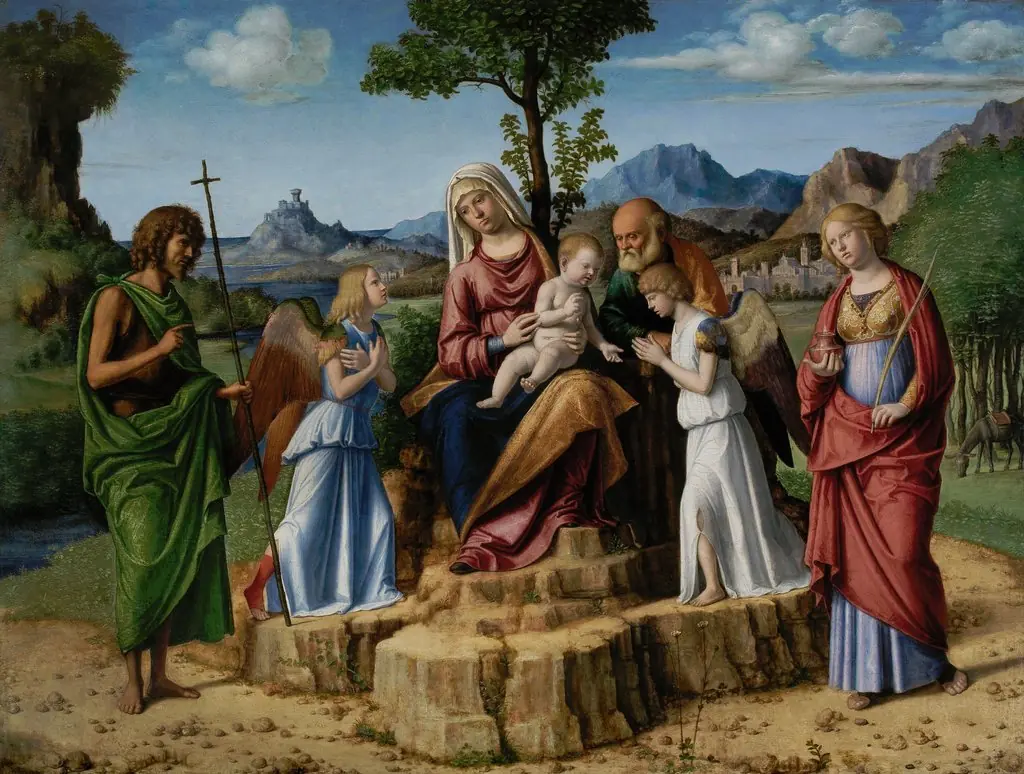 Rest on the Flight into Egypt
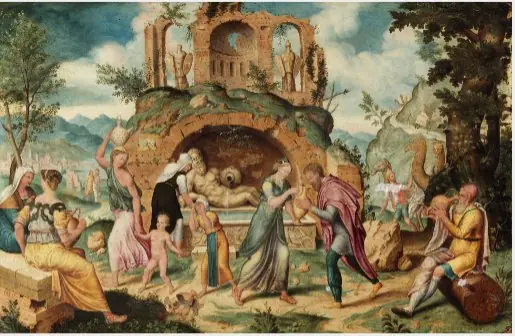 The Meeting of Rebecca and Abraham's Servant at the Well of Nahor
 The Virgin and Child with Saint Anne