Artwork
The Meeting of Rebecca and Abraham's Servant at the Well of Nahor
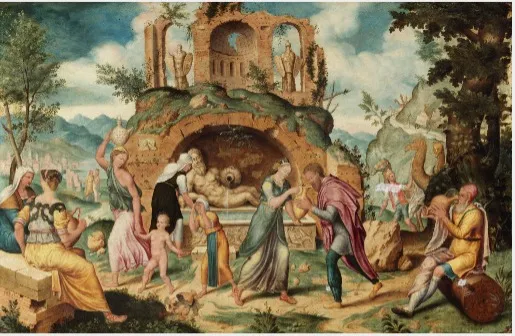
The Meeting of Rebecca and Abraham's Servant at the Well of Nahor is an oil painting by the Mannerist artist Unknown. It dates from 1564 and is held in the collection of the National Gallery of Ireland. The work depicts a biblical encounter at a well, featuring a group of figures gathered around a stone structure with arches.
About this work
Overview
The work depicts a biblical encounter at a well, featuring a group of figures gathered around a stone structure with arches. Central to the scene are a man cloaked in red and a woman in a blue dress, positioned near the well’s edge. The composition extends into a landscape of trees and distant mountains, rendered in muted greens, browns and blues that convey a tranquil atmosphere.
Subject & Meaning
The painting illustrates the moment when Rebecca meets Abraham’s servant at Nahor’s well, a narrative from Genesis in which the servant seeks a wife for Isaac. The interaction between the red‑cloaked man and the blue‑dressed woman highlights themes of hospitality, destiny, and divine guidance, emphasizing the calm deliberation of the encounter.
Technique & Style
Executed in oil on canvas, the artist employs a restrained palette of earth tones punctuated by the vivid red and blue of the principal figures. Fine brushwork renders the architectural details of the well and arches, while broader strokes suggest the surrounding foliage and distant hills, creating depth and a measured, serene mood.
History & Provenance
The painting’s provenance is not documented in the supplied information, and no specific date, artist, or collection history is provided. Consequently, its acquisition history and exhibition record remain unknown pending further archival research.
Context
The scene draws from a well‑known biblical episode that has been a frequent subject in Western art, reflecting the 19th‑century interest in narrative religious themes. The inclusion of architectural elements and a naturalistic landscape aligns the work with academic traditions that favored historical accuracy and moral illustration.
Legacy
Without identified artist or exhibition data, the painting’s influence on subsequent works cannot be assessed. Nonetheless, its careful rendering of a classic scriptural moment contributes to the broader visual tradition of biblical storytelling in oil painting.
Artist & collection

 Domestic Scene
 Giacomo and Cardinal Marco, investing Andrea, Abbot of San Zeno, with his Benefice
 The Nymph of Fontainebleau
 Portrait of a Woman
 Madonna and Child with Saints in the Enclosed Garden
 Venus and Minerva
 Family Group of Four on Sofa
 Wall painting from Room H of the Villa of P. Fannius Synistor at Boscoreale
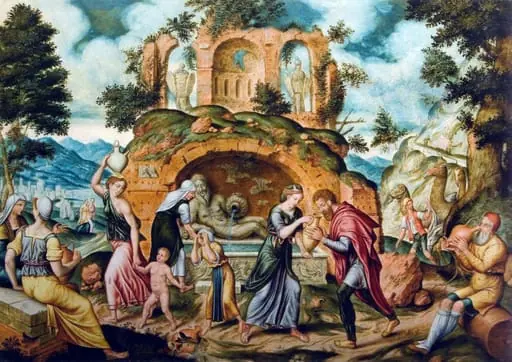 Rebeca la izvor
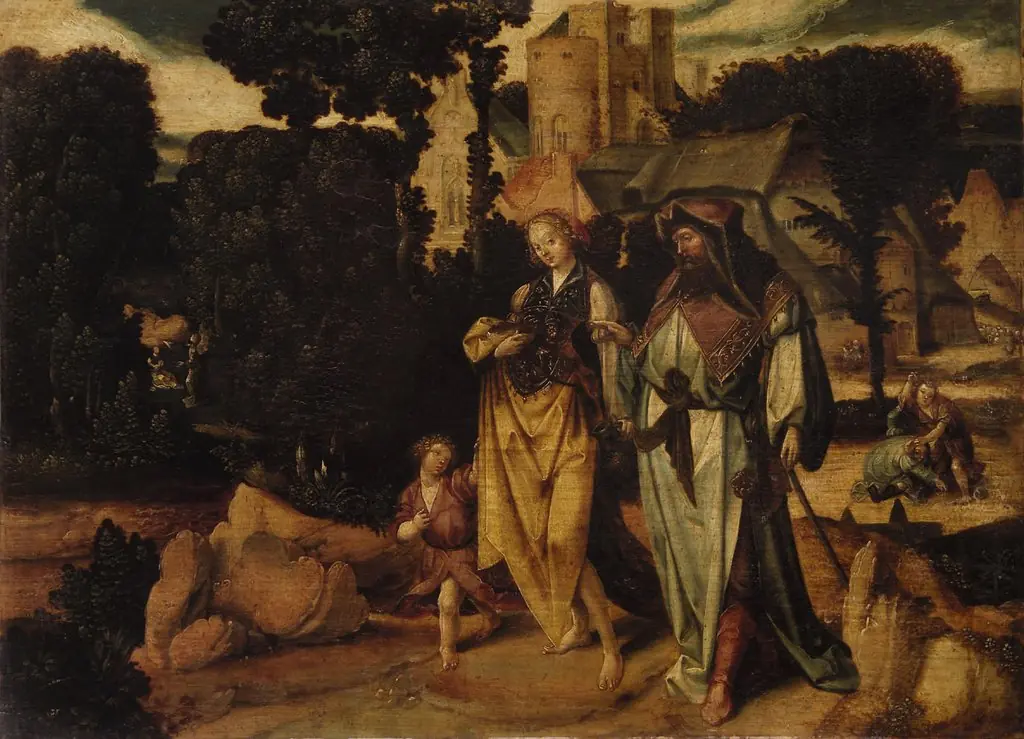 Rejection of Hagar
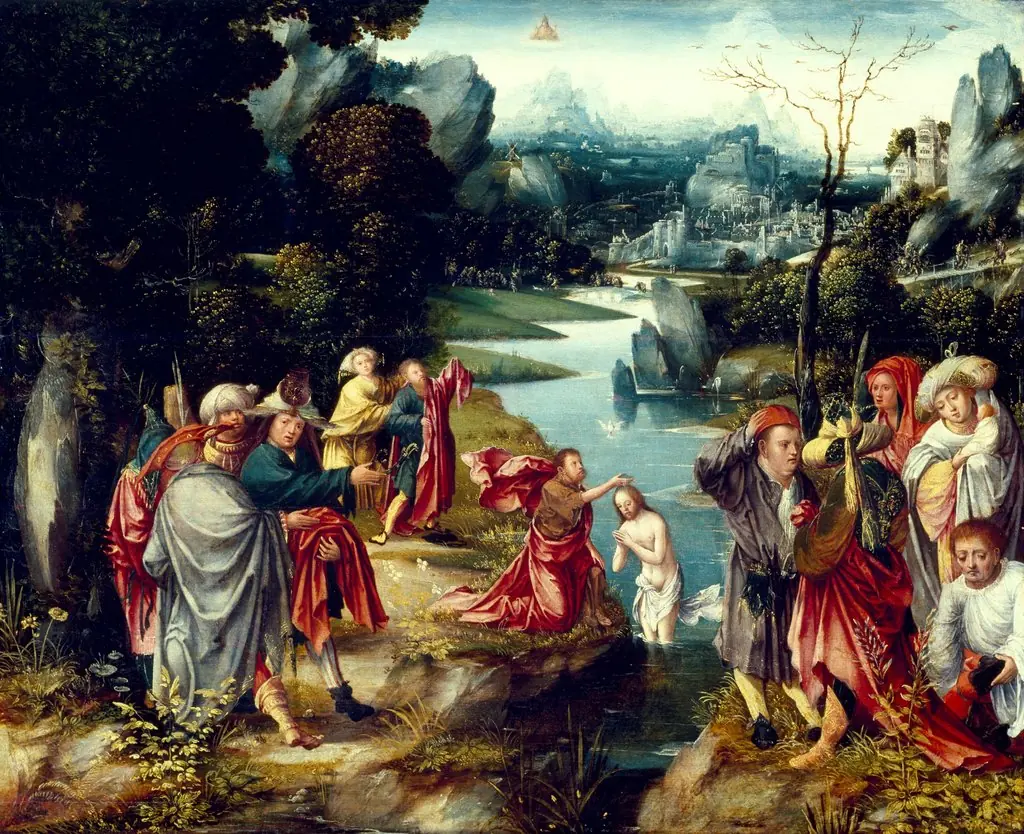 The Baptism of Christ
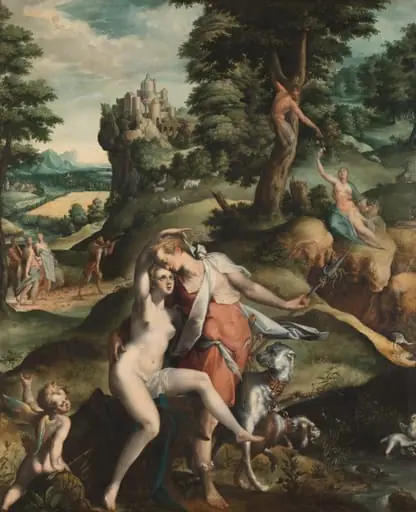 Venus and Adonis
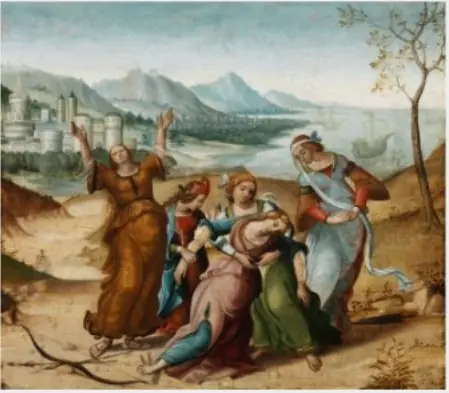 The Death of Eurydice
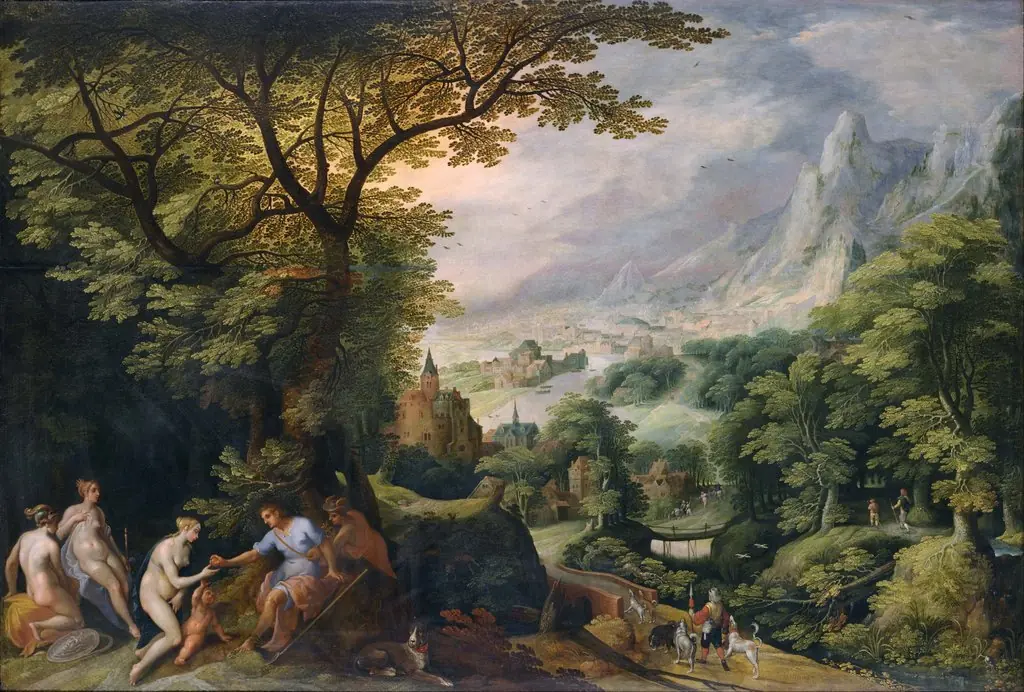 Landscape with the Judgement of Paris
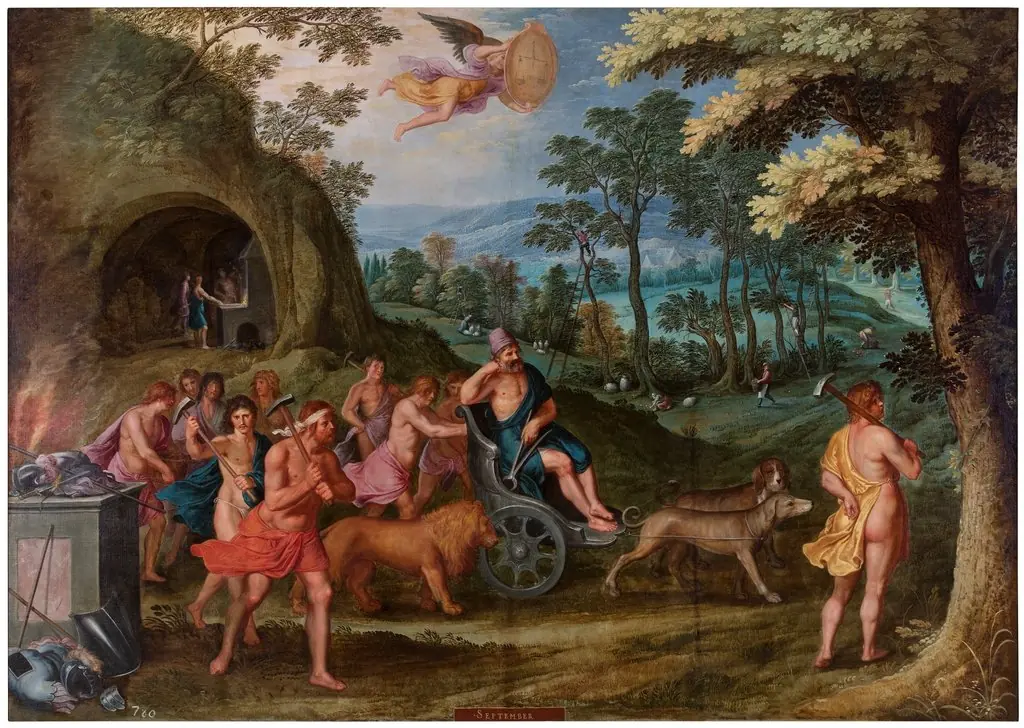 Alegoría del mes de Septiembre con el triunfo de Vulcano y el signo de Libra
 Allegory
 The Apulian Shepherd
 Neitsyt Maria, Jeesus-lapsi ja lahjoittajat
 The Temptation of Saint Jerome