Artwork
Inverary Pier
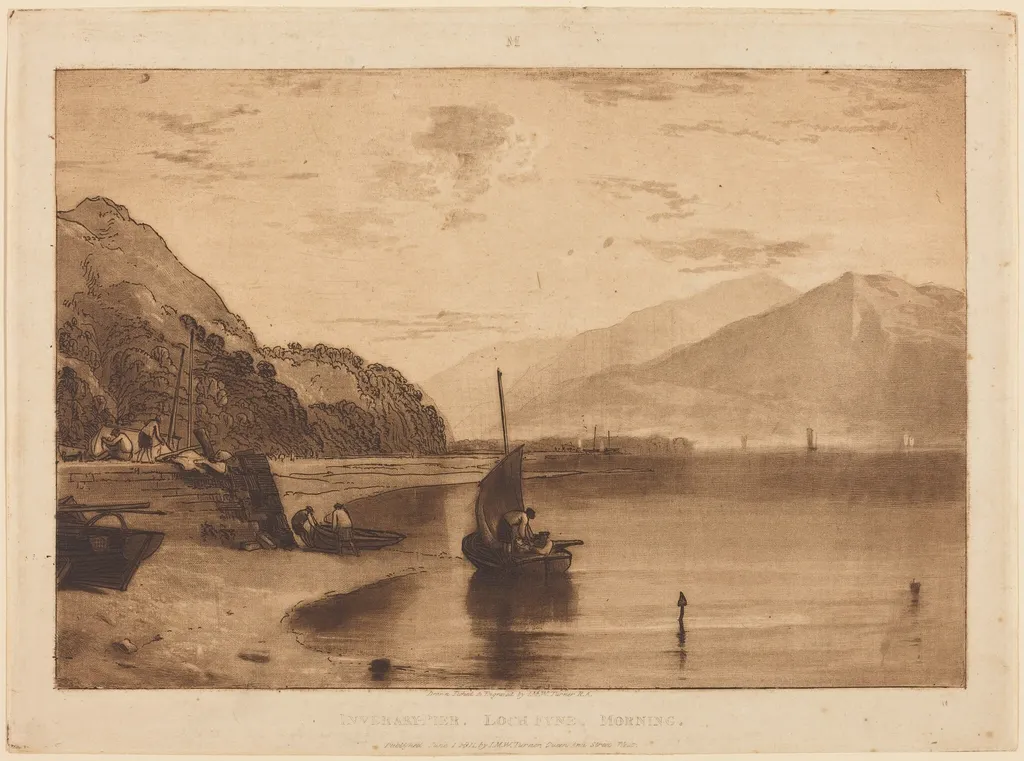
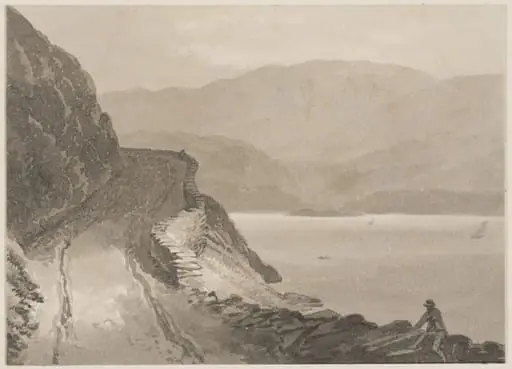
Inverary Pier is an ink print by the Romanticist artist Joseph Mallord William Turner. It dates from 1811 and is held in the collection of the National Gallery of Art.
About this work
Overview
Inverary Pier, produced in 1811, is a print by J. M. W. Turner that combines etching, mezzotint and aquatint techniques. The work depicts a tranquil lakeside scene where a modest pier extends into calm water, framed by distant, mist‑shrouded hills and a line of trees along the shore.
Subject & Meaning
The composition presents a quiet recreation of leisure: a few figures stand near the bank, while two small boats drift, one propelled by a solitary rower. The sparse human presence and gentle atmosphere suggest contemplation of nature’s stillness rather than narrative drama.
Technique & Style
Turner employs a layered approach, using the fine lines of etching for structural detail, mezzotint for rich, velvety shadows, and aquatint to achieve soft tonal washes. This combination creates a delicate balance between precise outlines and atmospheric softness, characteristic of his early landscape experiments.
History & Provenance
Created during Turner’s early career, Inverary Pier reflects his interest in coastal and inland water scenes that would later inform his more ambitious works. The print has been documented in several 19th‑century collections, though its precise ownership trail remains limited in the public record.
Context
The early 1800s saw a rise in printmaking as a means to disseminate landscape imagery to a broader audience. Turner’s use of multiple intaglio processes placed him among innovators who expanded the expressive possibilities of the medium, bridging traditional etching with emerging tonal techniques.
Artist & collection
Artist
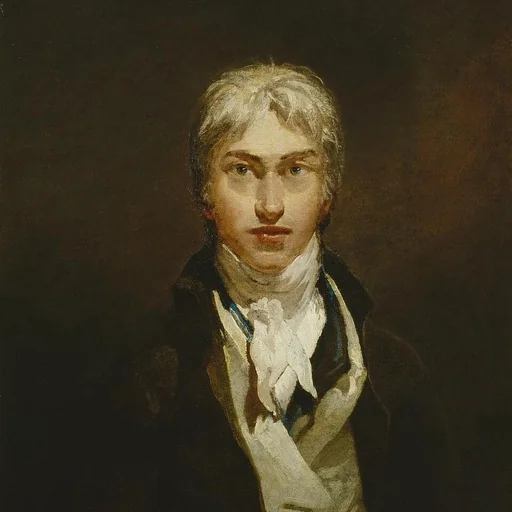
Joseph Mallord William Turner was born in 1775 at Maiden Lane, Covent Garden, where his father kept a barber and wig-making shop.

![Lake Shore, Menaggio [recto], by John Singer Sargent](https://artifactworldgallery.com/img/john-singer-sargent--lake-shore-menaggio-recto--2cbfc8ee4d60729d-w320.webp)