Artwork
Isleworth
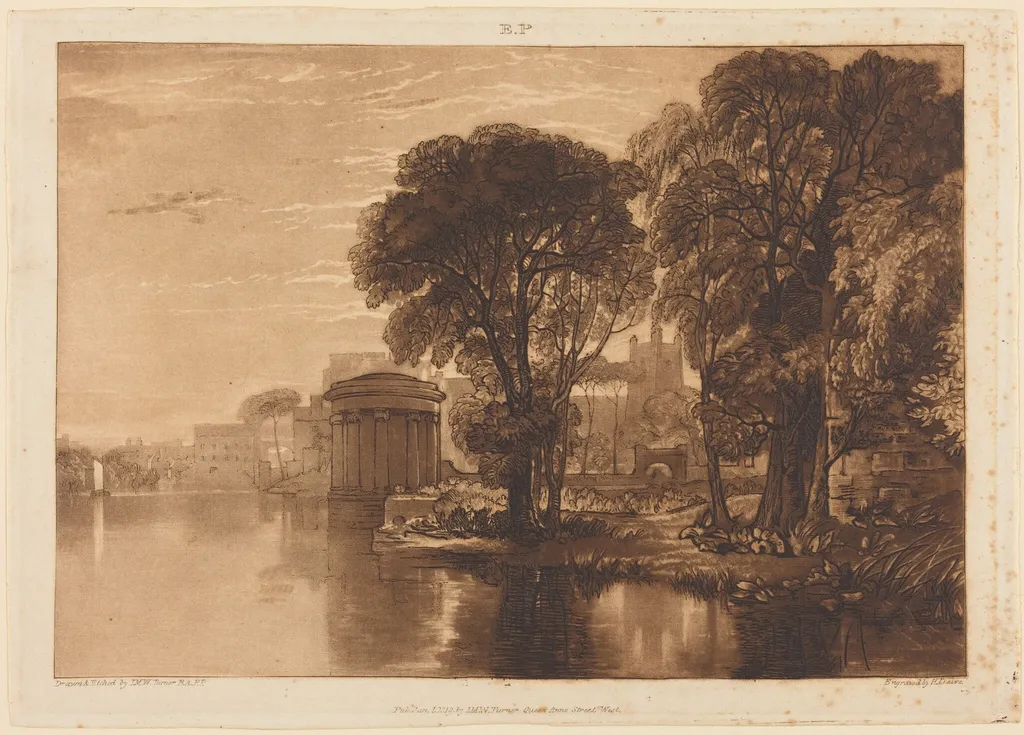
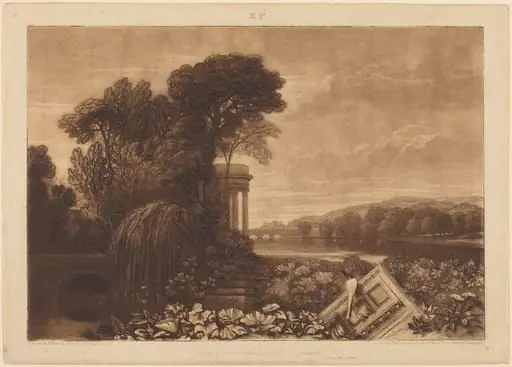
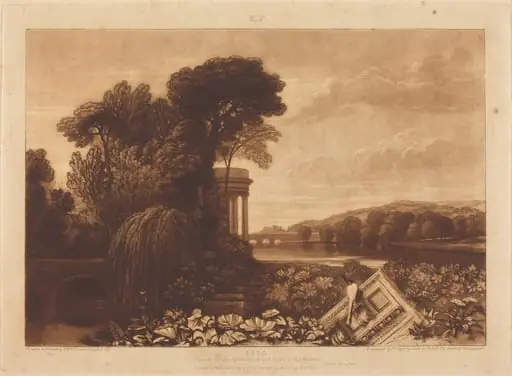
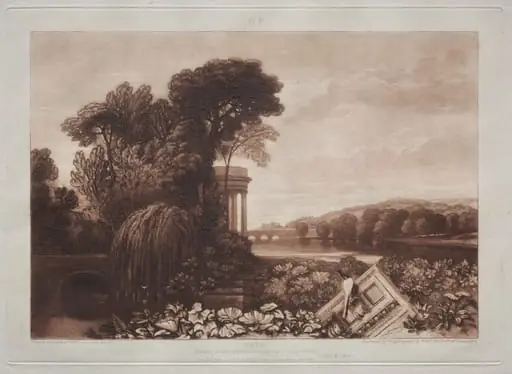
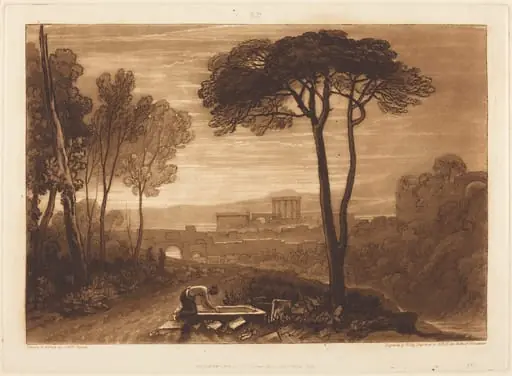
Isleworth is an ink print by the Romanticist artist Joseph Mallord William Turner. It dates from 1819 and is held in the collection of the National Gallery of Art.
About this work
Overview
Isleworth is a print produced in 1819 by the British landscape painter J. M. W. Turner. Executed as a combination of etching and mezzotint, the work measures a modest size typical of Turner’s early printmaking experiments and presents a tranquil riverside setting.
Subject & Meaning
The composition depicts a calm river flanked by tall trees whose branches arch over the water. At the centre stands a small classical temple, its columns reflected in the smooth surface of the river. Distant buildings emerge faintly through the foliage, while a soft, hazy sky completes the serene atmosphere.
Technique & Style
Turner employed etching to outline the architectural and natural elements, then used mezzotint to achieve rich tonal gradations, especially in the foliage and sky. The contrast between the darkened trees and the lighter background highlights the temple, while subtle shading renders the water’s reflective quality.
History & Provenance
Created during Turner’s early period of printmaking, Isleworth reflects his interest in combining atmospheric effects with precise line work. The print has been documented in several 19th‑century catalogues of Turner’s works and remains part of public and private collections that focus on his print output.
Artist & collection
Artist
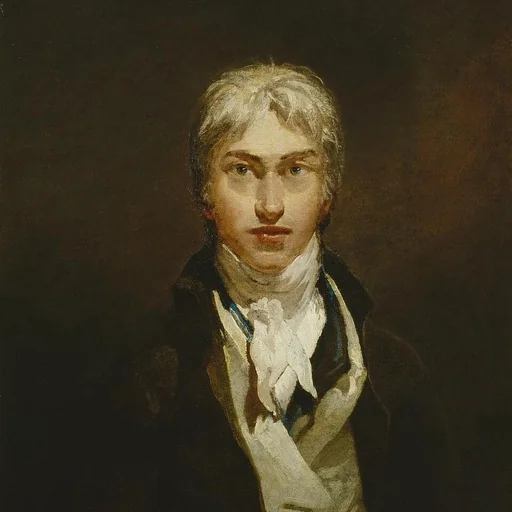
Joseph Mallord William Turner was born in 1775 at Maiden Lane, Covent Garden, where his father kept a barber and wig-making shop.