Artwork
Landscape No. 162 from "Liber Veritatis"
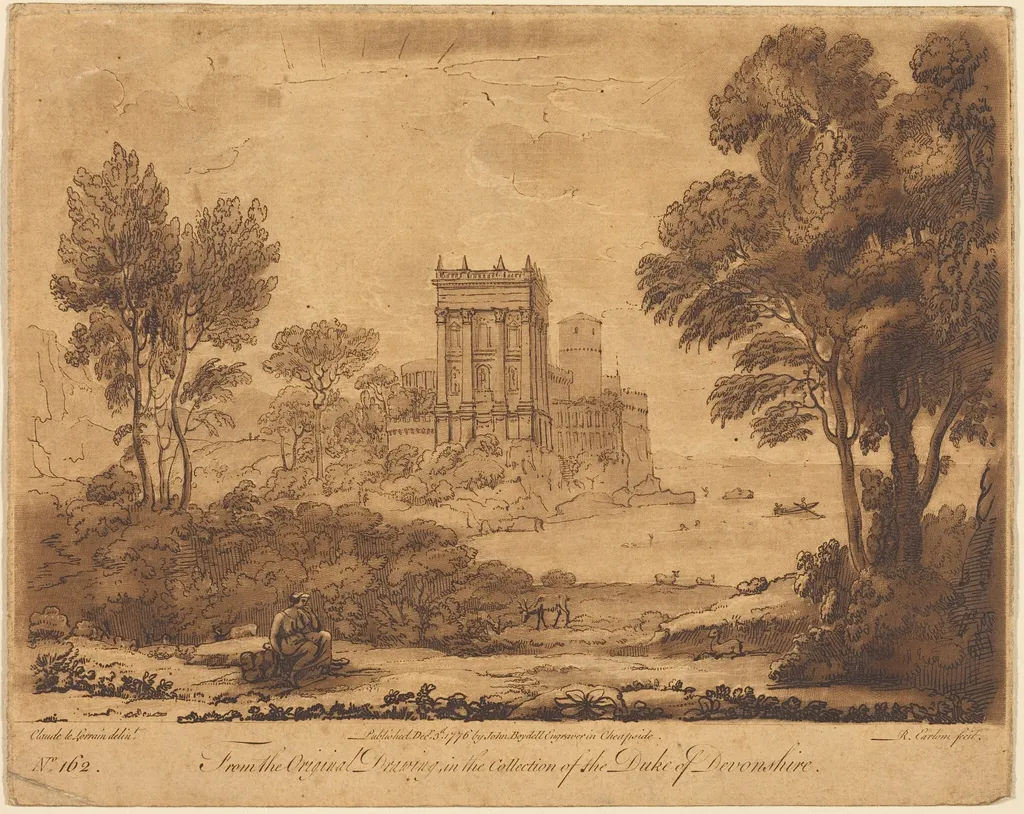
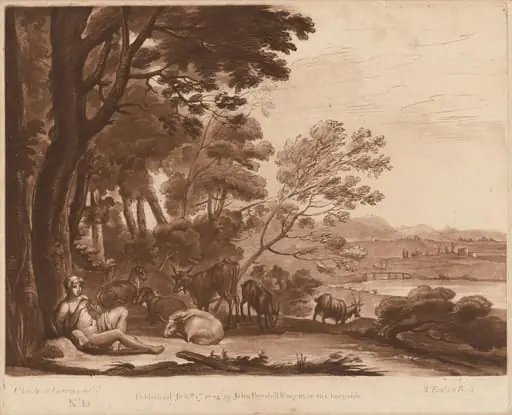
Landscape No. 162 from "Liber Veritatis" is an ink print by the Baroque artist Richard Earlom. It dates from 1782 and is held in the collection of the National Gallery of Art. Landscape No.
About this work
Overview
162 is a print from Richard Earlom’s 1782 series Liber Veritatis, a collection reproducing drawings by Claude Lorrain.
Landscape No. 162 is a print from Richard Earlom’s 1782 series Liber Veritatis, a collection reproducing drawings by Claude Lorrain. Executed in mezzotint and etching, the work captures a tranquil rural scene in monochrome brown tones. The technique allows for subtle gradations of light and shadow, lending the image a soft, atmospheric quality that echoes the original watercolor studies it translates.
Subject & Meaning
The scene depicts a solitary figure seated beside a gentle river, with a classical building—featuring columns and a tower—rising in the distance amid rolling hills and dense foliage. The composition suggests contemplation and harmony between human presence and the natural world, reflecting the idealized landscapes favored by Claude Lorrain. No narrative is overt; instead, mood and balance convey a sense of quiet order.
Technique & Style
Earlom employed mezzotint to achieve smooth tonal transitions, scraping the metal plate to create velvety darks and delicate midtones. Etching added fine linear details, such as tree branches and architectural elements. The brown ink enhances the aged appearance, mimicking the patina of old drawings. This combination allowed Earlom to replicate Claude’s delicate washes and atmospheric perspective with remarkable fidelity.
History & Provenance
The Liber Veritatis was commissioned by the Duke of Devonshire to document Claude Lorrain’s drawings, which were then in his collection. Earlom, a skilled reproductive printmaker, spent years translating 200 of these works into prints between 1774 and 1777, with the full series published in 1782. This print, No. 162, was part of that definitive edition, intended for scholarly and artistic circulation.
Context
In late 18th-century Britain, there was growing interest in classical landscape as a model for artistic taste. Earlom’s prints made Claude’s compositions accessible to collectors and artists who could not view the originals. The Liber Veritatis became a key reference for landscape painters and connoisseurs, reinforcing the prestige of Italianate scenery in British aesthetic discourse.
Legacy
Earlom’s prints preserved and disseminated Claude Lorrain’s vision for generations. The Liber Veritatis remains a vital resource for studying 17th-century landscape conventions and 18th-century printmaking techniques. While later artists moved toward more expressive styles, Earlom’s restrained, precise reproductions continue to inform historical understanding of landscape as both art and ideal.
Artist & collection

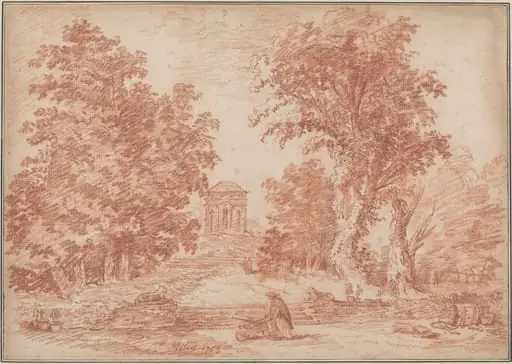 Italian Park with a Tempietto
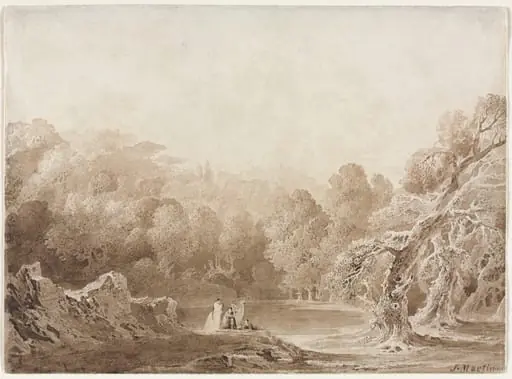 A Man Playing a Harp with other Figures beside a Lake
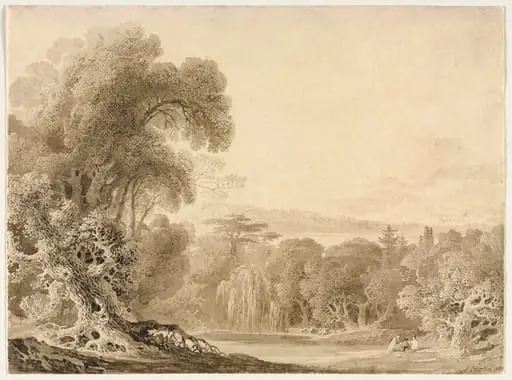 Figures Seated by a Lake in a Wooded Landscape
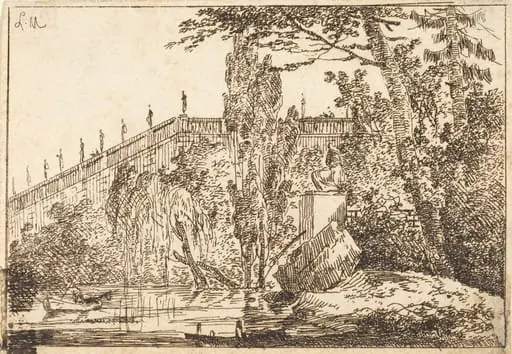 Park with Terrace and a Balustrade with Statues
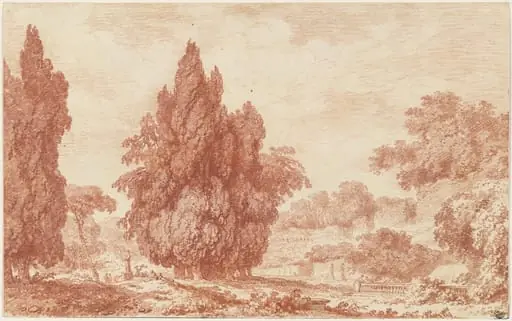 A Stand of Cypresses in an Italian Park
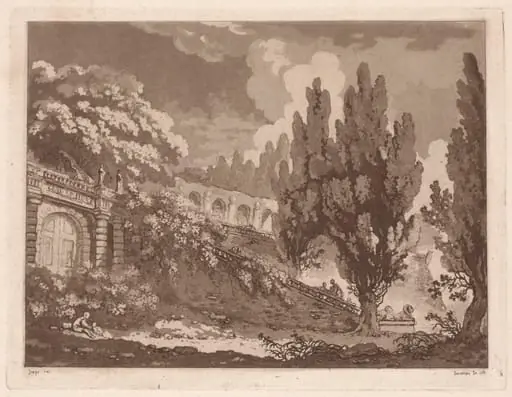 Stairs in an Italian Garden
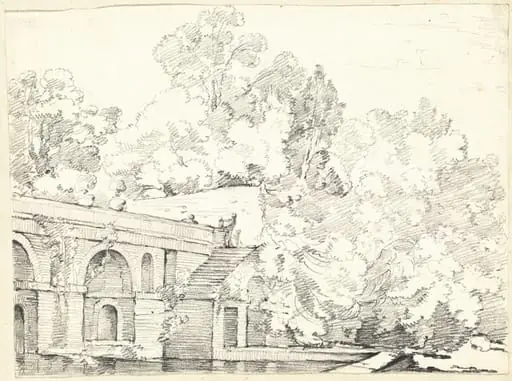 The Fishpond at Villa Madama
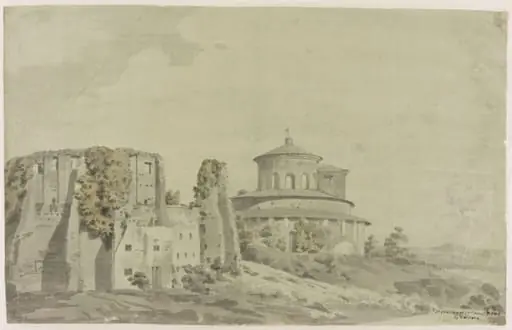 Santa Constanza, Rome
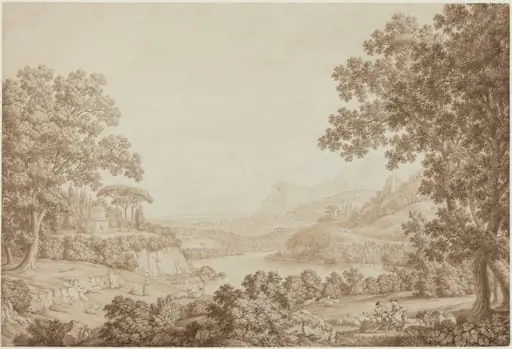 Arcadian Landscape with a Mausoleum
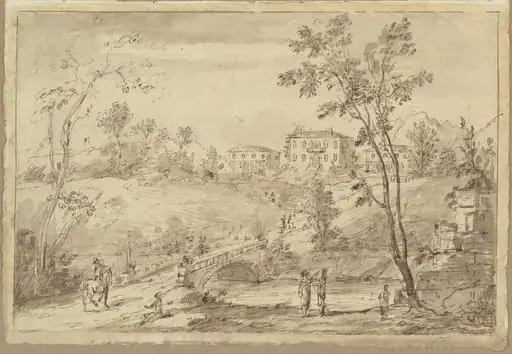 Landscape with a Bridge
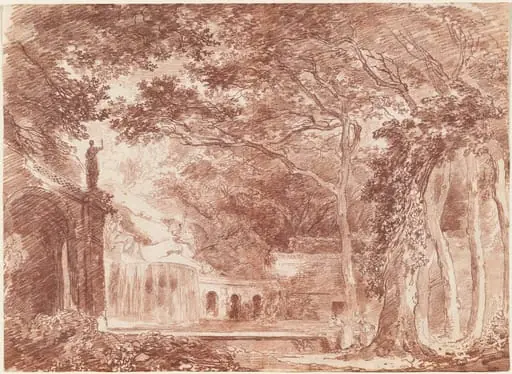 The Oval Fountain in the Gardens of the Villa d'Este, Tivoli
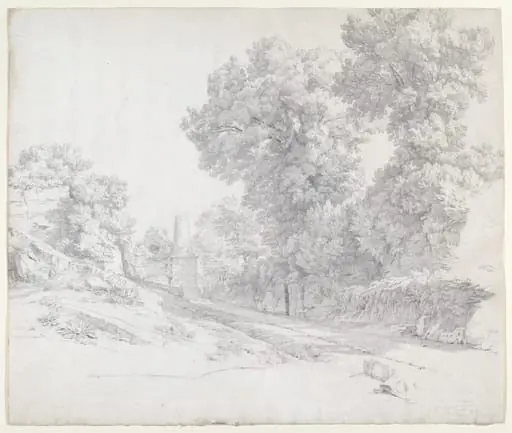 Oaks along the Appian Way near Albano