Artwork
Mill near the Grand Chartreuse
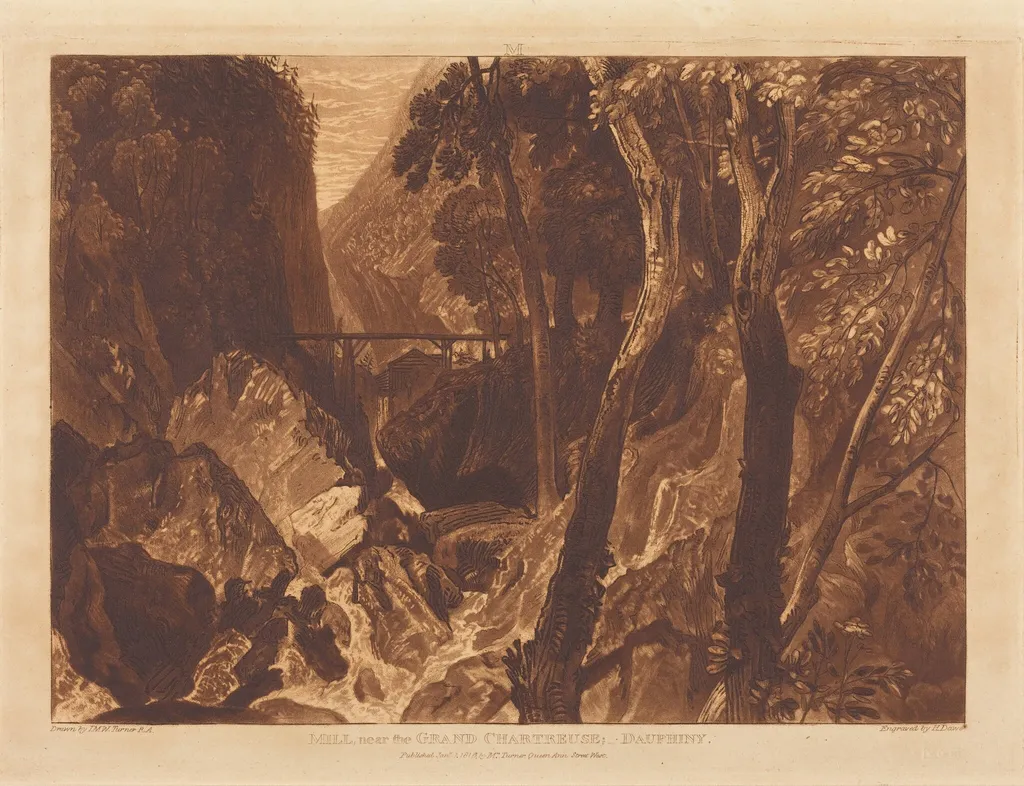
Mill near the Grand Chartreuse is an ink print by the Romanticist artist Joseph Mallord William Turner. It dates from 1816 and is held in the collection of the National Gallery of Art.
About this work
Overview
Mill near the Grand Chartreuse is a print by J.M.W. Turner, produced in 1816, utilizing etching and mezzotint techniques to depict a somber, natural landscape.
Subject & Meaning
The print captures a serene yet ominous river scene, featuring a small bridge, tall trees, and rocky banks, with a subdued sky barely visible at the top, evoking a sense of introspective moodiness.
Technique & Style
Turner employed a combination of etching and mezzotint to achieve textured, expressive renderings of trees and rocks, leveraging line work and shading to create depth, characteristic of early 19th-century printmaking practices.
History & Provenance
Created in 1816, specific details about the print's ownership history and exhibitions are not provided in the available information.
Context
Produced during a period when printmaking was a prevalent medium for artistic expression, this work reflects Turner's exploration of landscape themes through etching and mezzotint, techniques common among his contemporaries.
Legacy
While specific legacy details are not provided, the piece contributes to Turner's broader body of work in printmaking, showcasing his ability to evoke mood and depth in landscape prints.
Artist & collection
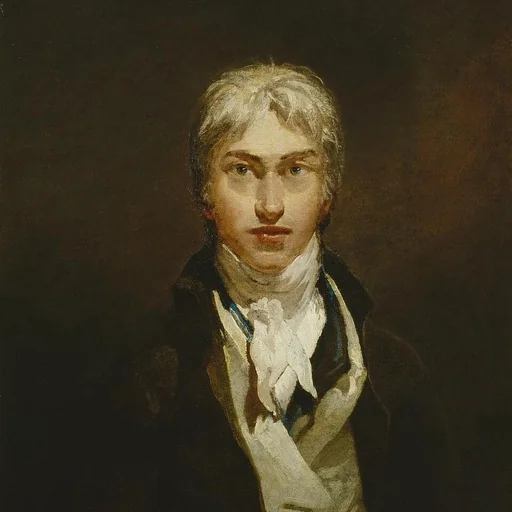
Artist
Joseph Mallord William Turner was born in 1775 at Maiden Lane, Covent Garden, where his father kept a barber and wig-making shop.

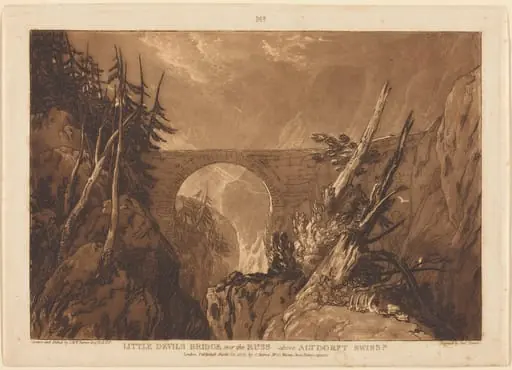 Little Devil's Bridge
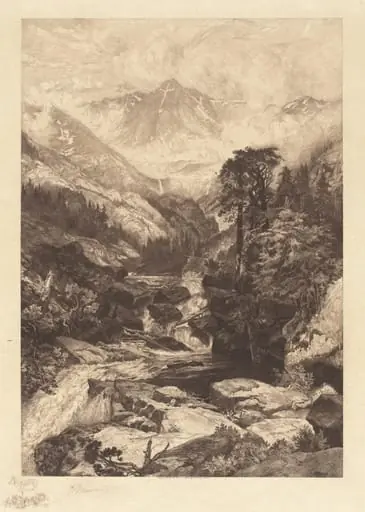 Mountain of the Holy Cross, Colorado
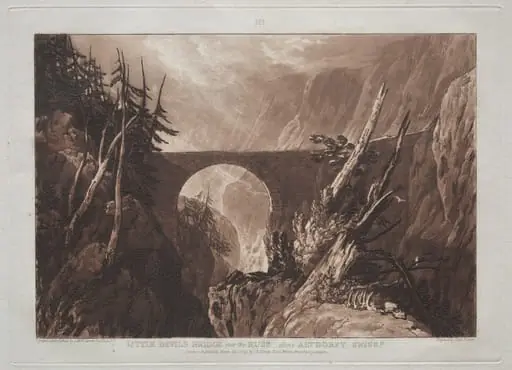 Liber Studiorum: Little Devil's Bridge over the Russ, above Altdorft, Swiss
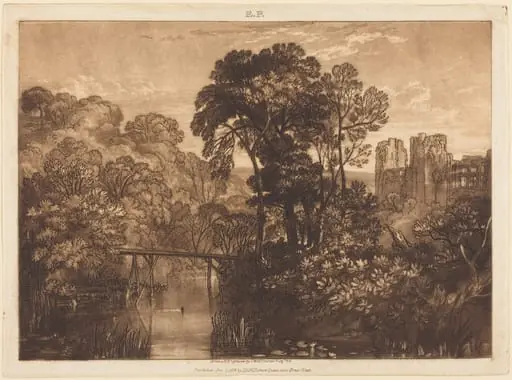 Berry Pomeroy Castle
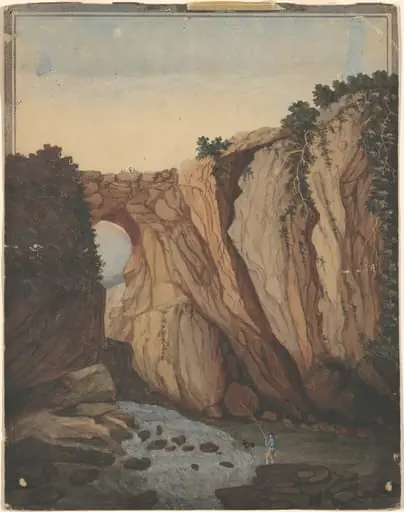 Natural Bridge, Virginia
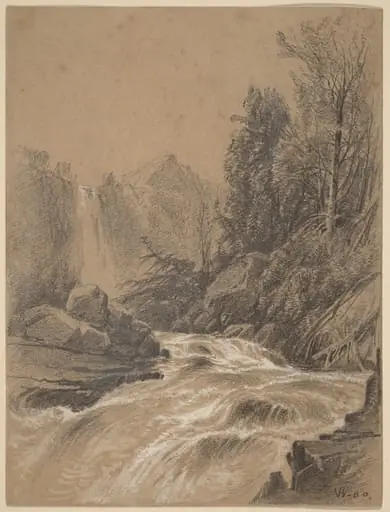 Mountain Landscape, Stream and Waterfall
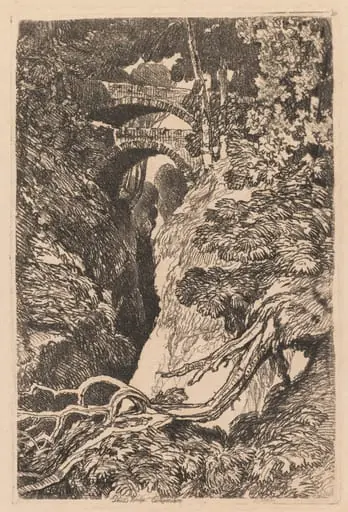 Devil's Bridge, Cardiganshire
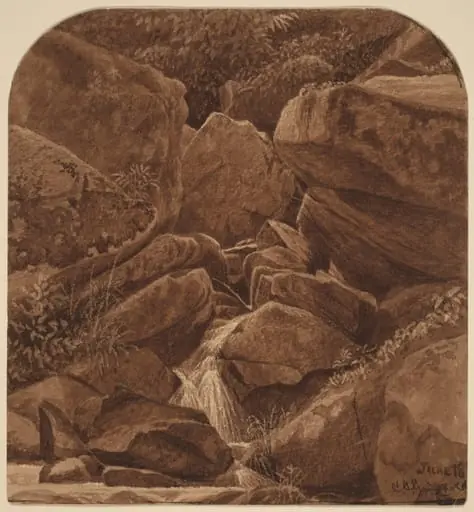 Rocks and Waterfall
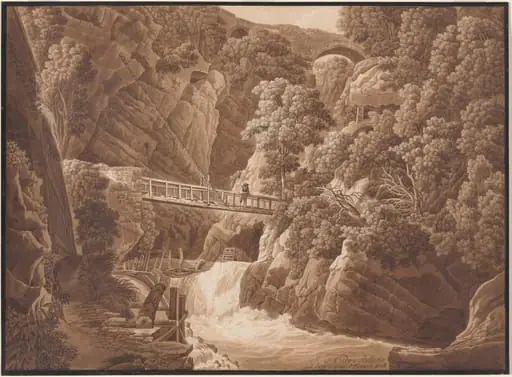 L'Orido a Bellano sul Lago di Como (The Orrido di Bellano near Lake Como)