Artwork
The Fall of the Clyde
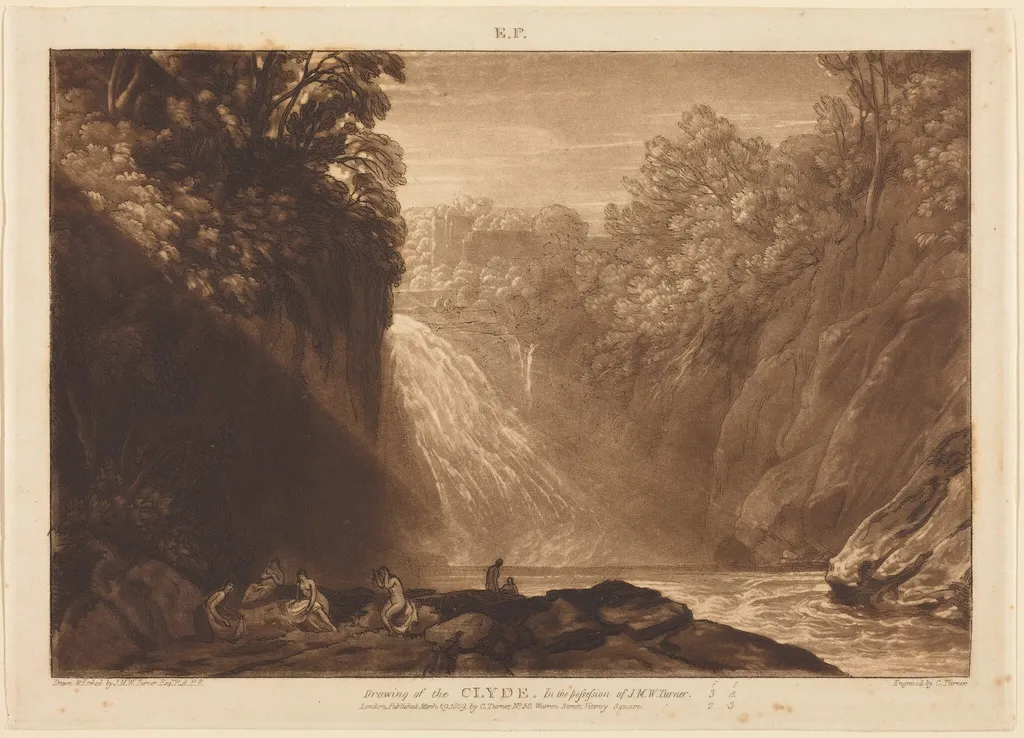
The Fall of the Clyde is an ink print by the Romanticist artist Joseph Mallord William Turner. It dates from 1809 and is held in the collection of the National Gallery of Art.
About this work
Overview
The Fall of the Clyde is a print created by Joseph Mallord William Turner in 1809, utilizing etching and mezzotint techniques to depict a dramatic natural scene.
Subject & Meaning
The print captures the awe-inspiring power of a waterfall cascading down rocky cliffs, contrasted with the serenity of three tiny figures resting at the water’s edge, emphasizing the sublime force of nature.
Technique & Style
Turner employed etching and mezzotint to achieve deep shadows and textured renderings of rocks and water, contributing to the overall dark, moody atmosphere, framed by heavy clouds and dense foliage.
History & Provenance
Created in 1809, specific details regarding the print’s ownership history and exhibitions are not provided in the available information.
Context
The work reflects Turner’s interest in capturing the dynamic interplay between nature’s power and human presence, characteristic of late 18th to early 19th-century Romanticism in art.
Legacy
While the broader impact and reception of The Fall of the Clyde are not detailed here, it exemplifies Turner’s contribution to the development of landscape printing techniques and the Romantic movement’s emphasis on nature’s sublime qualities.
Artist & collection
Artist
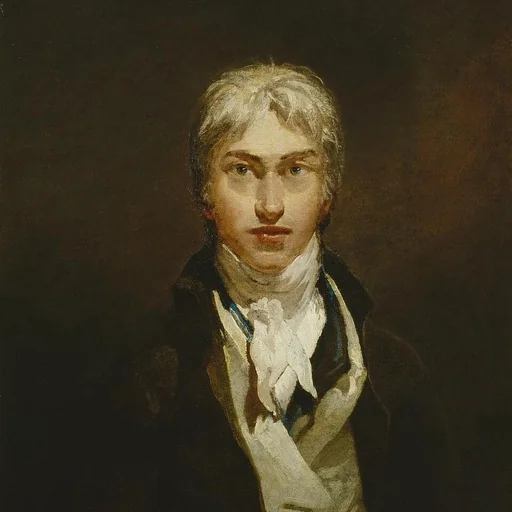
Joseph Mallord William Turner was born in 1775 at Maiden Lane, Covent Garden, where his father kept a barber and wig-making shop.

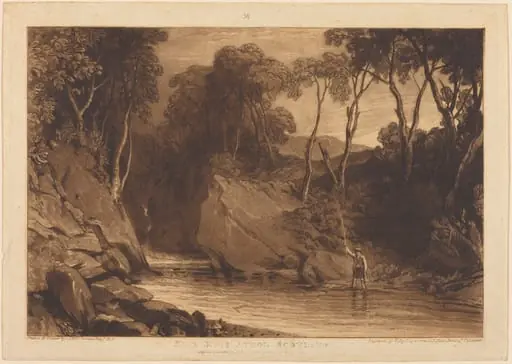 Near Blair Athol
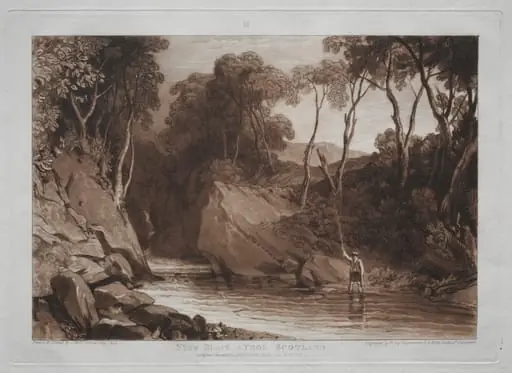 Liber Studiorum: Near Blain Athol, Scotland
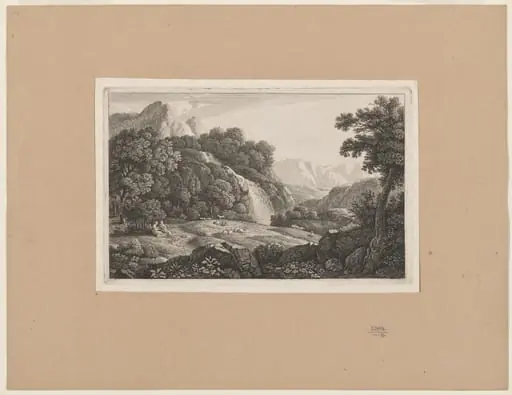 Classical Landscape with a Flutist
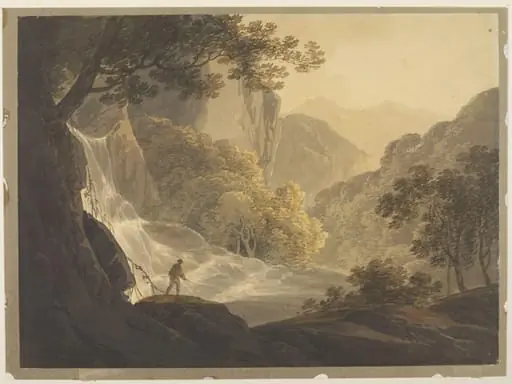 Waterfall
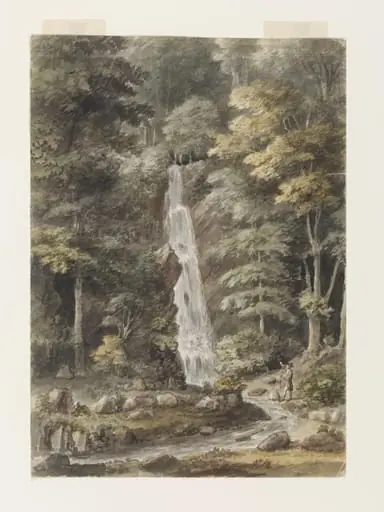 The Cascade at Hestercombe
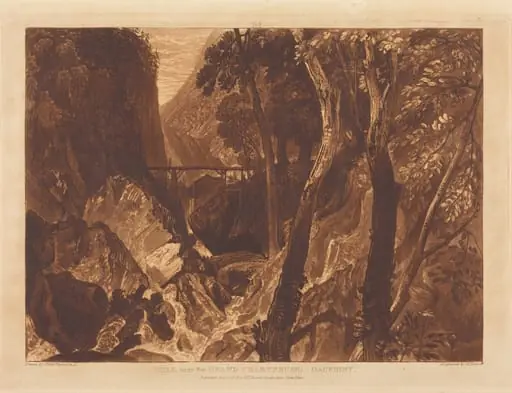 Mill near the Grand Chartreuse
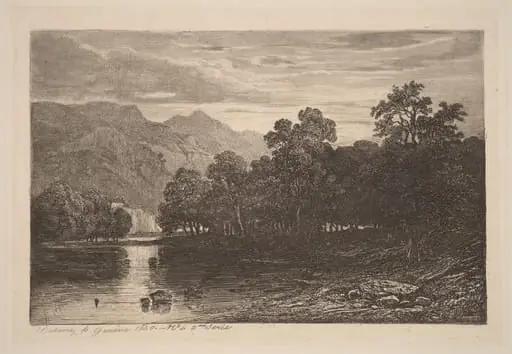 Mountain River
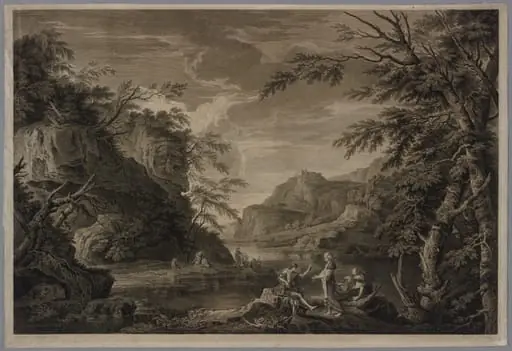 Apollo and the Sibyl
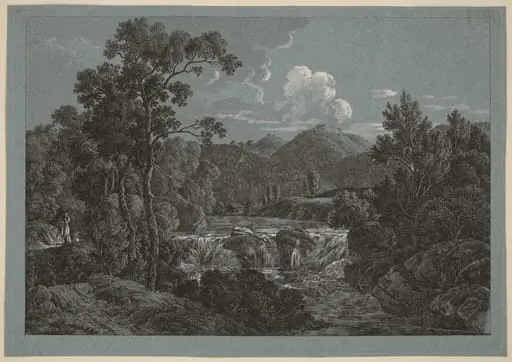 The Waterfall near Schladming in the Steiermark
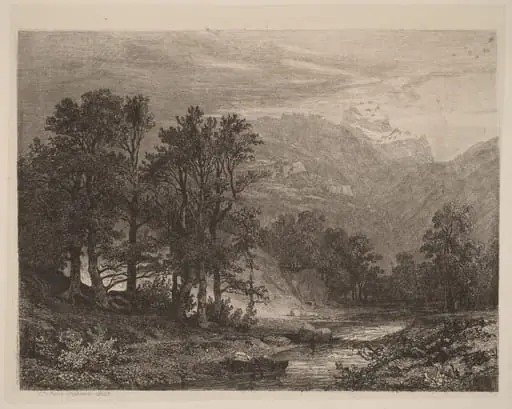 Mountain Stream
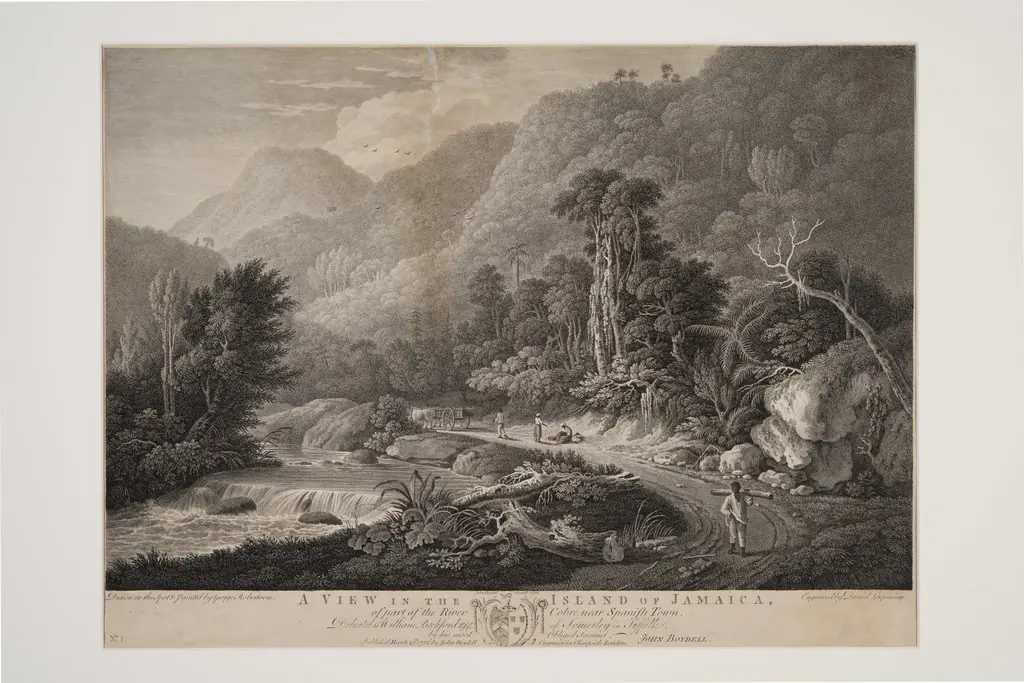 A View in the Island of Jamaica, of Part of the River Cobre near Spanish Town
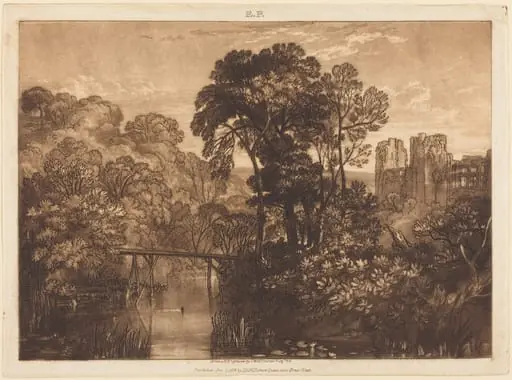 Berry Pomeroy Castle