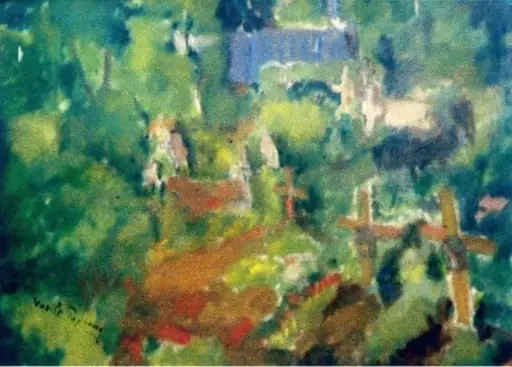
Artwork
Balcicul în zori
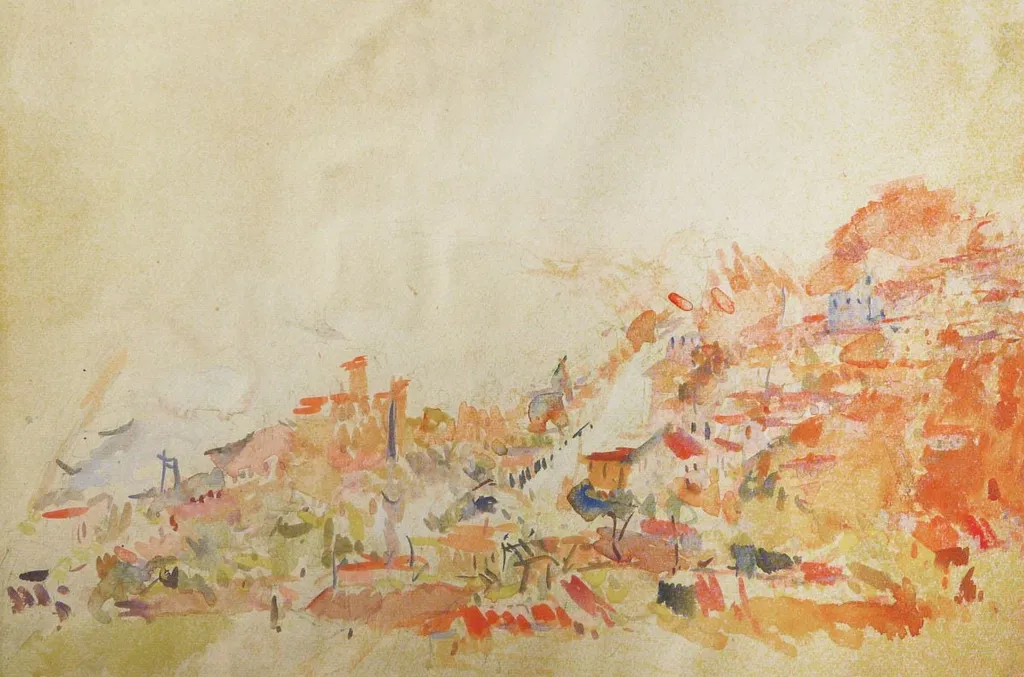
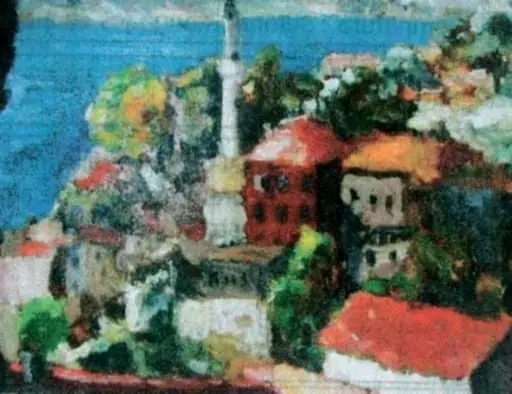
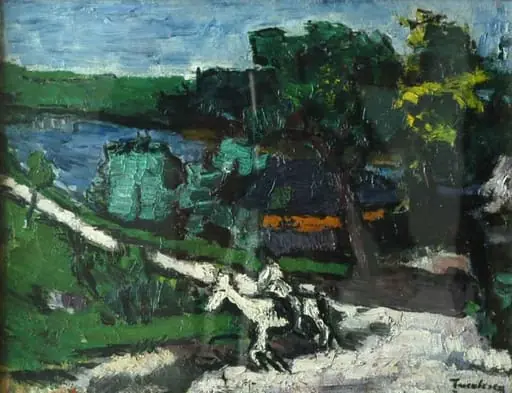
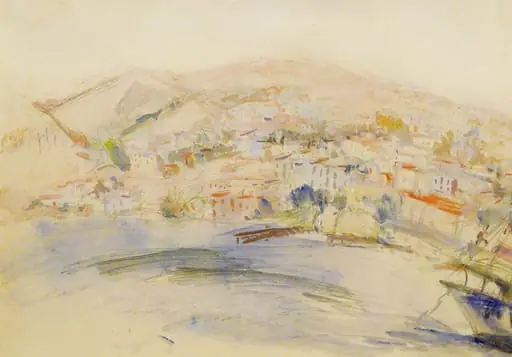
Balcicul în zori is a print by Ion Țuculescu. It dates from 1946 and is held in the collection of the Art museum of Craiova.
About this work
Overview
The work is part of the collection at the Museum of Ethnography in Bucharest, where it is preserved as an example of postwar Romanian landscape expression.
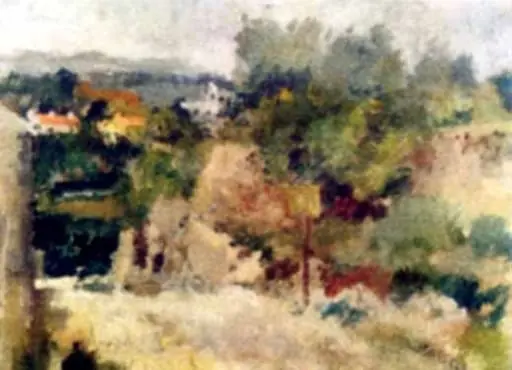
Balcicul în zori, dated around 1946, is a small-scale oil painting by Romanian artist Ion Țuculescu. It depicts a rural landscape at early morning, rendered with minimal detail and a sense of immediacy. The work is part of the collection at the Museum of Ethnography in Bucharest, where it is preserved as an example of postwar Romanian landscape expression. Its informal execution suggests a personal, observational approach rather than a formal composition.
Subject & Meaning
The painting presents a quiet, unnamed village at dawn, with no human figures or clear narrative. Structures and vegetation are suggested through muted forms, evoking stillness rather than activity. The absence of detail invites contemplation of rural life’s quiet rhythms. The title, meaning 'The Village at Dawn,' anchors the scene in a specific temporal moment, emphasizing transition and solitude over event or drama.
Technique & Style
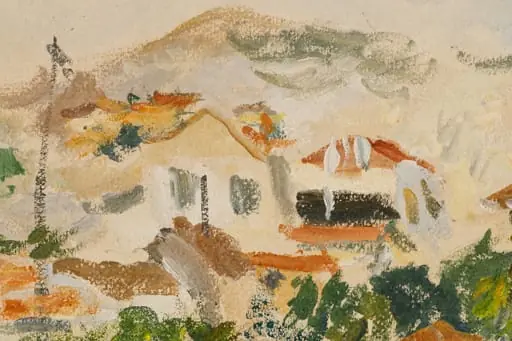
Țuculescu applied paint with loose, unrefined brushwork, leaving visible strokes and uneven edges. Colors are restrained—soft pinks, pale yellows, and earthy browns—creating a hazy, luminous atmosphere. Thick pigment is used selectively, building texture without polish. The technique avoids idealization, favoring spontaneity and sensory impression over precision, aligning with a direct, almost sketch-like response to the landscape.
History & Provenance
Created shortly after World War II, the painting emerged during a period of cultural reevaluation in Romania. It entered the Museum of Ethnography’s collection in the mid-20th century, likely through donation or institutional acquisition. Its preservation in an ethnographic context, rather than a fine arts museum, reflects its perceived connection to vernacular life and regional identity, rather than artistic innovation alone.
Context
In the mid-1940s, Romanian artists increasingly turned to domestic scenes as national identity was being redefined. Țuculescu’s work reflects this trend, focusing on rural tranquility amid urban reconstruction. While not overtly political, the painting’s quiet realism resonated with broader cultural efforts to document and preserve traditional ways of life during a time of rapid social change.
Legacy
Balcicul în zori remains a modest but representative example of Țuculescu’s lyrical approach to landscape. It has not been widely exhibited outside Romania, but it continues to inform understandings of postwar Romanian painting’s quieter, introspective currents. Its preservation in an ethnographic setting underscores its role as a cultural artifact as much as an artistic one.
Artist & collection

Artist
Ion Țuculescu was a Romanian expressionist and abstract oil painter, although professionally he worked as a biologist and physician.