Artwork
Saint John the Baptist
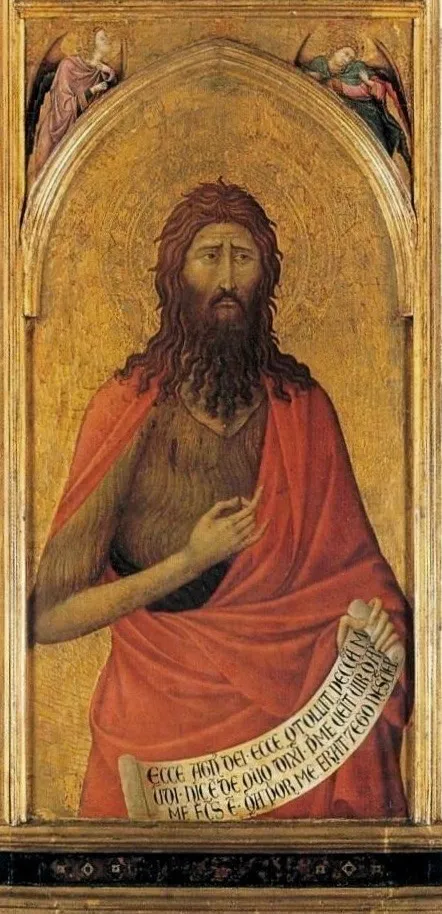
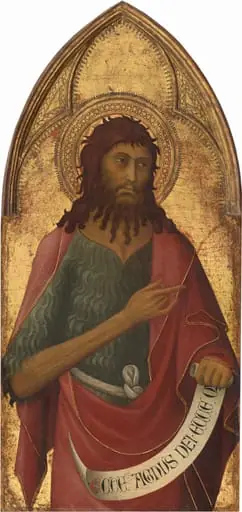
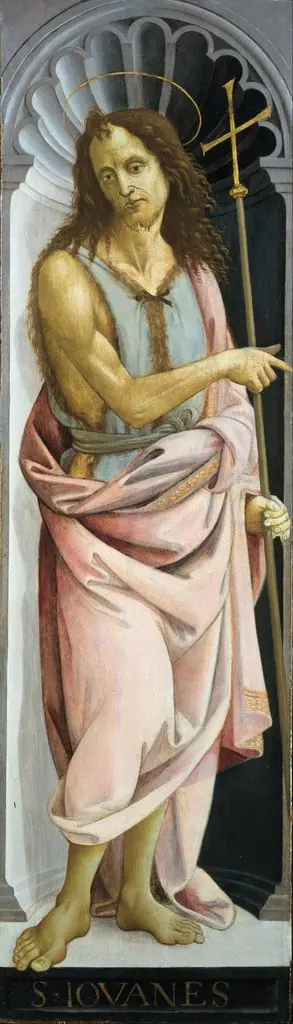
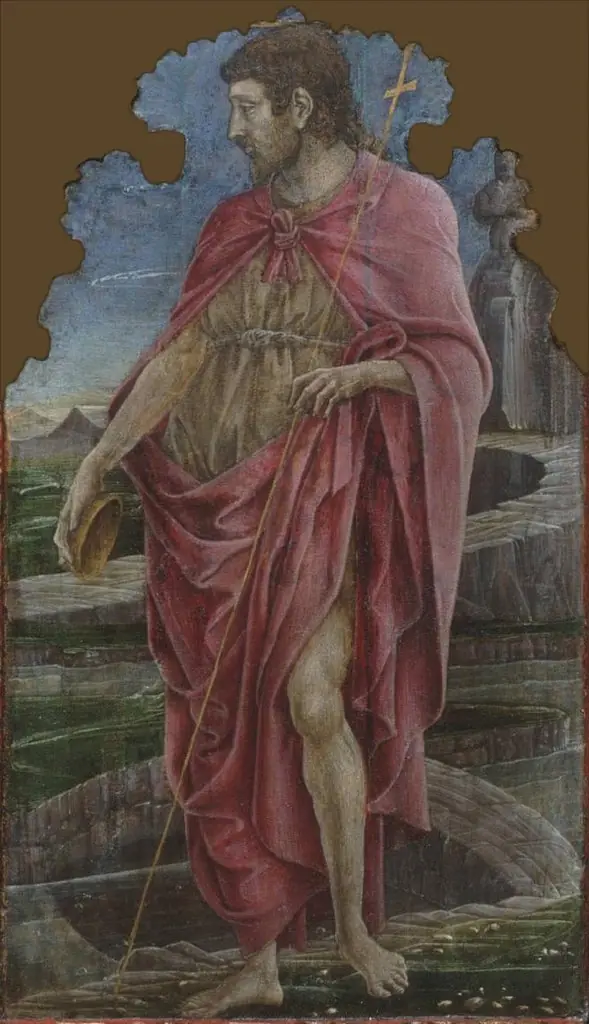
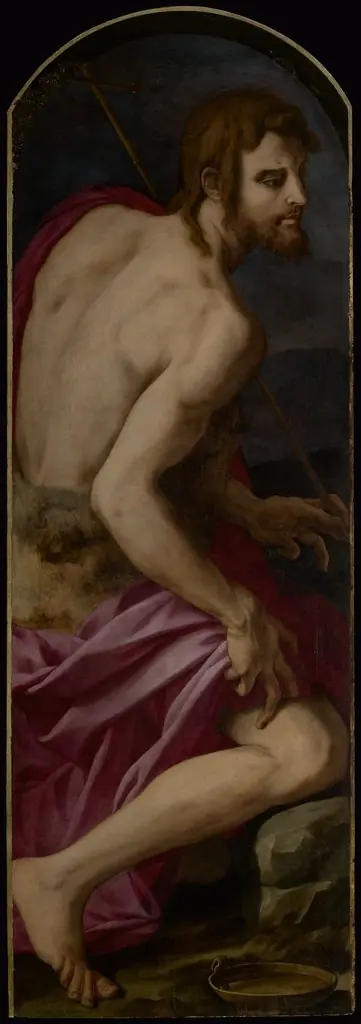
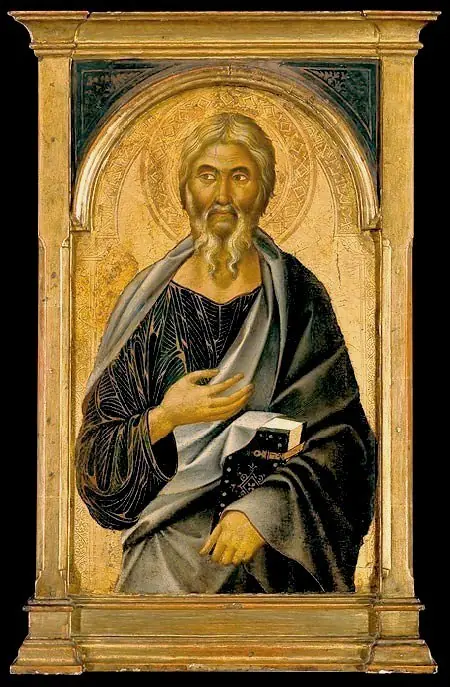
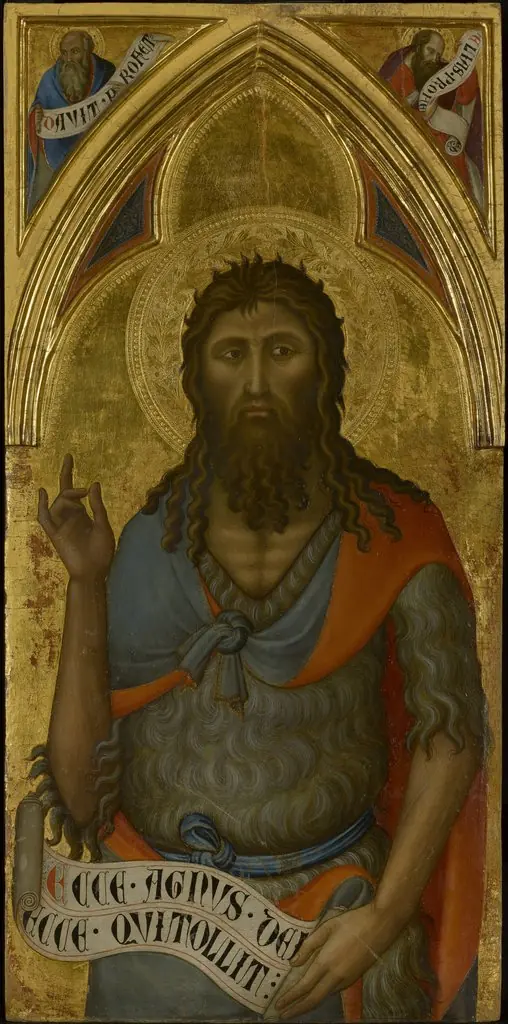
Saint John the Baptist is an unspecified painting by the Byzantine icon painting artist Ugolino di Nerio. It dates from 1325 and is held in the collection of the Gemäldegalerie Berlin.
About this work
Overview
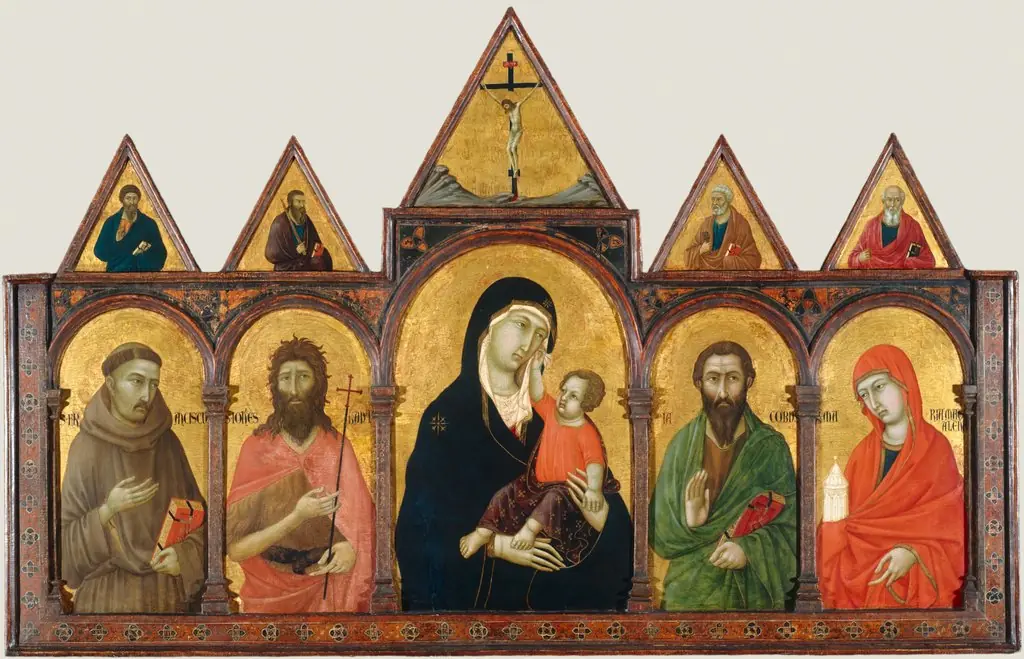
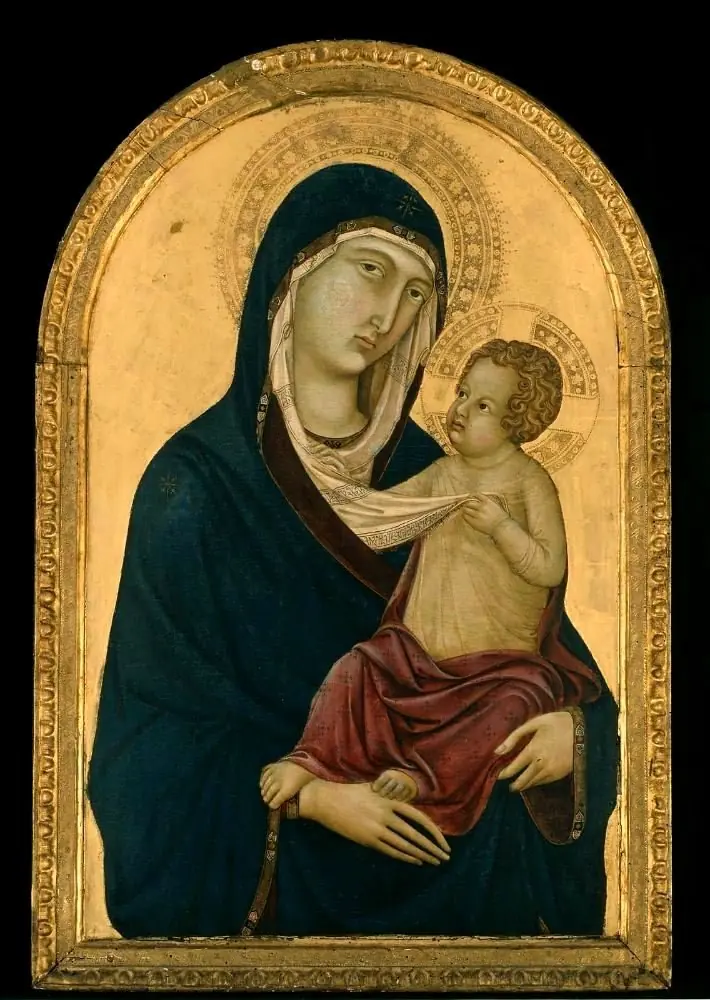
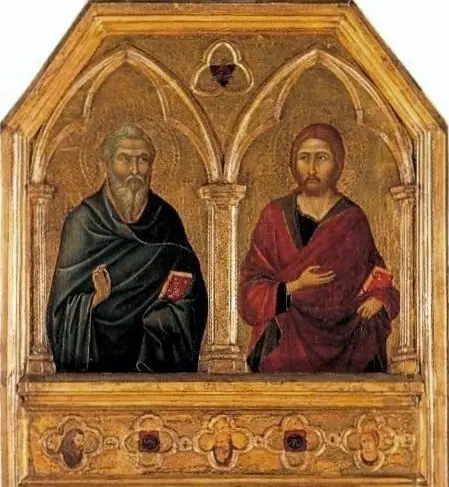
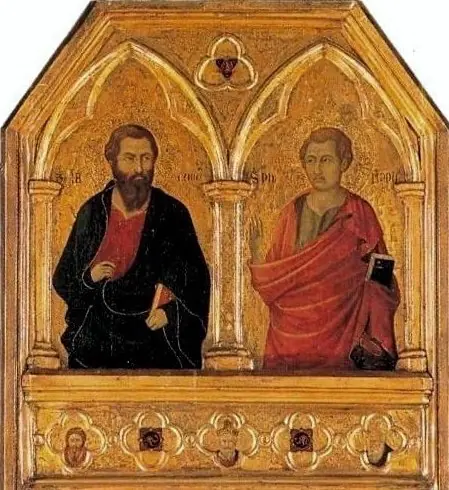
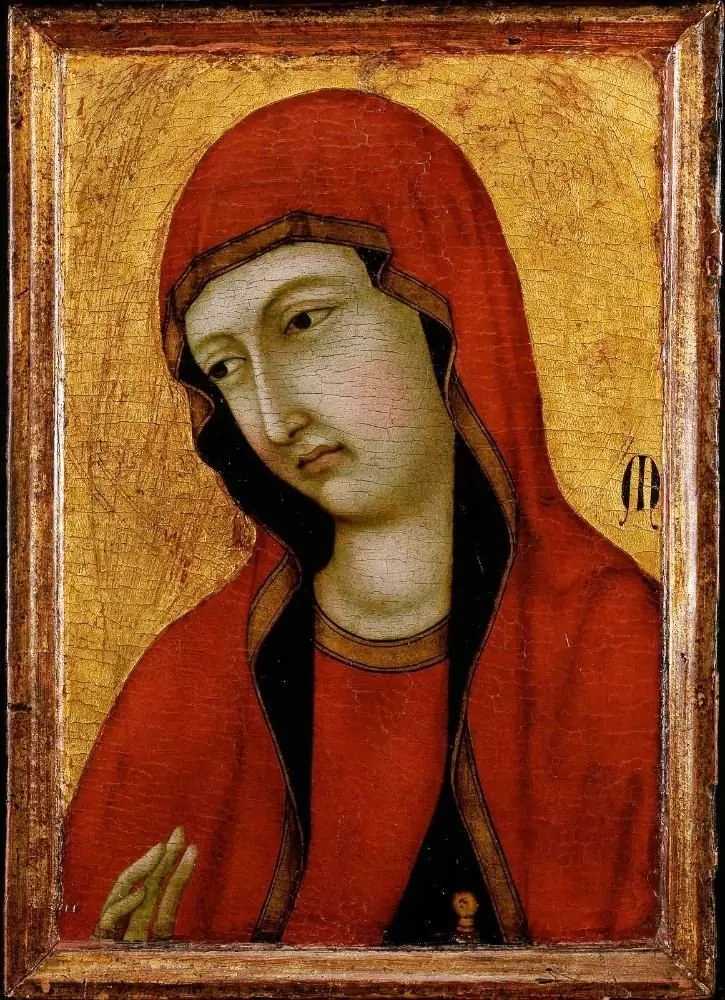
Created in 1325, this panel portrays Saint John the Baptist as a contemplative figure. He stands before a gold‑toned backdrop, his gaze lowered, holding a scroll that he points to with his right hand. Dressed in a red mantle over a brown tunic, his long wavy hair and beard convey a solemn presence, while two diminutive figures flank the arch above him.
Subject & Meaning
The work identifies the biblical forerunner of Christ, emphasizing his role as a prophetic voice. The scroll, a common attribute of John, suggests the proclamation of divine truth, though the inscription is unreadable. The downward look and thoughtful expression invite viewers to consider the inner meditation of the saint, aligning with medieval notions of spiritual introspection.
Technique & Style
Executed in the Byzantine tradition, the painting employs a flat gold background and stylized forms characteristic of early 14th‑century Sienese art. Ugolino’s handling reflects the influence of his master Duccio, evident in the delicate modeling of the face and the subtle gradations of red and brown garments, while maintaining the iconic, linear clarity of the period.
History & Provenance
Ugolino di Nerio, active in Siena and Florence between 1317 and 1327, painted this piece during his Florentine commissions for Santa Maria Novella and Santa Croce. The panel later entered the collection of the Gemäldegalerie in Berlin, where it remains on display, providing a rare example of the artist’s work outside Italy.
Context
The painting emerges at a time when Sienese artists were extending their aesthetic to Florence, bringing a softer, lyrical approach to the more rigid Gothic style prevalent there. Ugolino’s adherence to Byzantine iconography, combined with Duccio’s emerging naturalism, illustrates the transitional phase in Italian painting that set the stage for later developments in the Trecento.
Artist & collection
Artist
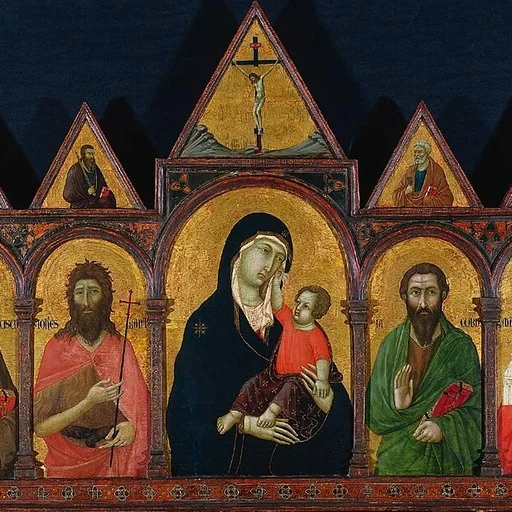
Ugolino di Nerio (1280? – 1349) was an Italian painter active in his native city of Siena and in Florence between the years 1317 and 1327. He was a follower of Duccio di Buoninsegna, from whose Maestà some of his…