Artwork
Saint John the Baptist
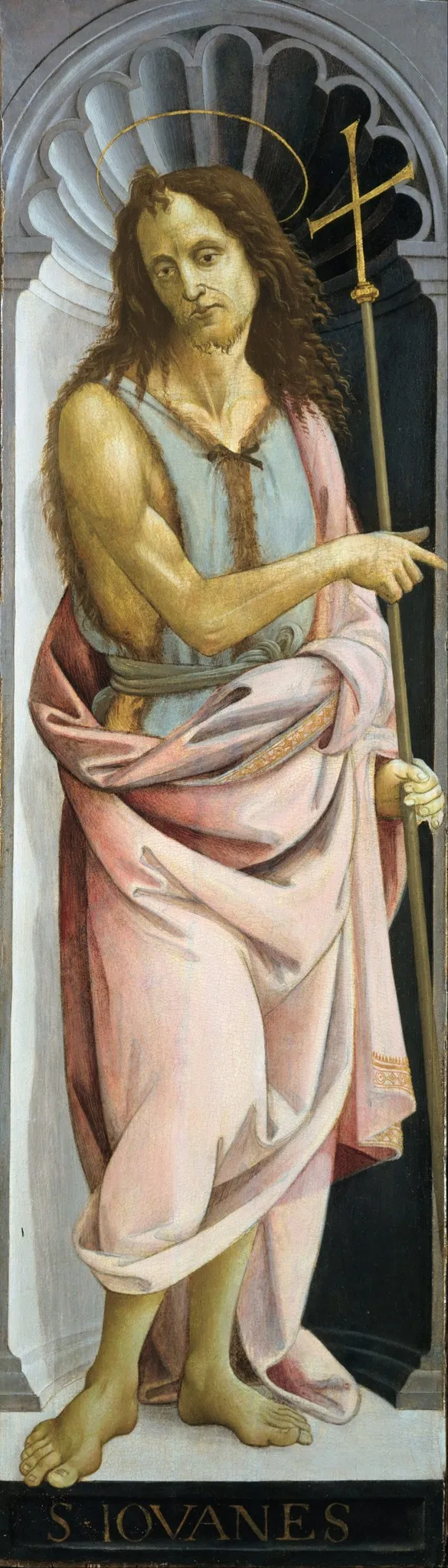
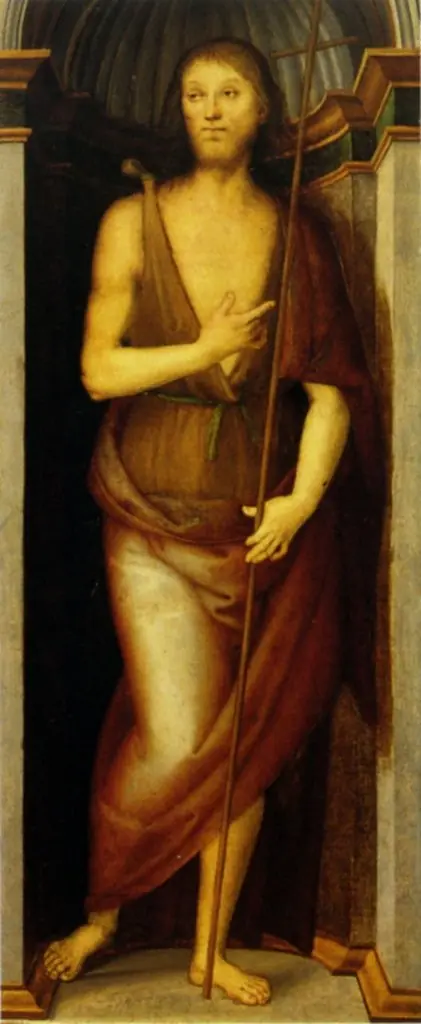
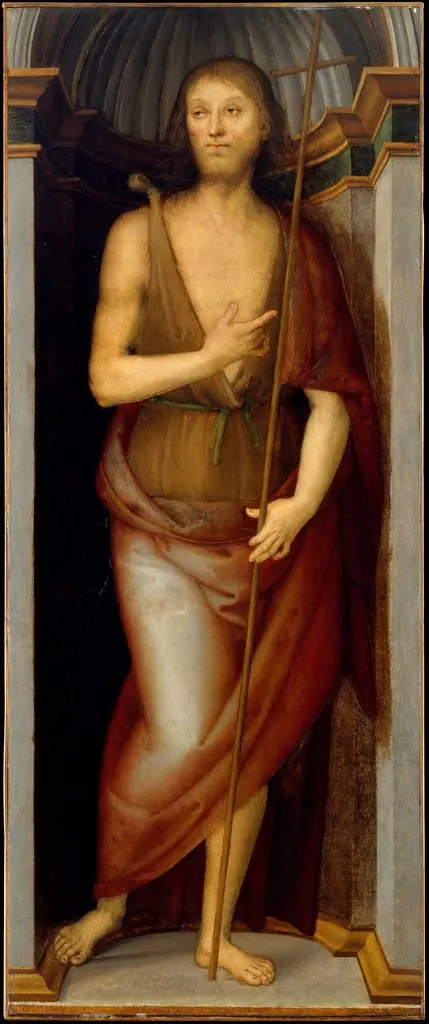
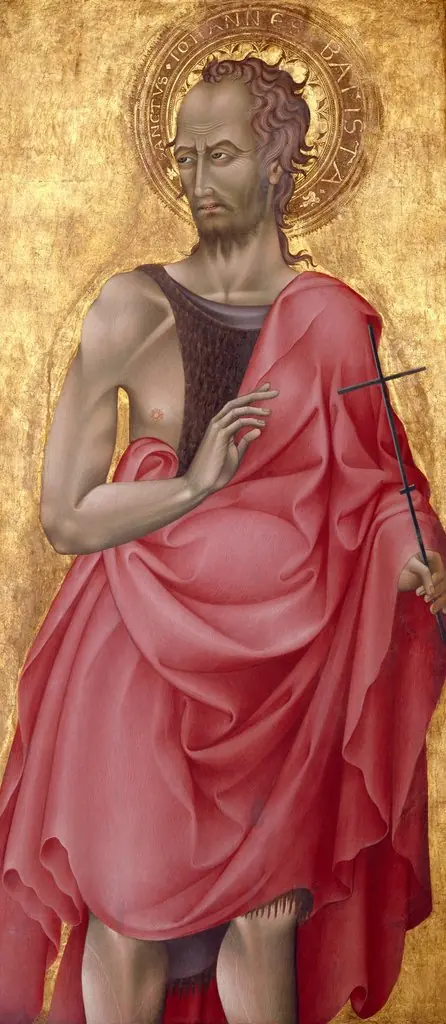
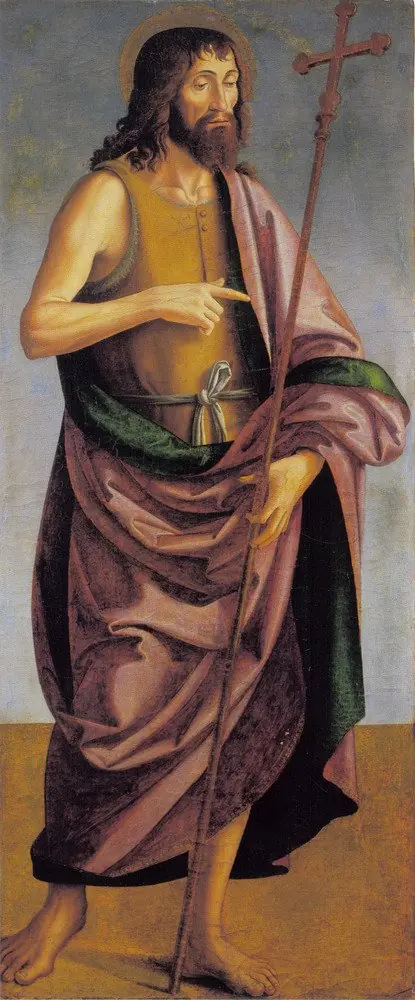
Saint John the Baptist is a tempera painting by the Early Renaissance artist Bartolomeo di Giovanni. It dates from 1496 and is held in the collection of the Art Gallery of New South Wales.
About this work
Overview
It is now part of the Art Gallery of New South Wales collection, where it serves as an example of early Renaissance panel painting outside Italy.
Painted in 1496 by Bartolomeo di Giovanni, this tempera-on-panel work portrays Saint John the Baptist in a devotional format typical of late 15th-century Florentine art. The painting reflects the artist’s training within the workshop culture of the period and aligns with the religious imagery favored by civic and ecclesiastical patrons. It is now part of the Art Gallery of New South Wales collection, where it serves as an example of early Renaissance panel painting outside Italy.
Subject & Meaning
The figure of John the Baptist is depicted as a prophetic voice, identified by his ascetic attire, long hair, and beard. His gesture—pointing left—directs attention toward the coming of Christ, a conventional symbol of his role as forerunner. The gold staff, often associated with his wilderness ministry, and the halo affirm his sanctity. The arched doorway behind him suggests a threshold between the earthly and divine, reinforcing his spiritual function without narrative detail.
Technique & Style
Executed in tempera, the painting employs fine brushwork and layered pigments to achieve subtle tonal transitions. The figure’s drapery is rendered with crisp folds, and the colors—light blue, pink, and gold—are applied with restraint, typical of Florentine practice before the widespread adoption of oil. The decorative background arch and the flat, gold-leaf halo reflect lingering Gothic conventions, while the figure’s solid form shows emerging Renaissance naturalism.
History & Provenance
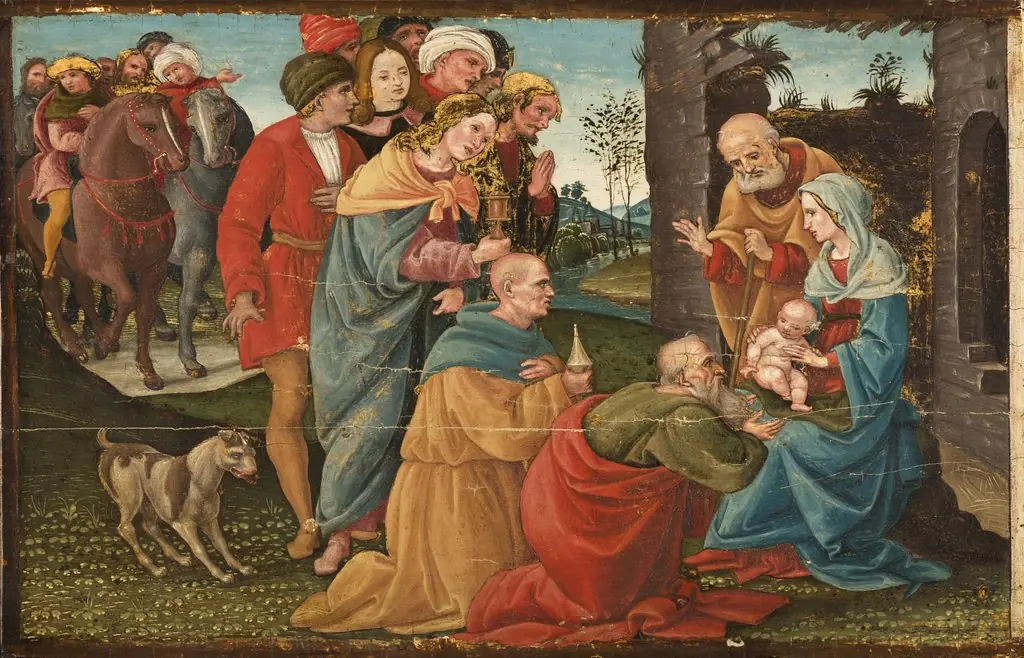
Bartolomeo di Giovanni, active in Florence from the 1470s to the 1500s, is known primarily for his work as an assistant to Domenico Ghirlandaio, including contributions to the predella of the *Adoration of the Magi* at the Ospedale degli Innocenti. This painting, dated 1496, likely originated as a private devotional piece. Its journey to Australia remains undocumented, but it entered the Art Gallery of New South Wales’ collection in the 20th century as part of a broader acquisition of early Italian art.
Context
In late 15th-century Florence, images of John the Baptist were common due to his status as the city’s patron saint. Artists often depicted him in solitude, emphasizing his role as a spiritual guide rather than a participant in biblical narratives. Bartolomeo’s style, rooted in Ghirlandaio’s workshop, reflects the city’s emphasis on clarity, order, and devotional clarity—qualities suited to both public altarpieces and private prayer.
Legacy
Though Bartolomeo di Giovanni did not achieve the fame of his contemporaries, his works provide insight into the collaborative nature of Renaissance workshops and the persistence of traditional iconography. This painting, modest in scale and execution, exemplifies how skilled artisans sustained religious visual language in a period of rapid artistic change, preserving devotional forms even as new techniques emerged.
Artist & collection
Artist
Bartolomeo di Giovanni di Domenico (1458? – 1501) was an Italian Renaissance painter active in Florence. His works were first identified by the art historian Bernard Berenson, who did not know the painter's real name so…

![The Archangel Gabriel [middle left panel], by Cosmè Tura](https://artifactworldgallery.com/img/cosme-tura--the-archangel-gabriel-middle-left-panel--c900f72d54477be2-w320.webp)