Artwork
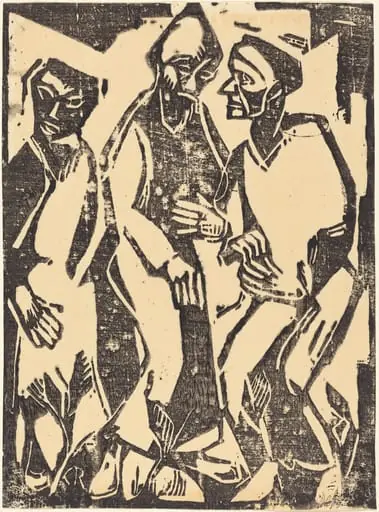
Ruhende Zigeuner
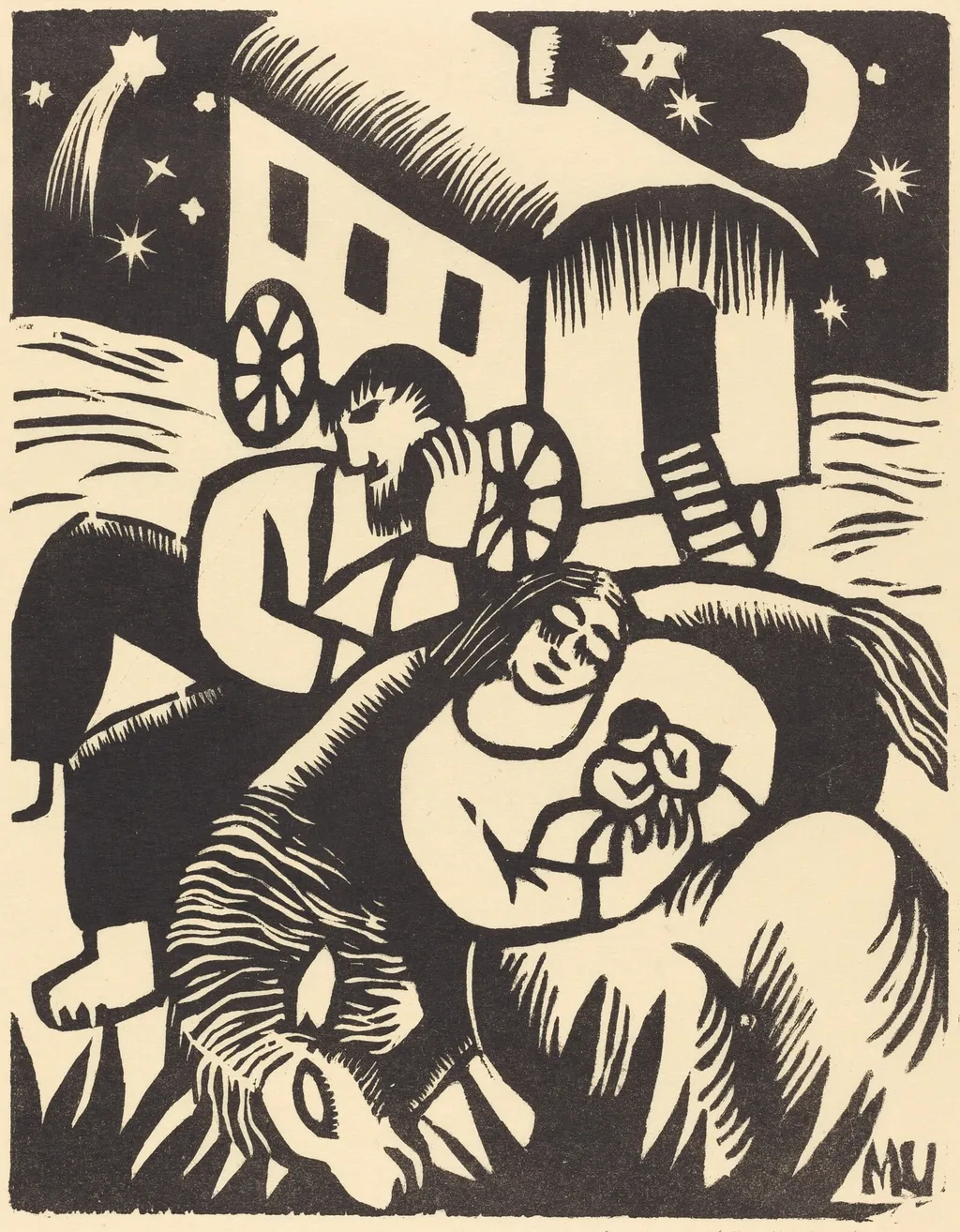
Ruhende Zigeuner is an ink print by the Impressionist artist Maria Uhden. It dates from 1918 and is held in the collection of the National Gallery of Art.
About this work
Overview
The work measures a modest size and is catalogued as a print in the collection of the National Gallery of Art, Washington.
Ruhende Zigeuner, executed in 1918 by Maria Uhden, is a black‑ink woodcut printed on Japanese paper. The work measures a modest size and is catalogued as a print in the collection of the National Gallery of Art, Washington. Its composition presents a nocturnal landscape populated by a small dwelling, a horse‑drawn cart, and two figures, a woman cradling an infant and a man, suggesting a traveling community.
Subject & Meaning
The scene unfolds under a star‑speckled sky illuminated by a thin crescent moon. A modest house and a cart anchor the setting, while the standing figures—identified as a woman with a baby and a man—evoke the everyday life of itinerant groups, often associated with Romani communities. The quiet atmosphere and intimate grouping convey a moment of rest amid travel.
Technique & Style
Uhden employed the woodcut process, carving bold, simplified forms into a block and printing them in deep black on smooth Japan paper. The stark contrast between ink and paper heightens the silhouette of the figures and architecture. Geometric simplification and decisive line work give the image a restrained elegance, characteristic of early twentieth‑century German Expressionist printmaking.
History & Provenance
Created toward the end of World War I, the print entered the holdings of the National Gallery of Art in Washington, where it remains accessible to scholars and the public. Its acquisition reflects the museum’s broader effort to represent German Expressionist printmakers of the period.
Context
Maria Uhden, active in the German avant‑garde before her premature death in 1918, worked alongside contemporaries who explored the expressive potential of woodcut. Ruhende Zigeuner exemplifies the movement’s interest in everyday subjects rendered with emotional intensity through stark graphic means, aligning with the era’s shift toward abstraction and symbolic representation.
Own this work as a print
Artist & collection


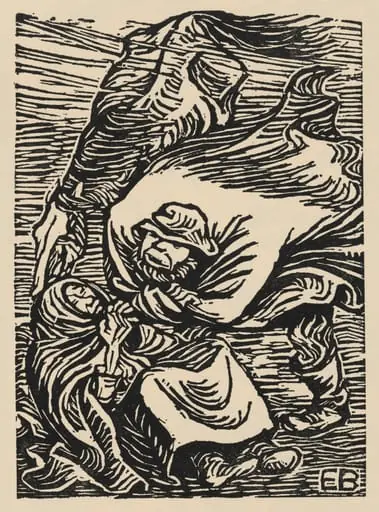 Gruppe im Sturm (Couple in a Storm) from Deutsche Graphiker der Gegenwart (German Printmakers of Our Time)
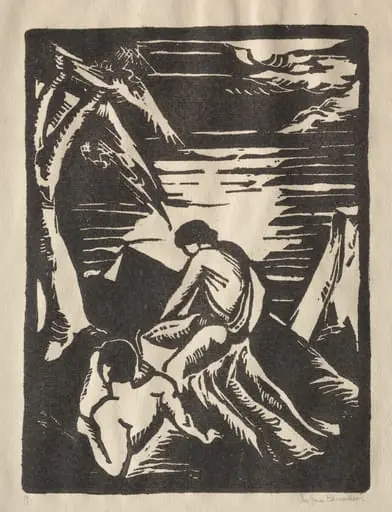 Orestes and Pylades
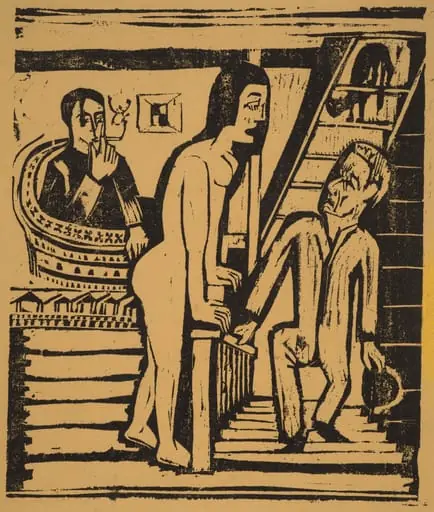 The Visit
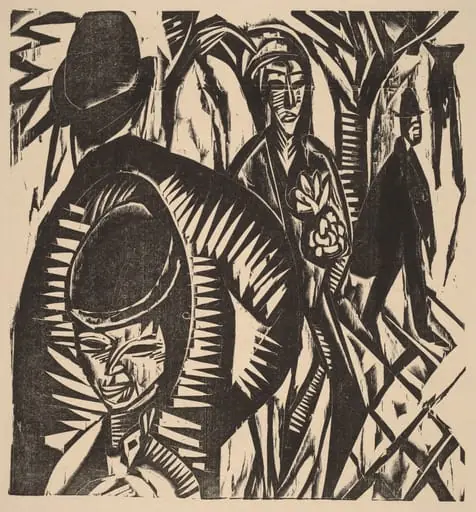 Street Scene after the Rain (Straßenszene, Nach dem Regen)
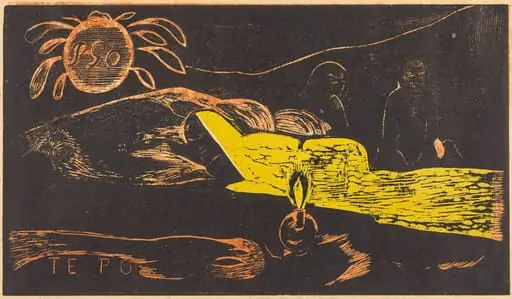 Te Po (The Long Night)
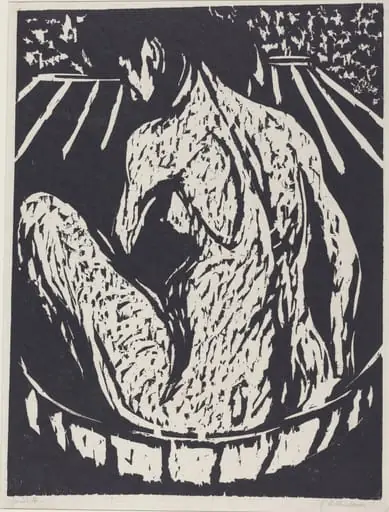 Female Nude
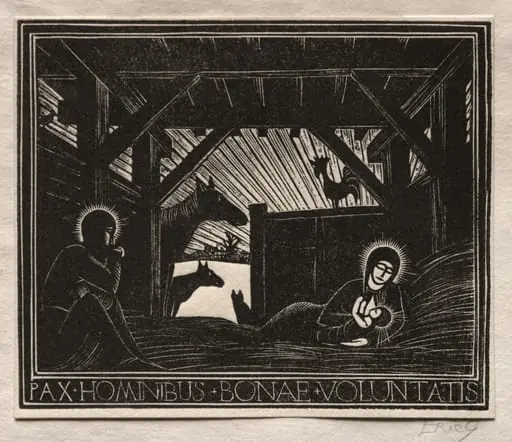 Christmas Gifts: Dawn
 Crucifixion I
 Deliberation (Beratung)
 Three Breton Women with Infants
 The Gull Hunter
 Deliberation (Beratung)