Artwork
Three Breton Women with Infants
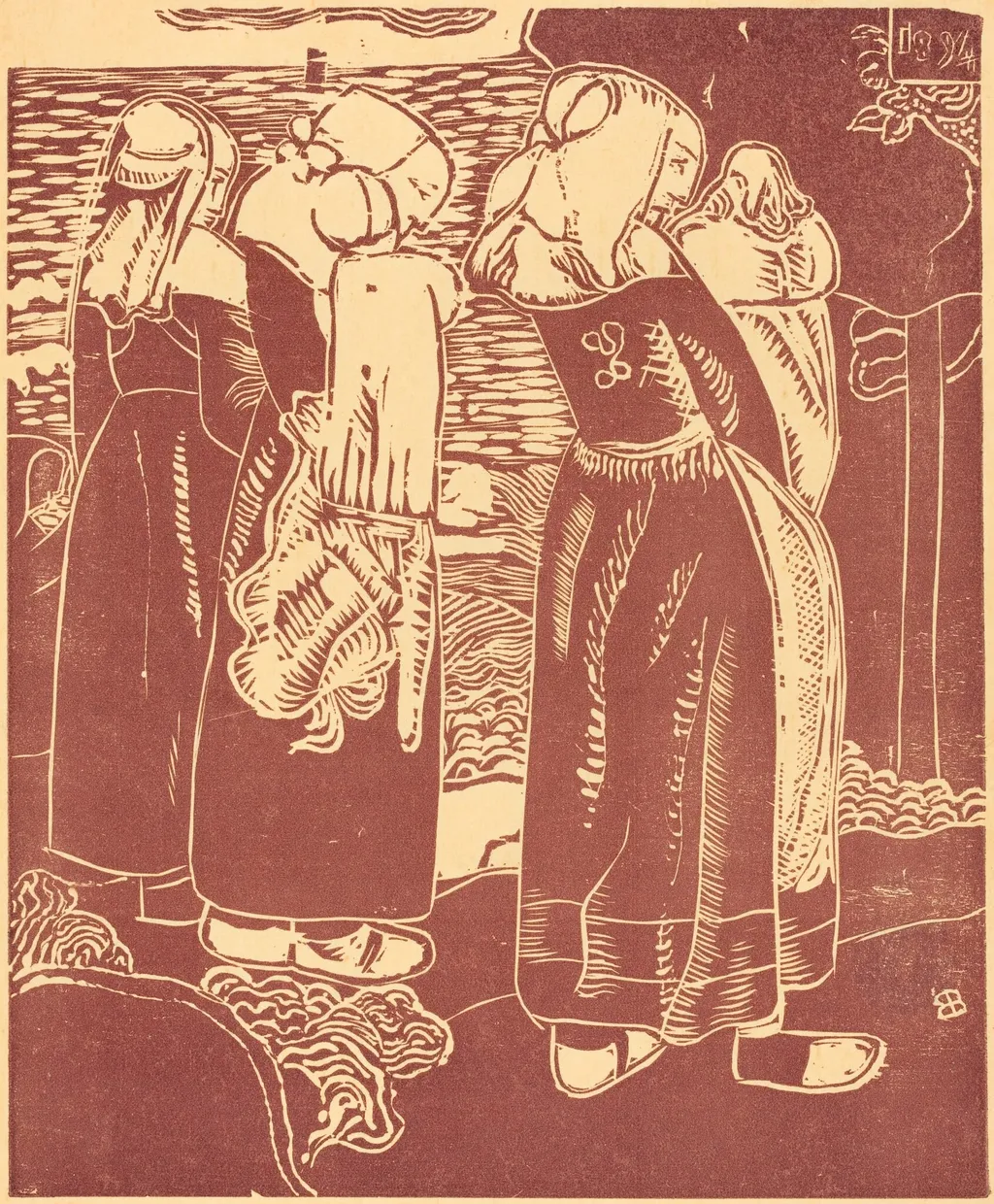
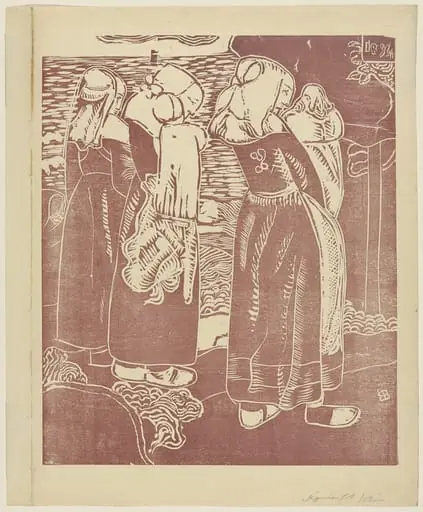
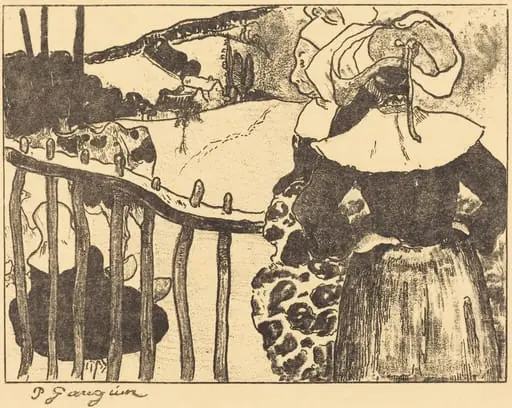
Three Breton Women with Infants is an ink print by the Impressionist artist Armand Séguin. It dates from 1894 and is held in the collection of the National Gallery of Art.
About this work
Overview
Armand Séguin’s 1894 woodcut, *Three Breton Women with Infants*, presents three clothed figures each cradling an infant. Executed in a deep red‑brown ink on smooth wove paper, the image is defined by bold, carved lines that give the composition a tactile, textured quality.
Subject & Meaning
The work depicts three Breton women, their long dresses rendered with pronounced folds, holding their babies swaddled in cloth. The simplified facial features—large heads with minimal detail—emphasize a universal, archetypal portrayal of motherhood rather than individualized portraiture.
Technique & Style
Created as a woodcut, the image relies on carved relief blocks that produce strong, graphic outlines and a limited tonal range. The red‑brown pigment and the wavy background line suggest a stylized landscape, echoing the Symbolist and Synthetist tendencies of the Pont‑Aven circle.
History & Provenance
Séguin produced the print while active in the Breton region, a period marked by his association with Paul Gauguin’s artistic network after meeting the painter in 1893. He briefly studied under Gauguin and later collaborated with Roderic O’Conor on etchings before his premature death in 1903.
Context
The piece belongs to the broader output of the Pont‑Aven School, where artists explored simplified forms, bold coloration, and symbolic content. Séguin’s engagement with these ideas is evident in the work’s flattened space, decorative patterning, and emphasis on line over realistic modeling.
Artist & collection
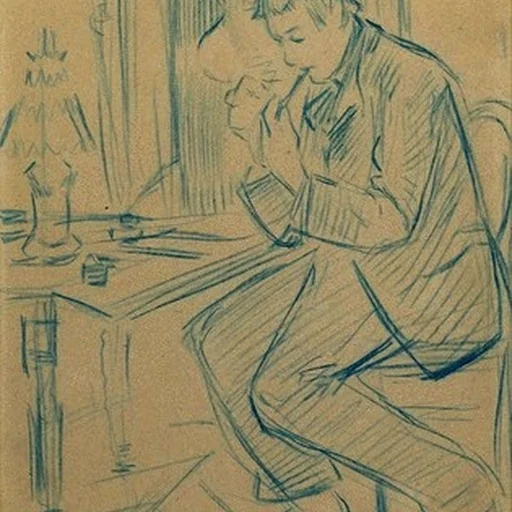
Artist
Armand Séguin (1869–1903) was a post-Impressionist French painter who is remembered for his involvement in the Pont-Aven School beginning in 1891.

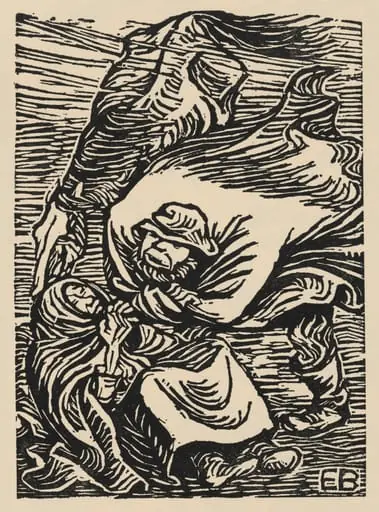 Gruppe im Sturm (Couple in a Storm) from Deutsche Graphiker der Gegenwart (German Printmakers of Our Time)
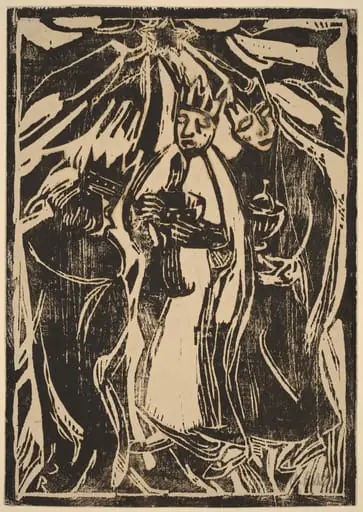 The Magi
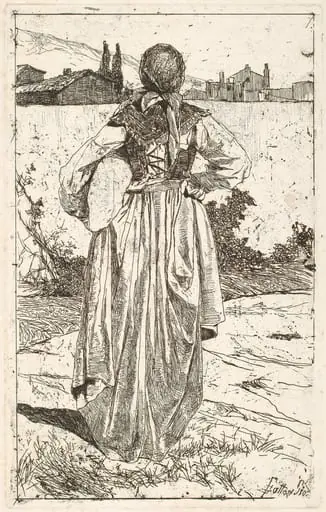 Woman of the Gabbro (Donna al gabbro)
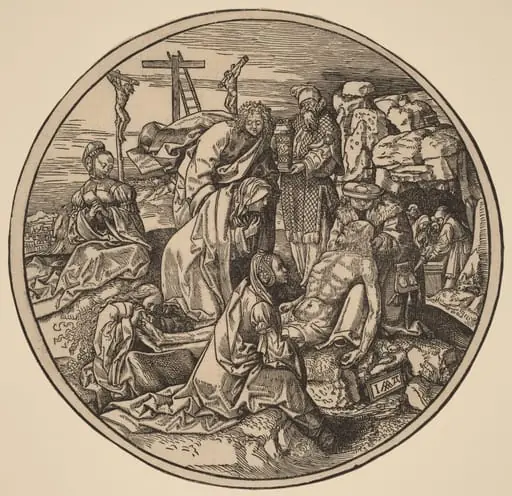 The Lamentation and Entombment
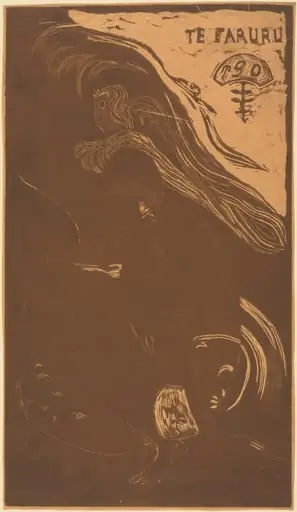 Te Faruru (They are Making Love Here)
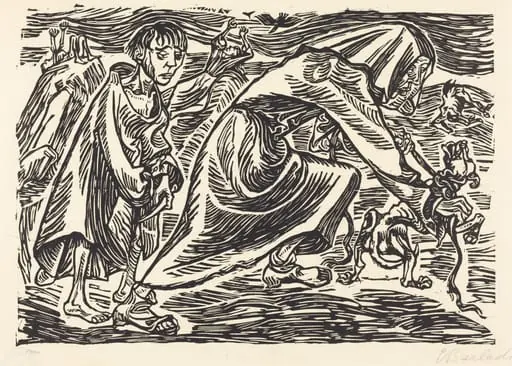 The Dog Catcher
 Untitled
 St. Jerome in the Wilderness
 Orestes and Pylades
 Au Luxembourg (At the Luxembourg Gardens)
 Breton Women beside a Fence (Bretonnes à la barrière)