Artwork
Frank Duveneck
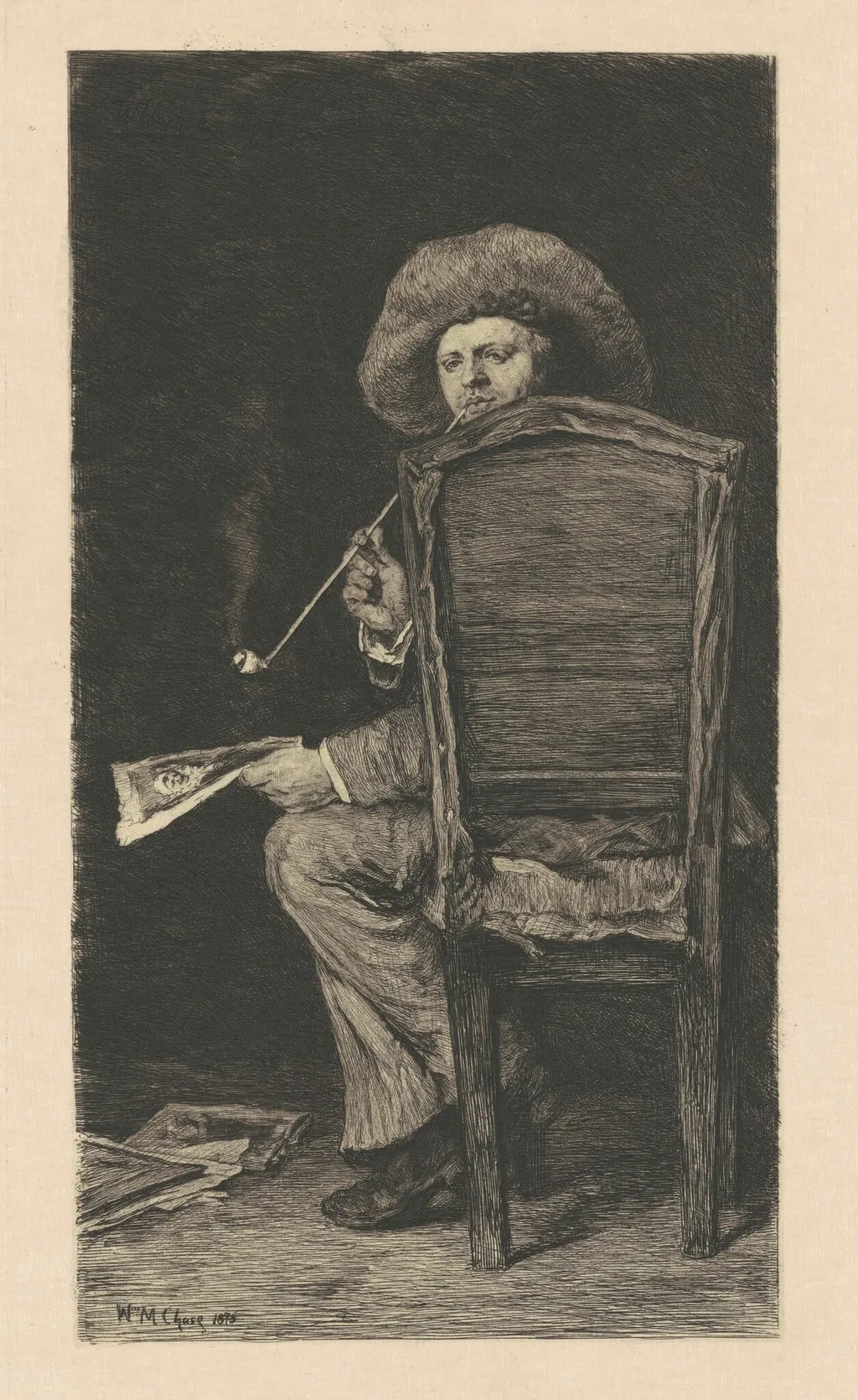
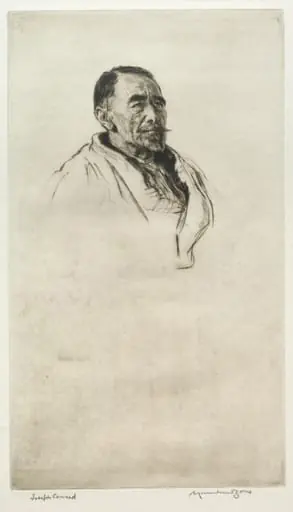
Frank Duveneck is an ink print by the Impressionist artist William Unger. It dates from 1875 and is held in the collection of the National Gallery of Art.
About this work
Overview
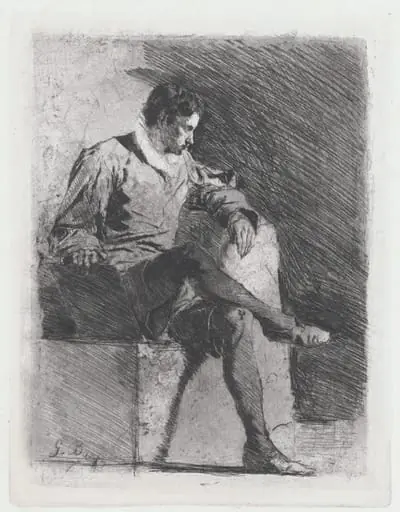
William Unger’s 1875 etching presents a seated portrait of the American painter Frank Duveneck. Rendered in black on laid paper, the image captures Duveneck in a direct, unembellished pose, his gaze meeting the viewer. The work’s modest scale and restrained composition convey a quiet presence, emphasizing the sitter’s individuality over any formal grandeur.
Subject & Meaning
The portrait depicts Duveneck as an ordinary figure rather than an elevated artistic hero. By focusing on a straightforward seated stance and a steady stare, the image invites contemplation of the man behind the canvas, suggesting a personal, almost conversational intimacy between subject and audience.
Technique & Style
Unger employed traditional intaglio etching, using fine lines and subtle shading to model form on laid paper. The black ink, applied uniformly, allows the texture of the paper to emerge, while the economy of line creates a calm, still atmosphere. The technique highlights the tactile qualities of the medium, revealing the artist’s hand.
History & Provenance
Created in 1875, the etching was produced during a period when both Unger and Duveneck were active in transatlantic artistic circles. Though specific ownership records are limited, the work has been documented in collections focusing on 19th‑century American and European printmaking, reflecting its relevance to the era’s exchange of artistic ideas.
Artist & collection


 Seated Acolyte
 Program for "Benefice Gemier" (Programme du "Bénéfice Gémier")
 Thomas Carlyle
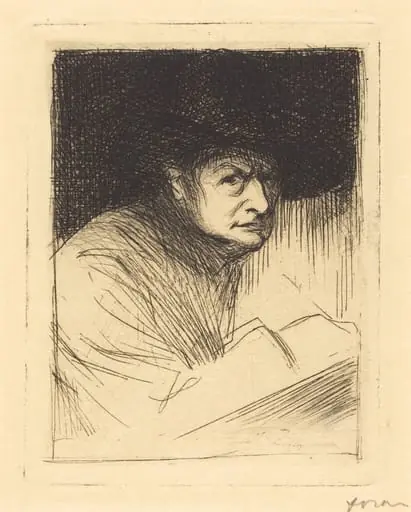 Portrait de Forain (Portrait of Forain)
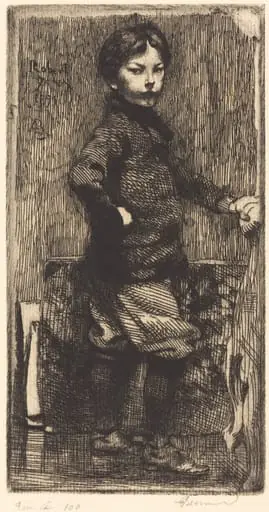 Robert Besnard
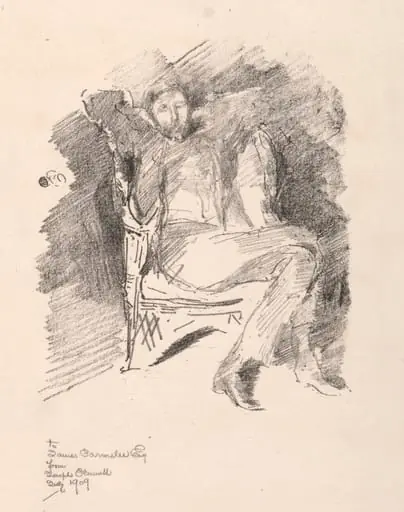 Joseph Pennell, No. 2
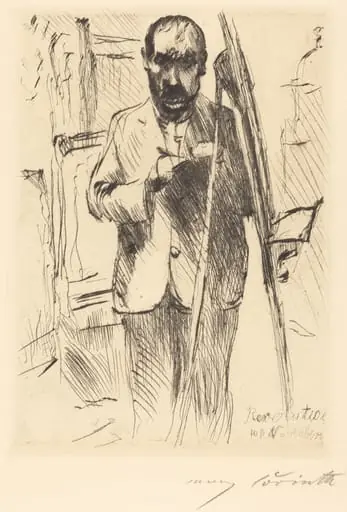 Selbstbildnis an der Staffelei (Self-Portrait with Easel)
 Henri de Toulouse-Lautrec
 Untitled
 Seated Man in Sixteenth-Century Costume
 Mr. Davis (Mr. Mann)
 Arthur Joseph Conrad