Artwork
Henri de Toulouse-Lautrec
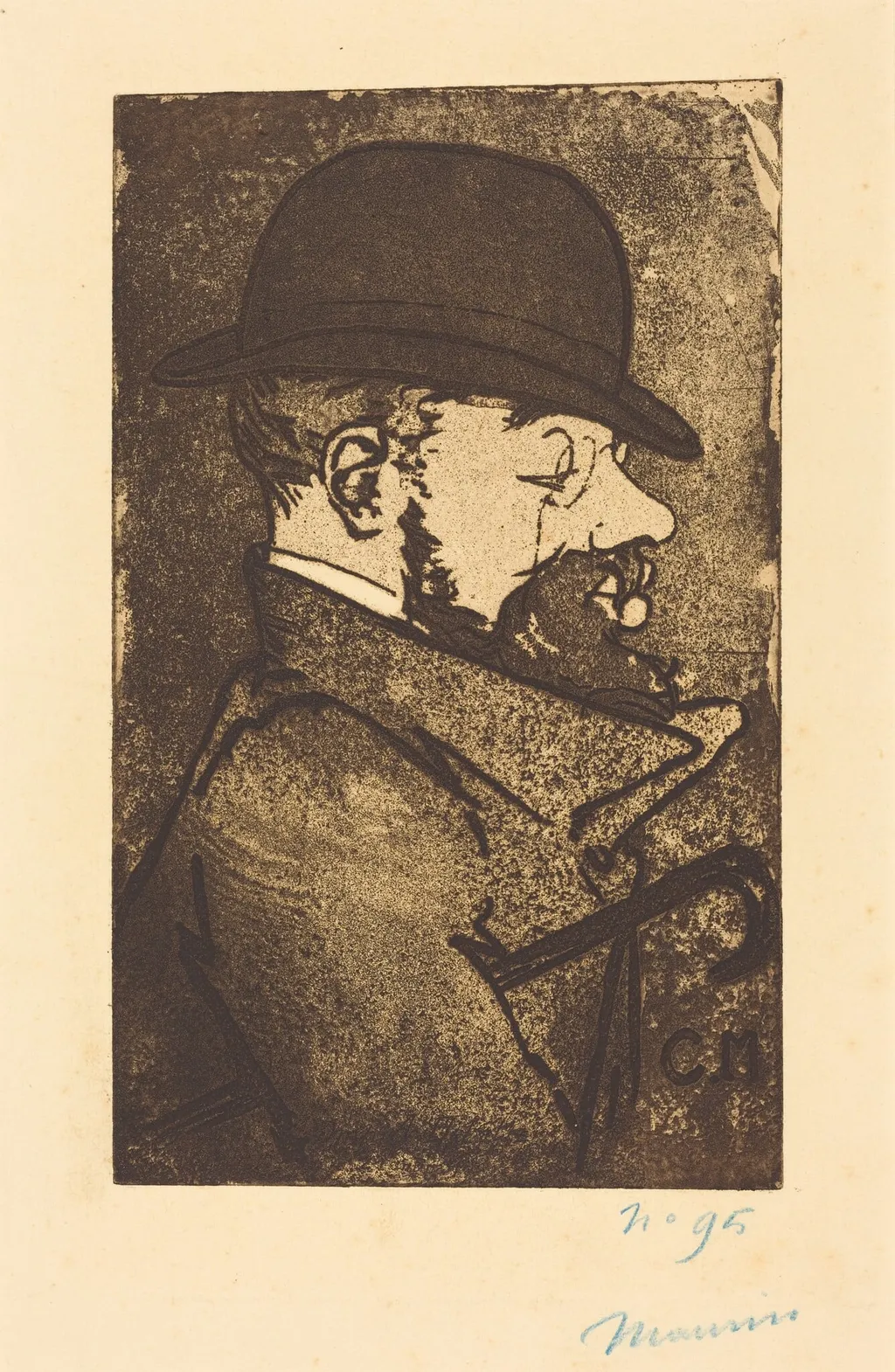
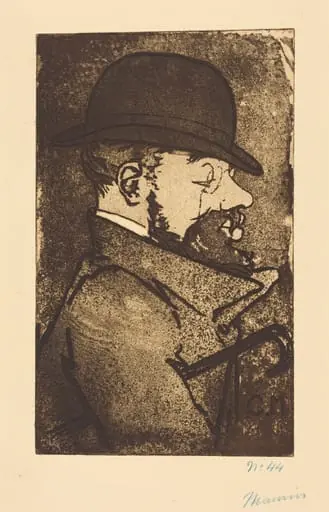
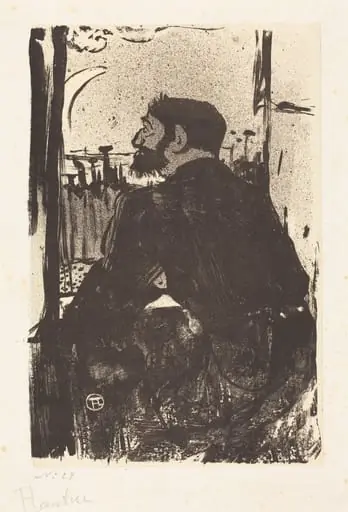
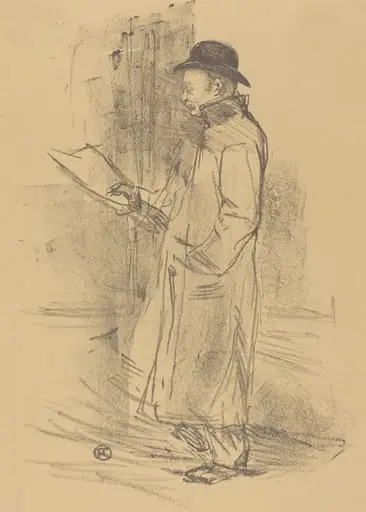
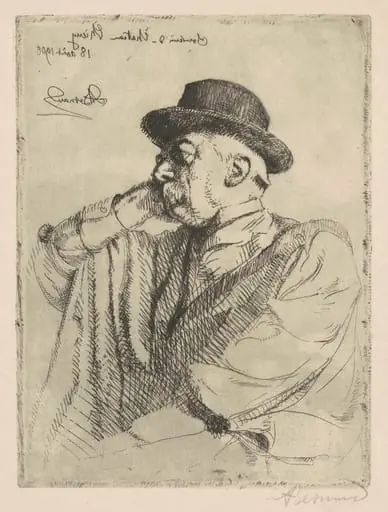
Henri de Toulouse-Lautrec is an ink print by the Impressionist artist Charles Maurin. It dates from 1890 and is held in the collection of the National Gallery of Art.
About this work
This is a grainy black-and-white portrait of a man in a wide-brimmed hat and a high-collared coat.
This is a grainy black-and-white portrait of a man in a wide-brimmed hat and a high-collared coat. His face is turned slightly away, and he holds a small object near his mouth. The background is dark and blurry, making him stand out.
The artist used a technique that creates a textured, almost sketchy look. This was made in 1890, and the style fits the Realism movement.
Next, look up etching to see how this kind of printmaking works.
Overview
Charles Maurin’s 1890 print, titled “Henri de Toulouse‑Lautrec,” presents a stark, monochrome portrait rendered in aquatint and etching. The image captures a solitary figure wearing a wide‑brimmed hat and a high‑collared coat, his profile turned slightly away while a small object rests near his mouth. A dark, indistinct backdrop isolates the subject, emphasizing the contrast between figure and void.
Subject & Meaning
The sitter, identified as the French painter Henri de Toulouse‑Lautrec, is depicted in a moment of quiet contemplation. The small object he holds—perhaps a cigarette or pipe—suggests a private, informal gesture, while his turned gaze invites speculation about his inner thoughts, aligning the work with the realist interest in everyday, unidealized moments.
Technique & Style
Maurin employed a combination of aquatint and traditional etching, producing a grainy, textured surface that resembles a rapid sketch. The method allows for subtle tonal variations, creating a smoky atmosphere and a sense of immediacy. The overall aesthetic aligns with late‑19th‑century Realism, favoring direct observation over decorative embellishment.
History & Provenance
Created in 1890, the print emerged during a period when both Maurin and Toulouse‑Lautrec were active in Parisian artistic circles. While the original ownership record is limited, the work has circulated among collections specializing in French printmaking of the Belle Époque, reflecting its relevance to studies of inter‑artist relationships of the era.
Context
The portrait belongs to a broader trend of artist-to-artist representations common in the 1880s and 1890s, when printmakers often honored peers through portraiture. Maurin’s choice of a stark, realist approach mirrors contemporary shifts away from academic idealization toward a more candid visual language that captured the personality of the subject.
Artist & collection