Artwork
Anne, Duc de Joyeuse
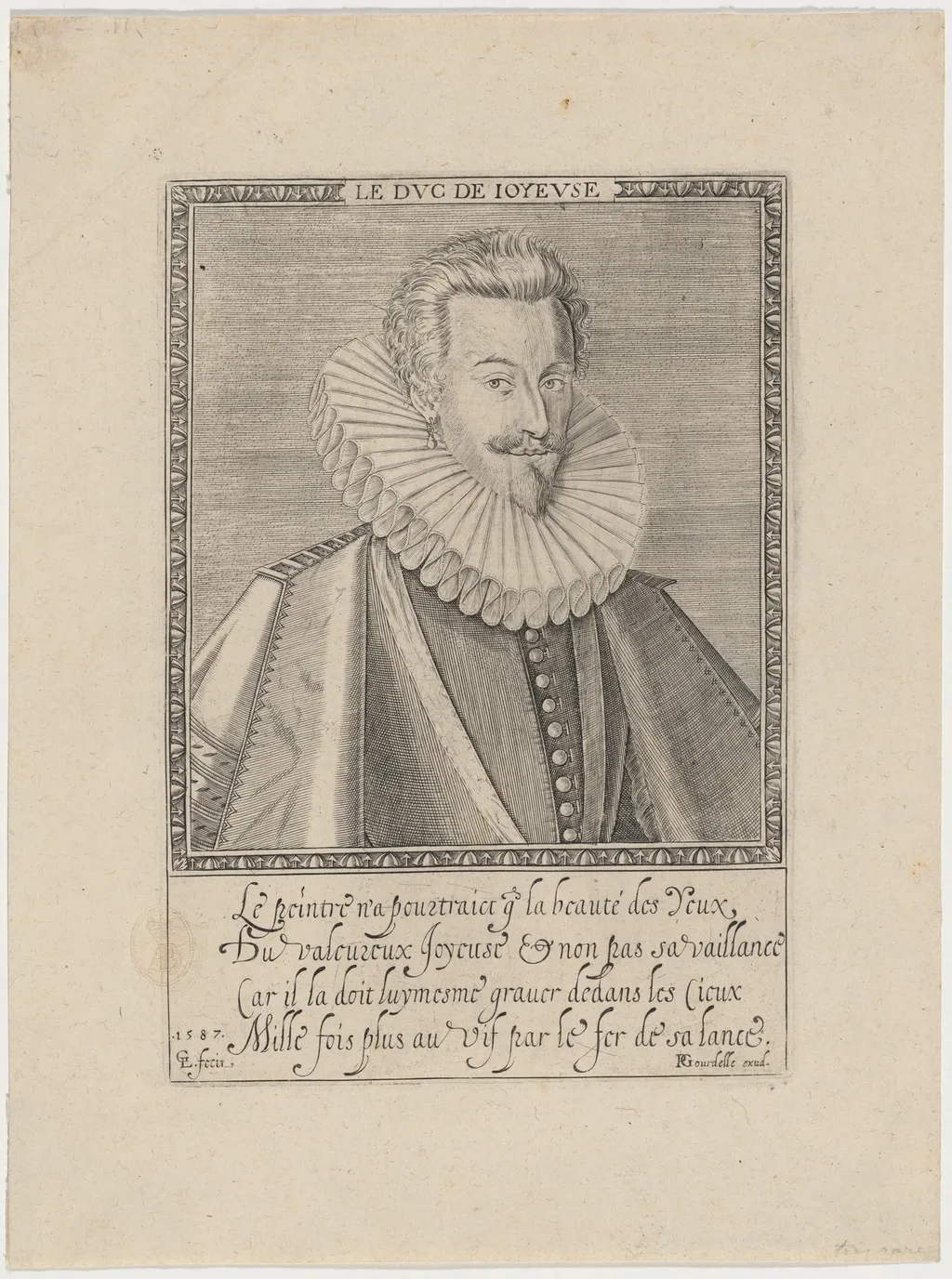
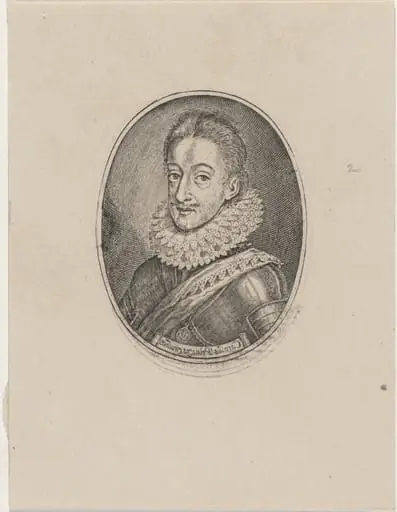
Anne, Duc de Joyeuse is an ink print by the Renaissance artist Unknown 19th Century. It dates from 1587 and is held in the collection of the National Gallery of Art.
About this work
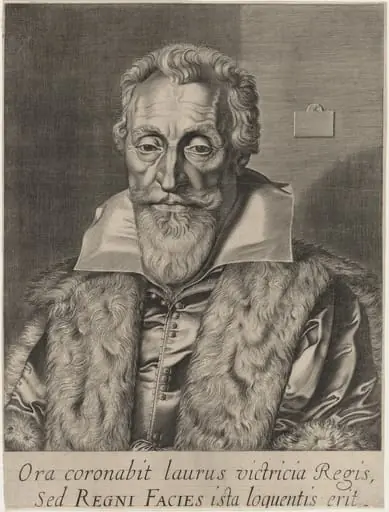
This is a black-and-white portrait of a man with a big, ruffled collar.
This is a black-and-white portrait of a man with a big, ruffled collar. His mustache is neatly trimmed, and his expression is serious. The lines on his face are sharp, drawn with careful detail.
The text below the image is in French and praises the man’s bravery. The date 1587 is written in the corner, showing this was made long ago.
Next, look up engraving to see how artists use lines to create depth.
Overview
This 1587 engraving depicts Anne, Duc de Joyeuse, a French nobleman and military commander. Rendered in monochrome, the portrait emphasizes fine linear detail to convey texture and form. The composition is formal, with the subject facing forward, framed by an elaborate ruffled collar. Below the image, French text extols his valor, aligning the visual with contemporary ideals of aristocratic virtue.
Subject & Meaning
Anne, Duc de Joyeuse, was a favored courtier of King Henry III and a prominent figure in France’s religious wars. The engraving presents him not merely as a nobleman but as a martial leader, his stern expression and precise grooming reinforcing his disciplined reputation. The accompanying inscription serves to memorialize his military conduct, reflecting how portraiture functioned as political propaganda in late 16th-century France.
Technique & Style
The portrait is executed in intaglio engraving, using incised lines to build tonal gradations and surface texture. The ruff’s folds, the contours of the face, and the mustache are rendered with controlled, deliberate strokes. The absence of color focuses attention on line quality, a hallmark of Northern European printmaking traditions. Sharp contrasts between light and shadow enhance the three-dimensionality of the features.
History & Provenance
Created in 1587, the engraving likely circulated among court circles shortly after Joyeuse’s rise to prominence. It may have been produced to commemorate his military campaigns or to reinforce his status following royal favor. The date inscribed suggests it was made during his lifetime, possibly by a printmaker connected to the French court, though the artist’s identity remains unconfirmed.
Context
In the late 1580s, France was deeply divided by religious conflict between Catholics and Huguenots. Joyeuse, a staunch Catholic, led royal forces in several key battles. Portraits like this one were tools of political messaging, designed to project strength and legitimacy. Engravings allowed such images to be reproduced and distributed, making them accessible beyond the aristocracy to a broader literate audience.
Legacy
Though Joyeuse died in battle in 1587, this engraving preserves his public image as a disciplined commander. It exemplifies how print culture shaped noble identity in early modern Europe, blending portraiture with propaganda. The work contributes to a broader corpus of 16th-century French prints that document the intersection of power, image, and print technology during a turbulent era.
Artist & collection

Artist

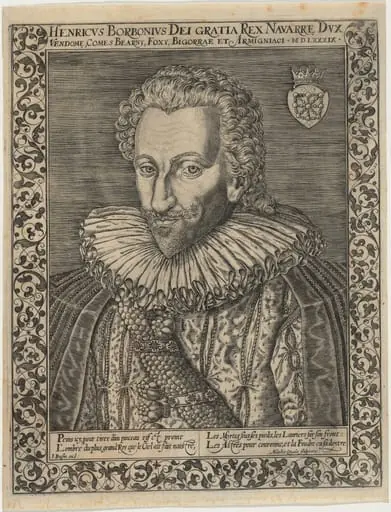 Henry IV of France
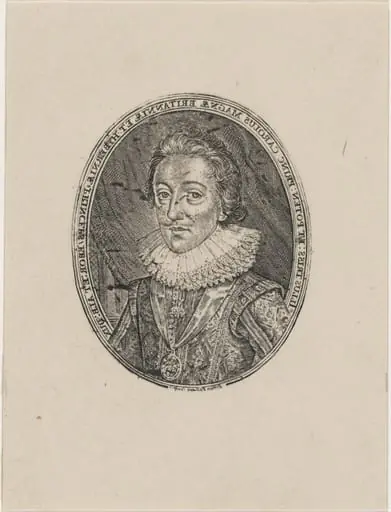 Charles I, King of England
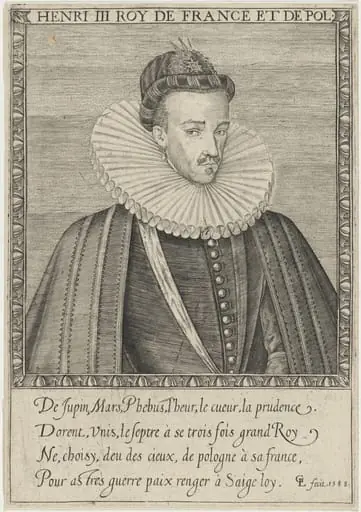 Henry III, Roy de France et de Pol
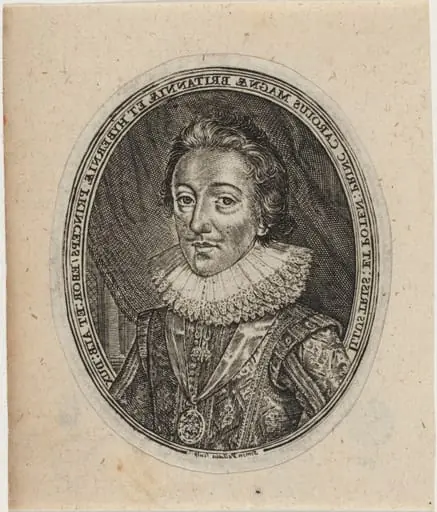 Charles I, King of England
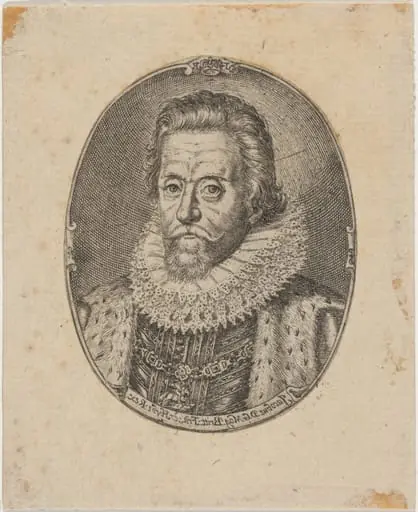 James I, King of England
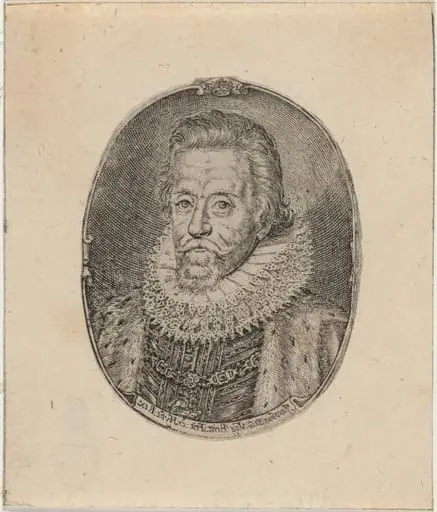 James I, King of England
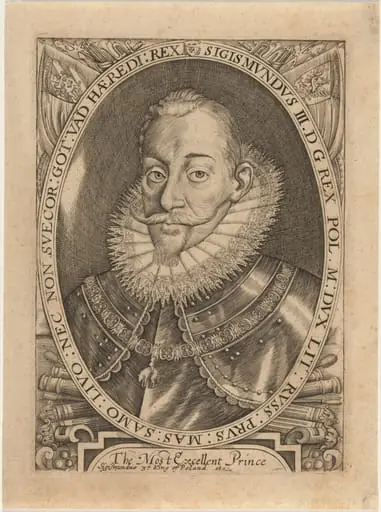 Sigismund III, King of Poland and Sweden
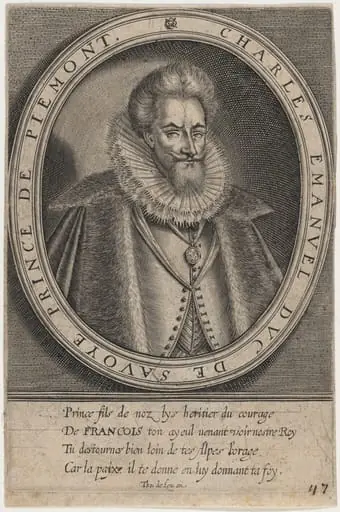 Charles Emmanuel I, Duke of Savoy, Prince of Piedmont
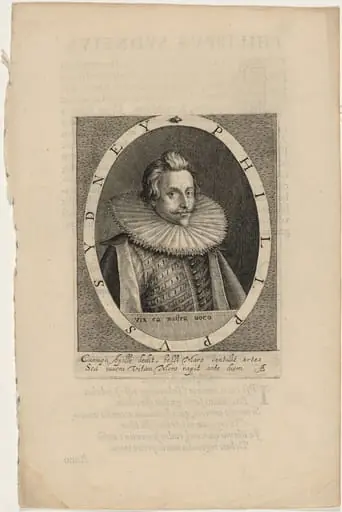 Sir Philip Sidney, Soldier and Poet
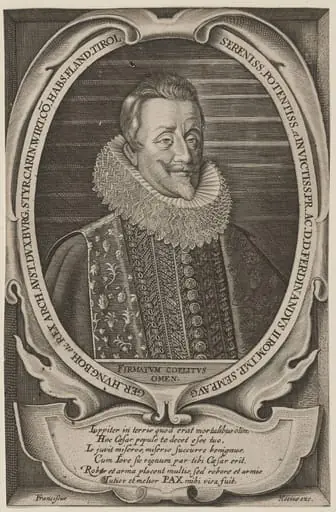 Ferdinand II, Roman Emperor
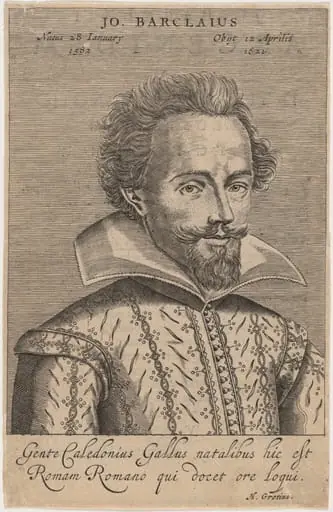 John Barclay
 Charles I, King of England