Artwork
James I, King of England
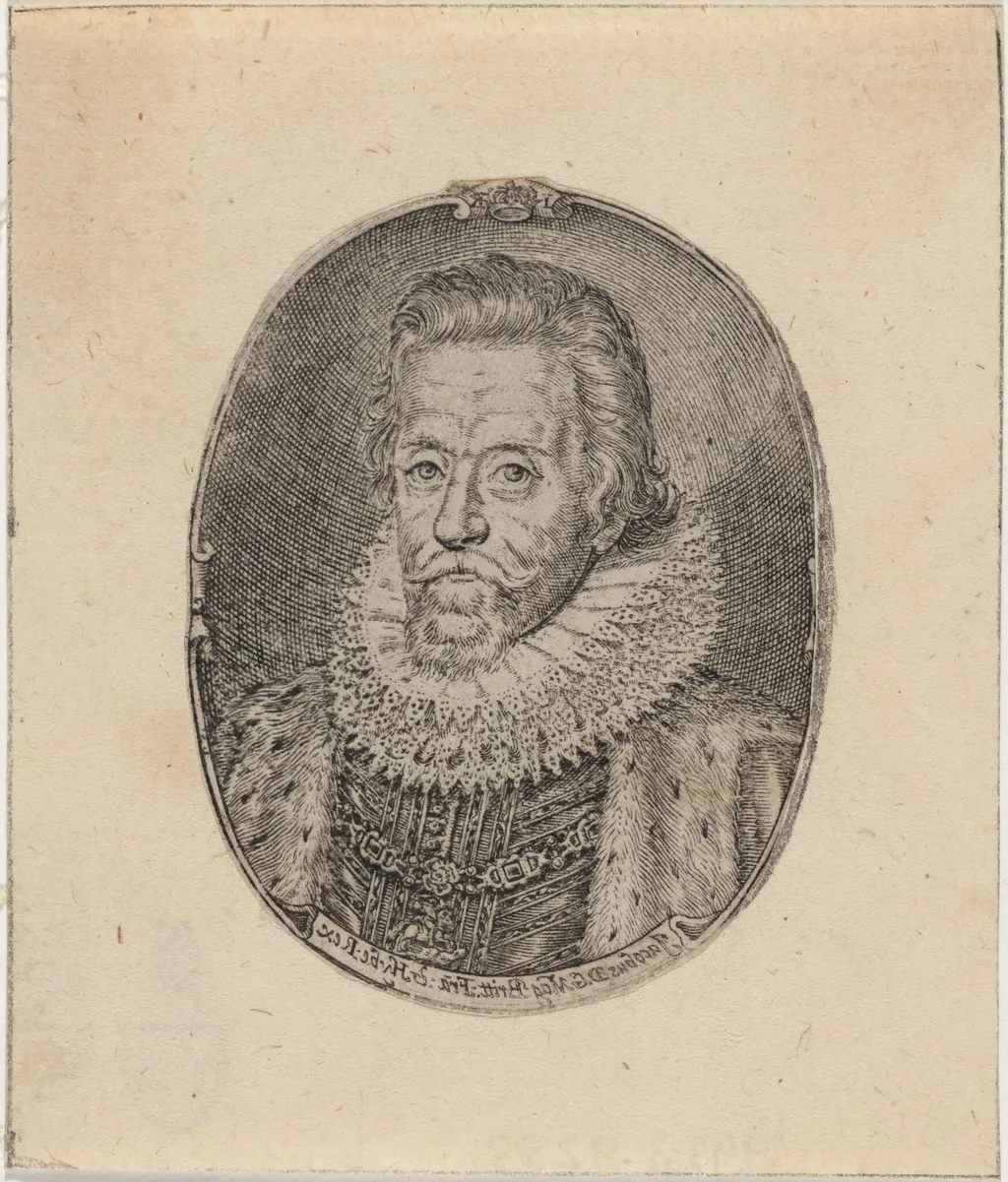
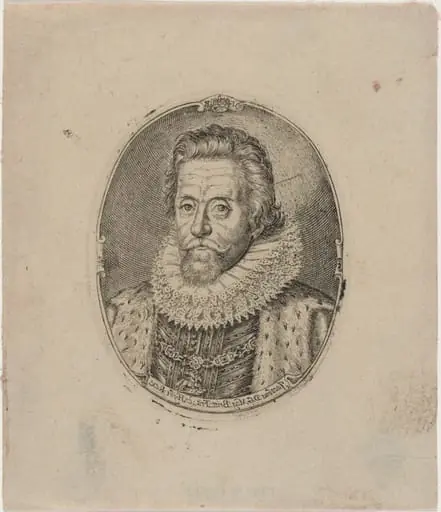
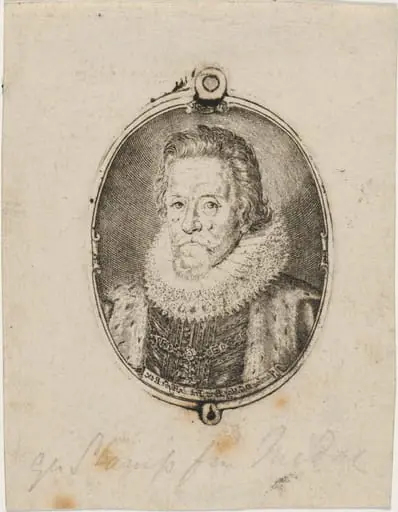
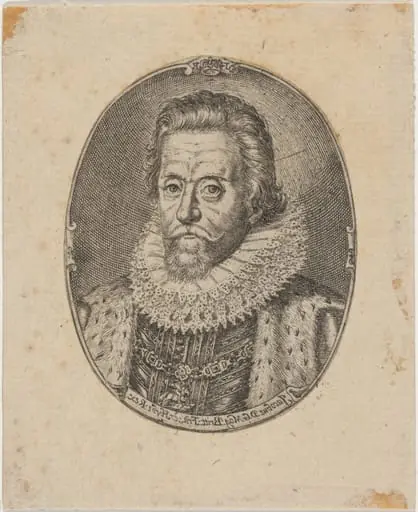
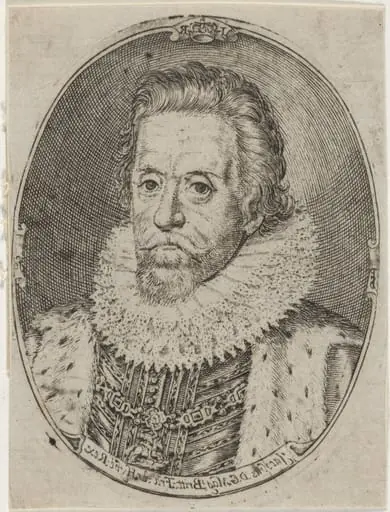
James I, King of England is an ink print by the Renaissance artist Simon van de Passe. It dates from 1621 and is held in the collection of the National Gallery of Art. This print is a black-and-white engraving derived from a silver medal struck in 1621.
About this work
Overview
The image is contained within a circular border, typical of commemorative medals, and includes inscriptive text along the lower edge.
This print is a black-and-white engraving derived from a silver medal struck in 1621. It depicts James I of England in profile, rendered with fine, precise lines that mimic the texture of metalwork. The image is contained within a circular border, typical of commemorative medals, and includes inscriptive text along the lower edge. The technique relies entirely on engraved lines to define form, avoiding tone or wash.
Subject & Meaning
The portrait presents James I as a sovereign of authority and solemnity. His full beard and ruffled collar reflect courtly dress of the early 17th century, while his direct gaze and composed expression convey regal dignity. The medal format suggests official commemoration, likely intended to reinforce his image as a legitimate and stable monarch during a period of political and religious tension in Britain.
Technique & Style
Simon van de Passe employed cross-hatching to model the king’s facial features and fabric textures. Fine, intersecting lines build gradations of light and shadow, creating volume without ink or tone. The precision of the engraving reflects the precision of medal-making, where each line must be carved into metal before casting. The result is a crisp, detailed likeness suited for reproduction and distribution.
History & Provenance
The original silver medal was commissioned in 1621, likely to mark a diplomatic or royal occasion. Van de Passe, a Dutch engraver working in England, produced both the medal and subsequent prints from it. The engraving served to disseminate the king’s likeness beyond the limited audience of the physical medal, making it a tool of political imagery in an era before mass printing.
Context
In early 17th-century England, portraiture was used to project royal legitimacy. James I, who united the crowns of England and Scotland, relied on visual culture to assert unity and authority. Engraved medals and prints like this one circulated among elites and foreign courts, functioning as both art and propaganda, reinforcing the monarch’s presence across a fragmented realm.
Legacy
Van de Passe’s engraving exemplifies the role of print in early modern statecraft. Though not widely known today, such works were instrumental in shaping public perception of monarchy. The precision of his technique influenced later portrait engravers, and surviving examples remain valuable records of how royal imagery was manufactured and circulated before photography.
Artist & collection