Artwork
Anne of Denmark
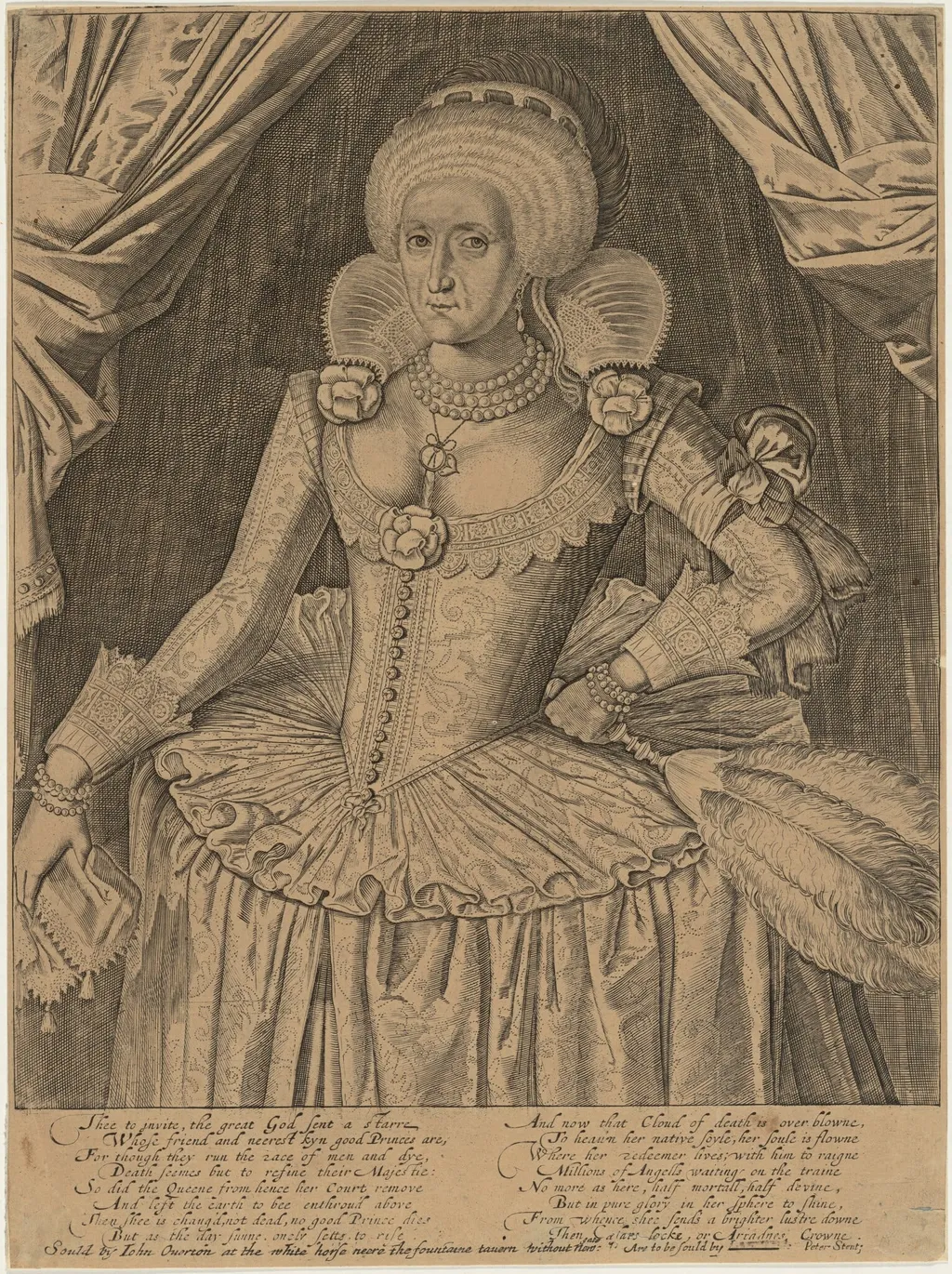
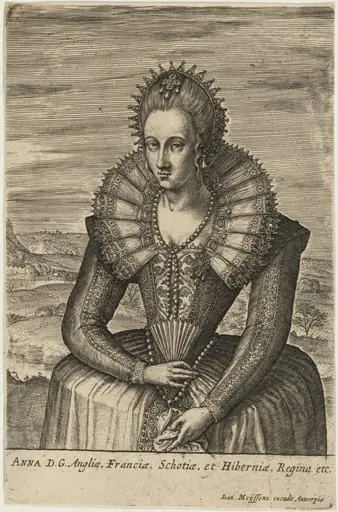
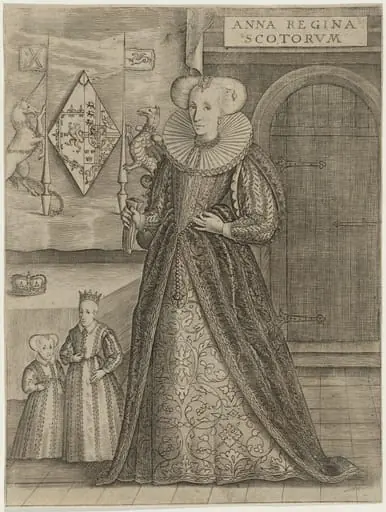
Anne of Denmark is an ink print by the Renaissance artist Cornelis Boel. It dates from 1598 and is held in the collection of the National Gallery of Art.
About this work
Overview
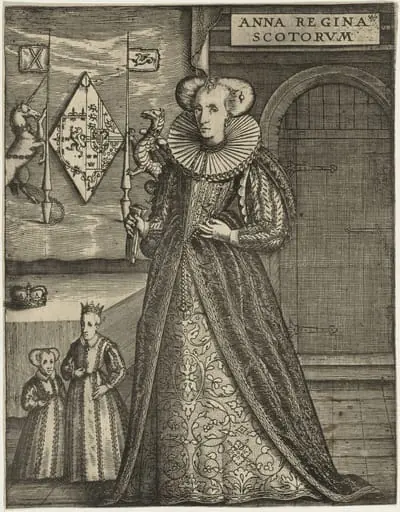
Cornelis Boel’s 1598 engraving portrays Anne of Denmark, queen consort of James VI and I. Executed in black ink on paper, the print presents a full‑length portrait that emphasizes the sitter’s status through elaborate costume and ornamental detail.
Subject & Meaning
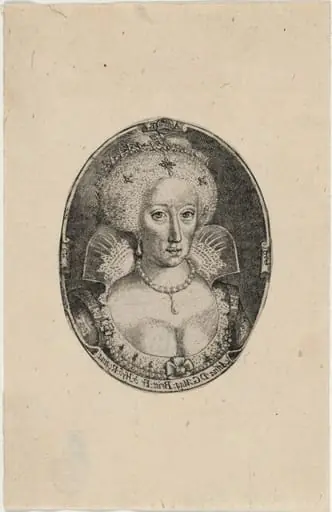
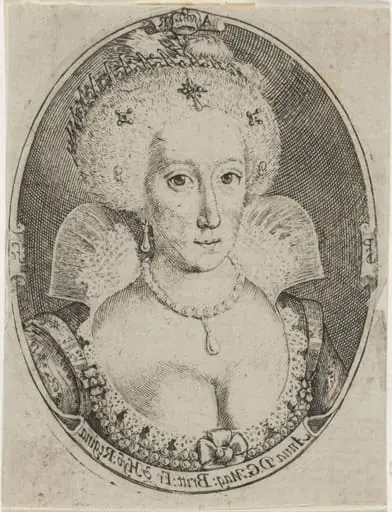
The figure is shown in contemporary aristocratic attire, complete with a high collar, ruff, and a richly patterned gown. Pearls and floral motifs adorn her hair and dress, signaling wealth and courtly refinement, while the surrounding drapery suggests a formal, indoor setting.
Technique & Style
Boel employs fine cross‑hatching, a method of intersecting lines, to render subtle gradations of light and shadow. This technique creates the illusion of texture on the fabric and the softness of the hair, giving the monochrome image a sense of depth and materiality.
History & Provenance
The engraving was produced shortly after Anne’s marriage to James VI of Scotland, later James I of England, and circulated as a means of disseminating her likeness across the kingdom. Copies of the print have been held in several European collections, reflecting its role in early modern portraiture.
Context
In the late sixteenth century, portrait engravings served both political and decorative purposes, allowing royal images to reach a wider audience than painted portraits. Boel’s work aligns with this practice, presenting the queen in a format suitable for display in homes and courts alike.
Artist & collection