Artwork
Bacon, Baxter, Blackstone, Beattie, Burns
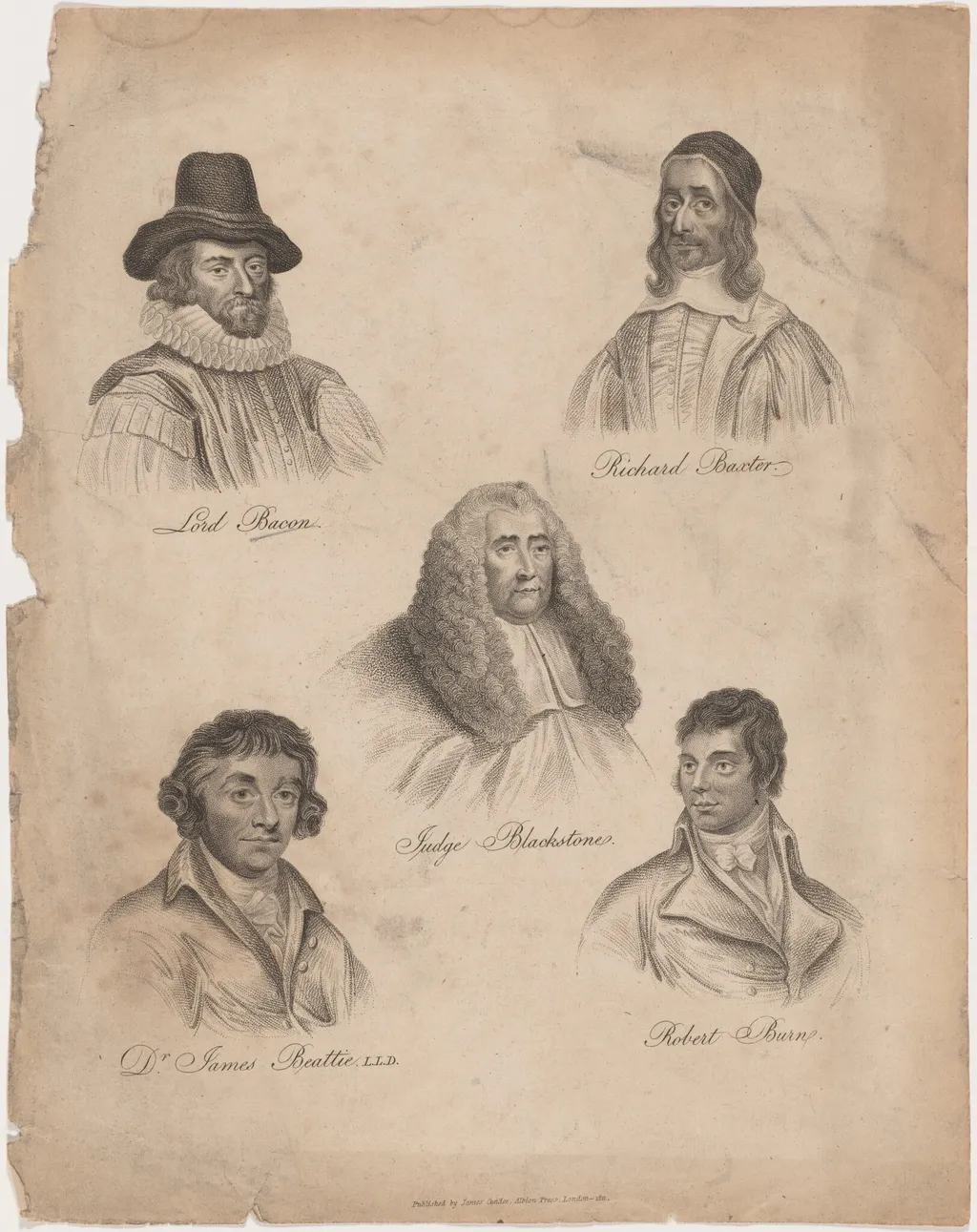
Bacon, Baxter, Blackstone, Beattie, Burns is an ink print by the Romanticist artist Unknown 19th Century. It dates from 1850 and is held in the collection of the National Gallery of Art. The work is an engraved print presenting five male portraits arranged side by side.
About this work
Overview
The work is an engraved print presenting five male portraits arranged side by side. Each figure is rendered in fine black lines against a light, slightly aged paper, giving the composition a uniform visual rhythm. The subjects are identified by hand‑written names beneath their heads, linking the images to specific individuals.
Subject & Meaning
The five sitters are identified as Bacon, Baxter, Blackstone, Beattie, and Burns. Their attire—ruffled collars, wigs, and elaborate coats—places them within an eighteenth‑century social milieu, suggesting a group of gentlemen whose status or profession warranted collective commemoration.
Technique & Style
Executed through traditional copper‑plate engraving, the image relies on incised lines that produce a dense, dark rendering of facial features while preserving a delicate tonal contrast with the paper. The tight, controlled line work emphasizes the contours of the faces and the texture of the period clothing.
History & Provenance
The print appears on yellowed, worn paper, indicating age and prior handling. No specific date or publisher is noted, but the fashion of wigs and ruffled collars points to a production period in the late 1700s to early 1800s, typical of portrait series circulated among acquaintances or professional circles.
Context
Portrait engravings of multiple sitters were common in the era as a means of documenting members of societies, guilds, or familial groups. This piece fits within that tradition, providing a visual record of five individuals whose shared identity is conveyed through uniform presentation.
Artist & collection

Artist

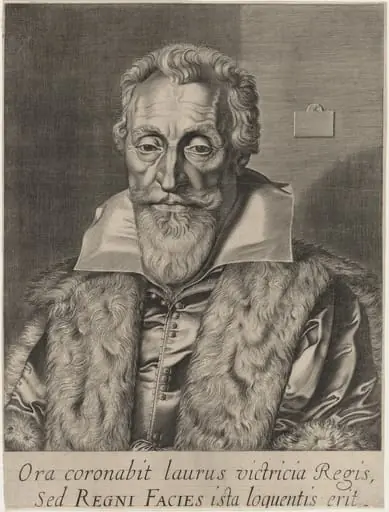
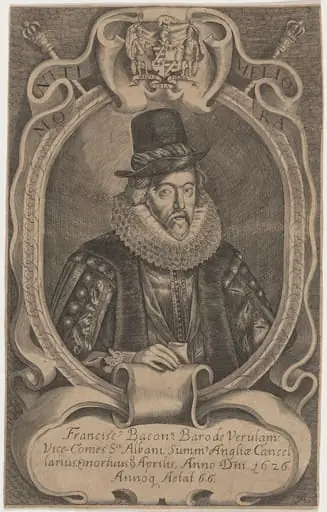 Francis Bacon
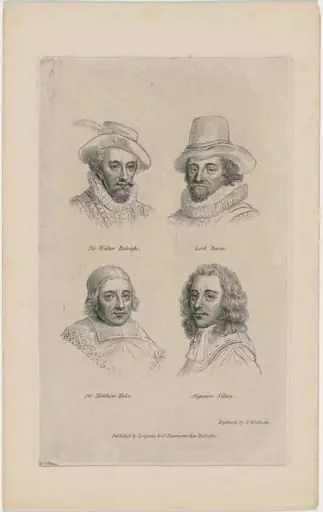 Portraits of Sir Walter Raleigh, Lord Bacon, Algernon Sidney, and Sir Matthew Hale
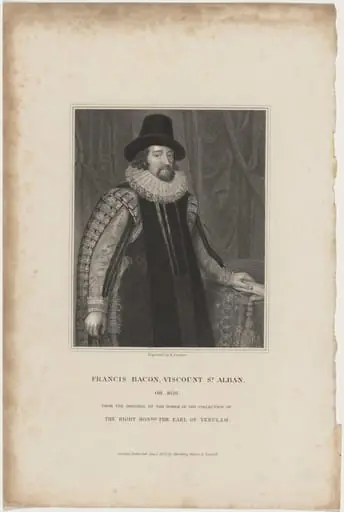 Francis Bacon
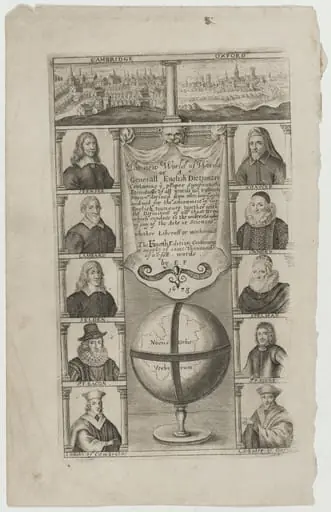 Title Page to The New World of Words or A General English Dictionary
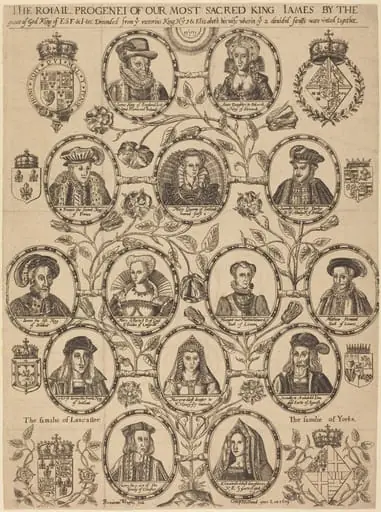 Royal Progeny of King James
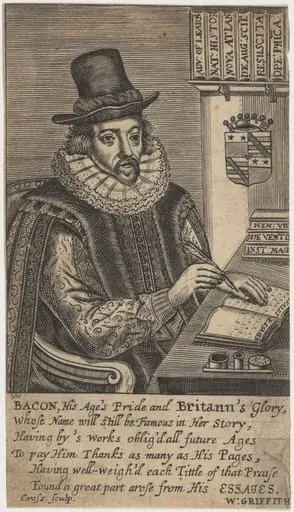 Francis Bacon
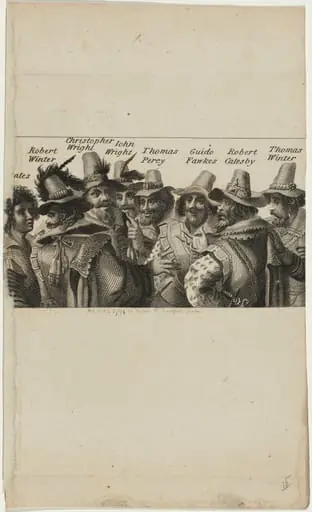 Figures in Gunpowder Plot
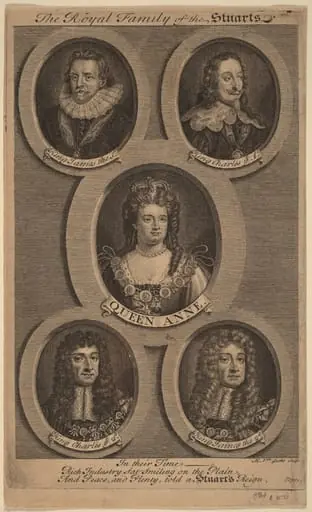 The Royal Family of the Stuarts
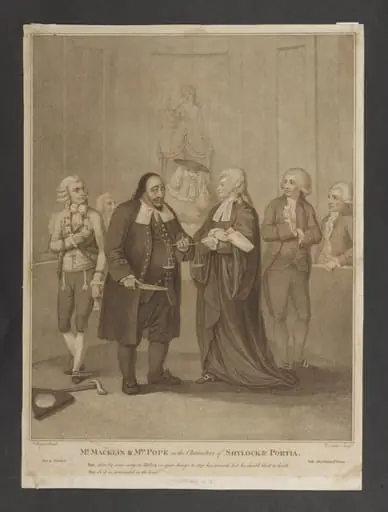 Harry Beard Print Collection