Artwork
Francis Bacon
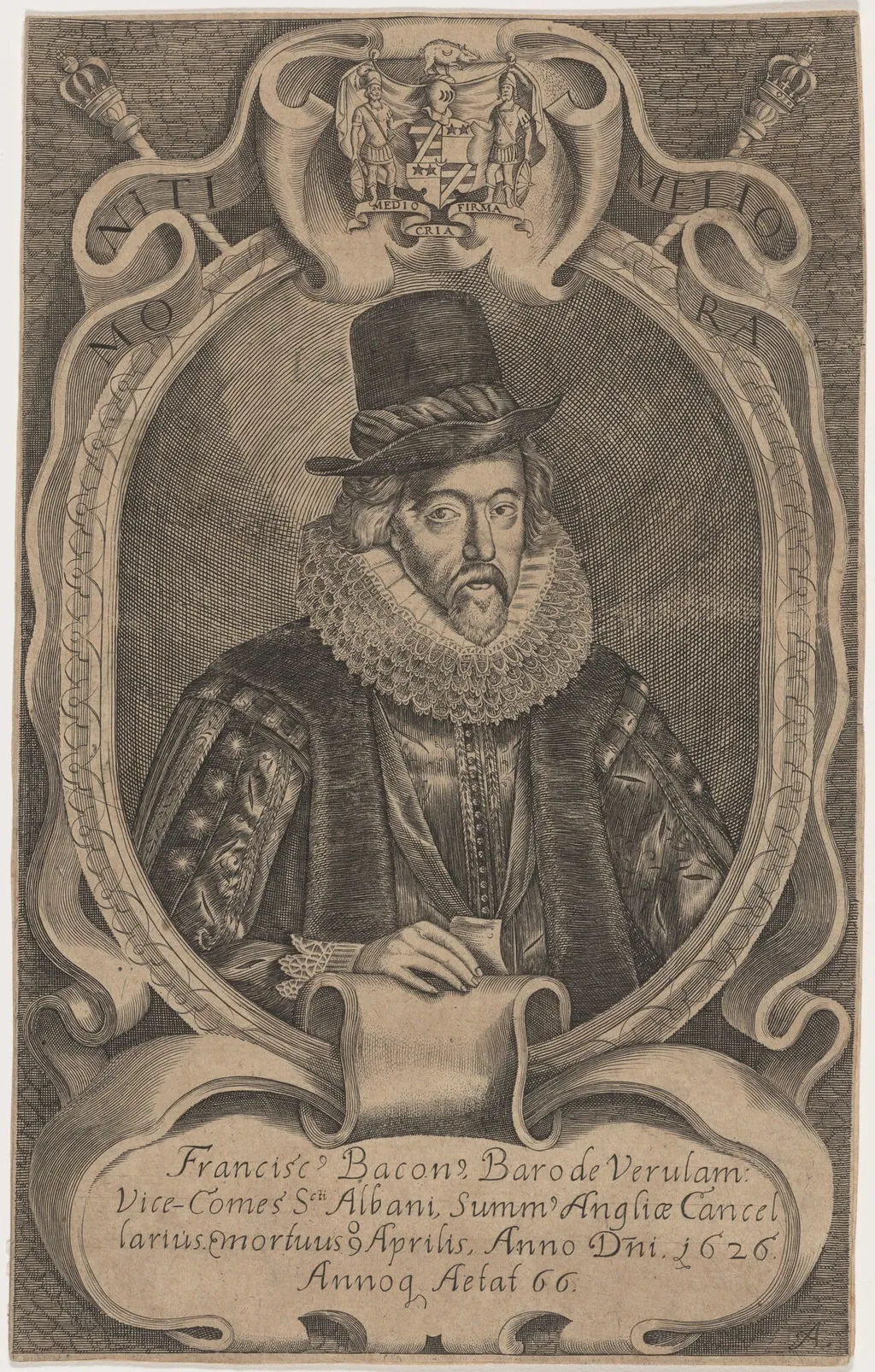
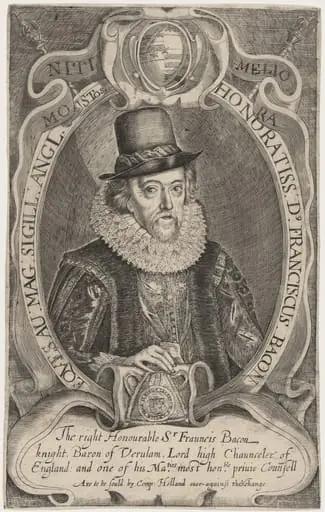
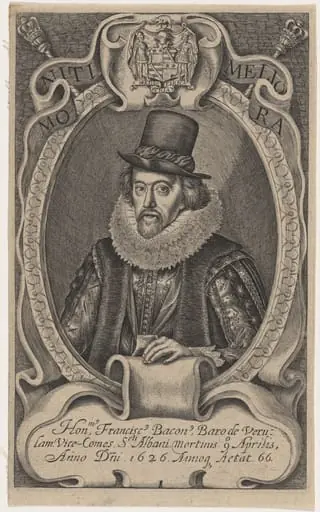
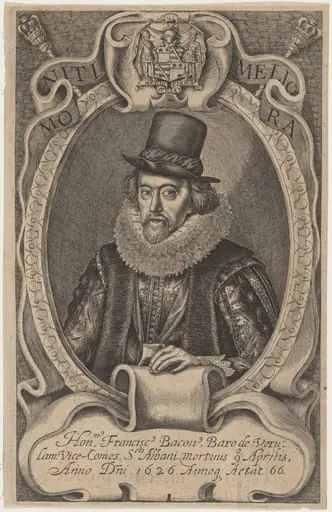
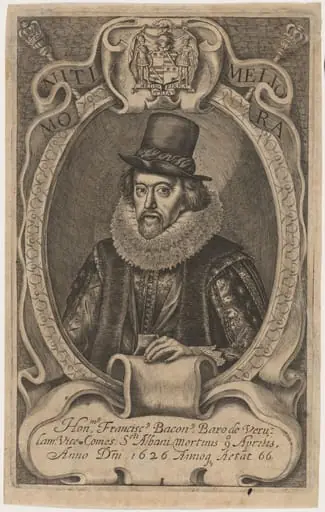
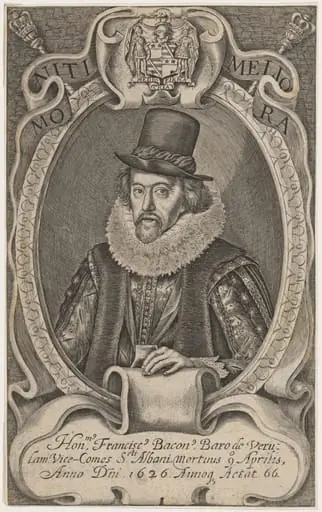
Francis Bacon is an ink print by the Romanticist artist Unknown 19th Century. It dates from 1850 and is held in the collection of the National Gallery of Art.
About this work
Overview
The composition is densely framed by ornate scrolls and swirling lines, creating a sense of visual richness that extends beyond the figure into the border.
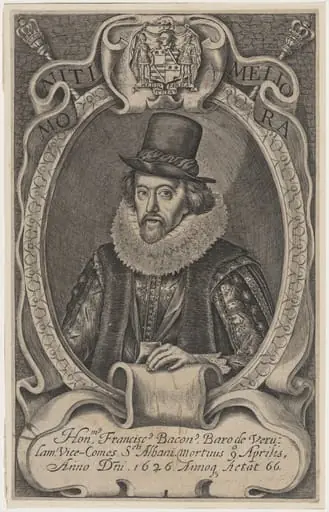
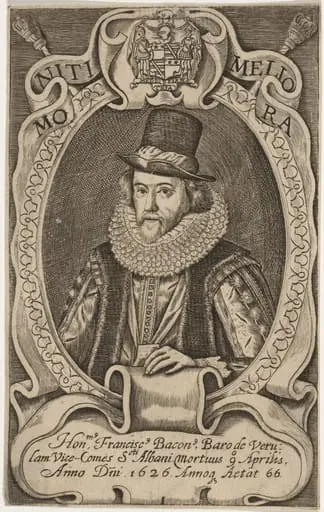
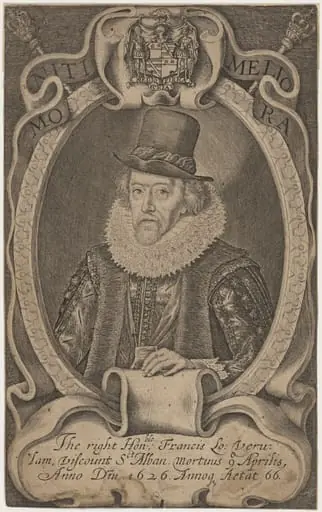
This black-and-white engraving presents a formal portrait of a man dressed in 17th-century attire, including a high collar with ruffles, a dark coat, and a broad-brimmed hat. His hands rest on a document, while an elaborate coat of arms hovers above him, flanked by two figures. The composition is densely framed by ornate scrolls and swirling lines, creating a sense of visual richness that extends beyond the figure into the border.
Subject & Meaning
The subject is identified by text at the base, though the portrait’s style suggests it was produced long after his lifetime. The inclusion of a coat of arms and scholarly posture implies status and intellectual authority. The image functions as a posthumous commemoration, using heraldic symbols and formal dress to reinforce social standing rather than capture a lifelike likeness.
Technique & Style
Executed as an engraving, the image relies on fine incised lines to build tone and texture, typical of printmaking before photography. The intricate border and detailed rendering of fabric and armor reflect a decorative tradition common in 18th-century portraiture. The contrast between the static figure and the dynamic, crowded frame creates a tension between restraint and ornamentation.
History & Provenance
Though the individual depicted lived in the 1600s, the print was likely made decades or even a century later, possibly for archival or genealogical purposes. Such engravings were often reproduced from earlier paintings or drawings, serving as standardized representations for families or institutions. The date inscribed may refer to the subject’s lifetime, not the print’s creation.
Context
In the 18th century, engraved portraits of historical figures were widely circulated among the educated elite, often bound in family albums or displayed in private libraries. The use of heraldry and elaborate borders aligned with contemporary tastes for antiquarianism and lineage. This print reflects a broader trend of visually preserving historical identity through stylized, symbolic imagery.
Legacy
As a product of pre-photographic reproduction, this engraving exemplifies how historical memory was shaped through printed media. Its stylistic choices—formal pose, symbolic elements, and decorative framing—became conventions for portraying authority. Though not a direct likeness, it contributed to the enduring visual identity of its subject in later collections and publications.
Artist & collection

Artist