Artwork
The Royal Family of the Stuarts
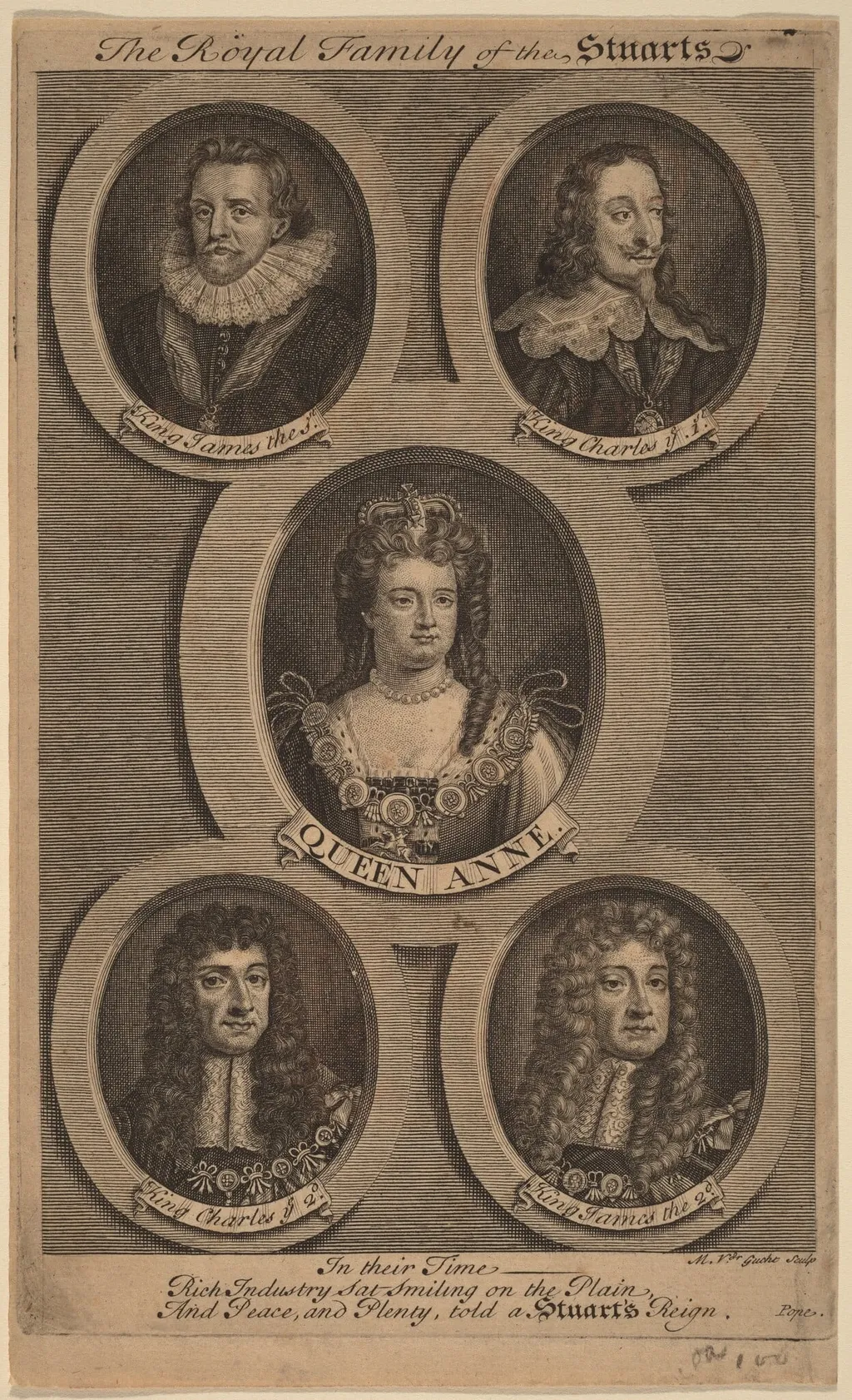
The Royal Family of the Stuarts is an ink print by the Baroque artist Michiel van der Gucht. It dates from 1692 and is held in the collection of the National Gallery of Art.
About this work
Overview
Five figures—two at the top, one centrally placed, and two below—are depicted with precise linear detail, characteristic of the intaglio printmaking process.
This 1692 engraving by Michiel van der Gucht presents the Stuart monarchs in a structured arrangement of oval portraits. Five figures—two at the top, one centrally placed, and two below—are depicted with precise linear detail, characteristic of the intaglio printmaking process. The work’s composition and accompanying inscription suggest an intent to commemorate the dynasty’s lineage and perceived virtues during its rule.
Subject & Meaning
The engraving depicts five Stuart sovereigns: James I, Charles I, Anne, Charles II, and James II. Their ordered placement within a grid reflects dynastic continuity, while the accompanying verse—*“In their Time Rich Industry sat Smiling on the Plain / And Peace, and Plenty, held a Stuart’s Reign”*—idealizes their governance. The imagery and text together frame the Stuarts as patrons of prosperity and stability, a narrative likely shaped by political allegiance or patronage.
Technique & Style
Executed in engraving, the print relies on fine, incised lines to render textures—from lace collars to powdered wigs—with meticulous precision. The dark, cross-hatched background contrasts sharply with the luminous oval portraits, enhancing their prominence. Van der Gucht’s technique adheres to the conventions of late 17th-century reproductive engraving, prioritizing clarity and detail over expressive flourish, while the symmetrical composition reinforces the work’s commemorative function.
History & Provenance
Produced in 1692, the engraving emerged during a period of political turbulence for the Stuart dynasty, following James II’s deposition in the Glorious Revolution of 1688. Its creation may reflect lingering support for the exiled monarch or an attempt to shape historical memory. As a print, it was likely disseminated widely, though specific early owners or editions remain unrecorded. The work survives as a document of both artistic practice and contemporary political sentiment.
Context
The engraving reflects the role of printed imagery in shaping public perception of monarchy during the late Stuart era. Prints like this served propagandistic or commemorative purposes, circulating among literate audiences to reinforce dynastic legitimacy. Its creation in 1692—four years after James II’s exile—suggests an effort to counter narratives of instability, instead emphasizing the dynasty’s historical association with order and abundance.
Legacy
As a reproductive engraving, the work exemplifies the period’s reliance on print media to disseminate royal iconography. While not an original composition, it contributes to the visual record of the Stuart dynasty, preserving likenesses and ideological claims for later audiences. Its survival in collections underscores the enduring interest in dynastic portraiture as both historical evidence and artistic artifact.
Artist & collection

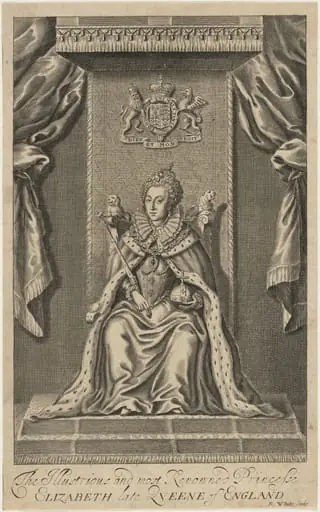 Queen Elizabeth Enthroned
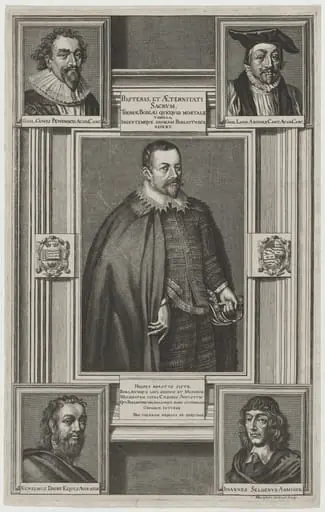 Sir Thomas Bodley, Founder of the Bodleian Library
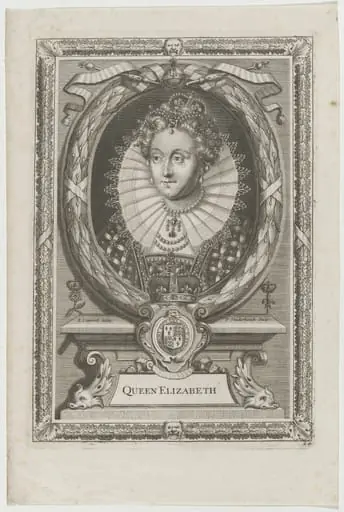 Queen Elizabeth
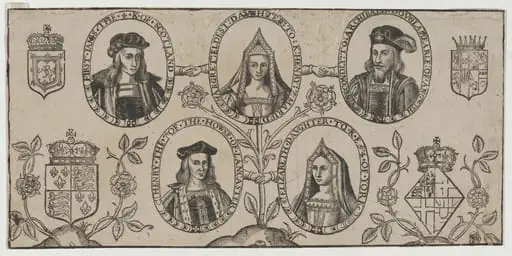 James IV of Scotland, Margaret, Daughter of Henry VII, Archibald Douglas, Earl of Angus, Henry VII, Elizabeth of York
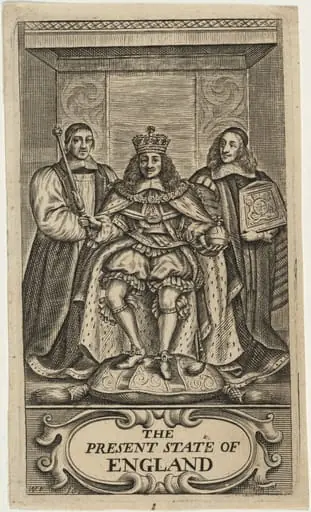 Title Page to The Edward Chamberlayne, The Present State of England
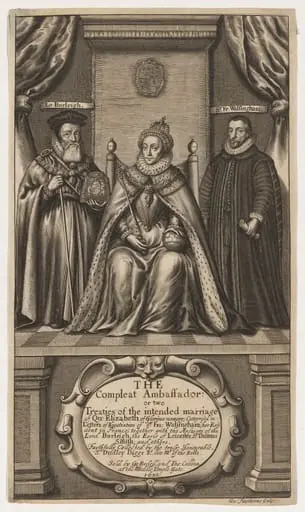 Title Page to Sir Dudly Digges, The Compleat Ambassador
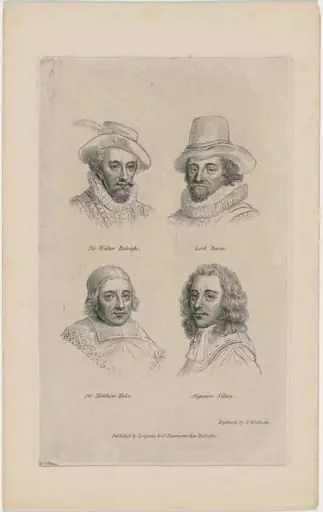 Portraits of Sir Walter Raleigh, Lord Bacon, Algernon Sidney, and Sir Matthew Hale
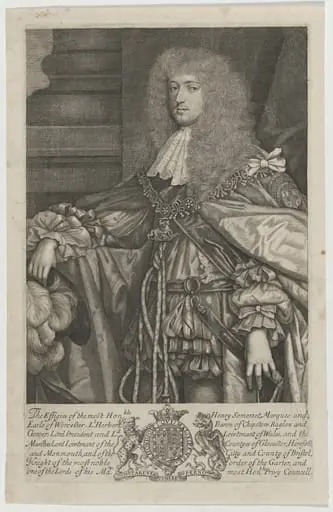 Henry Somerset, First Duke of Beaufort
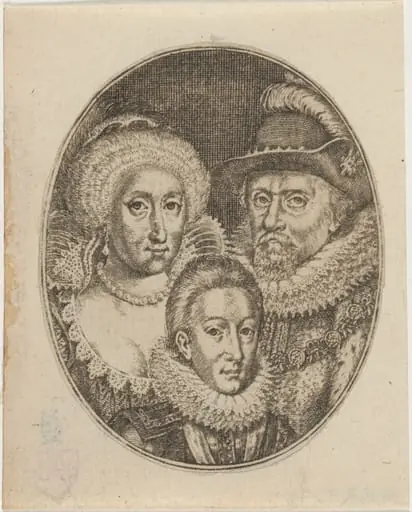 James I, Anne of Denmark, and Prince Charles
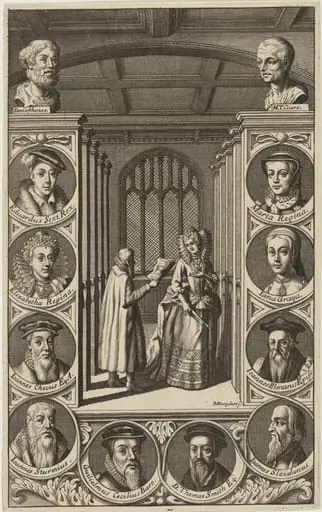 Roger Assham and Mary Surrounded by MedallianPortraits