Artwork
Charles, Count of Bucquoy
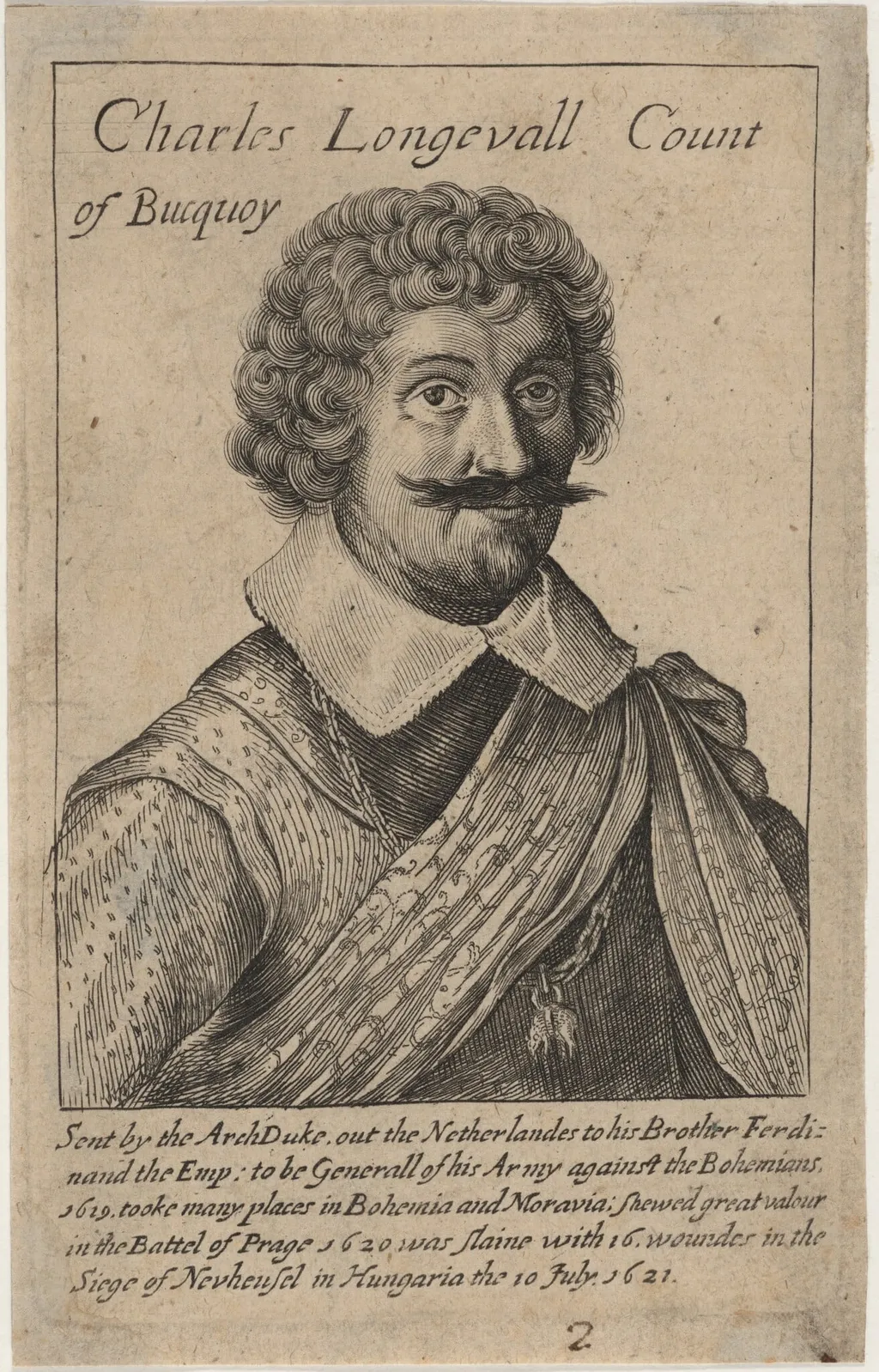
Charles, Count of Bucquoy is an ink print by the Romanticist artist Unknown 19th Century. It dates from 1850 and is held in the collection of the National Gallery of Art.
About this work
Overview
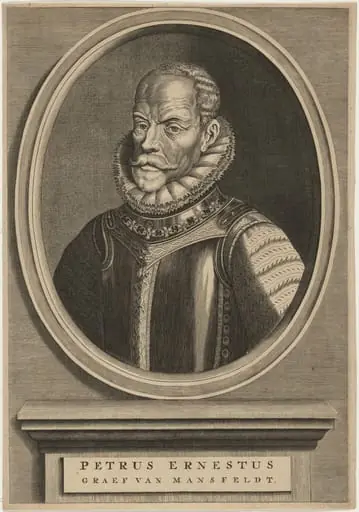
Inscriptions at top and bottom identify him and note his military service, aligning the image with documentary intent rather than artistic flourish.
This black-and-white engraving depicts Charles, Count of Bucquoy, a military figure of the early 17th century. Executed with fine linear incisions, the portrait emphasizes facial detail and textured fabric, typical of engraved portraiture. The plain background isolates the subject, reinforcing a formal, dignified tone. Inscriptions at top and bottom identify him and note his military service, aligning the image with documentary intent rather than artistic flourish.
Subject & Meaning
Charles de Bucquoy was a Habsburg general active during the Thirty Years' War. The portrait presents him with solemn expression and elaborate attire, signaling rank and authority. The ruffled collar and patterned shoulder ornament reflect aristocratic military dress of the period. The inclusion of his title and role transforms the image into a visual credential, intended to affirm status and service to the imperial cause.
Technique & Style
The image is rendered through meticulous engraving, with fine lines scratched into a metal plate to create tonal variation. Cross-hatching defines the folds of fabric and the contours of the face, while the smooth texture of skin contrasts with the intricate detail of the collar. The absence of tone or shading beyond line work reflects the precision and restraint characteristic of Northern European printmaking traditions of the era.
History & Provenance
Produced during or shortly after Bucquoy’s lifetime, the engraving likely served as a reproductive portrait for distribution among military circles or noble households. Its survival suggests it was valued as a record of a prominent commander, possibly commissioned by allies or the imperial court. No known original plate survives, but multiple impressions were likely circulated in the decades following his death in 1621.
Context
Engraved portraits like this were common tools for disseminating the likenesses of military and political leaders before photography. In the context of the Thirty Years' War, such images reinforced loyalty to the Habsburg dynasty and helped construct the public persona of commanders. Bucquoy’s role in key battles made him a suitable subject, and his portrait would have circulated among officers and courtiers as both tribute and propaganda.
Legacy
The engraving stands as a modest but precise example of early 17th-century portraiture in print. It contributes to the visual archive of Habsburg military leadership and reflects the era’s reliance on engraved images for identity and commemoration. While not widely known today, it remains a tangible artifact of how authority was visually constructed and preserved in pre-modern Europe.
Artist & collection

Artist