Artwork
Coat of Arms in a Circle
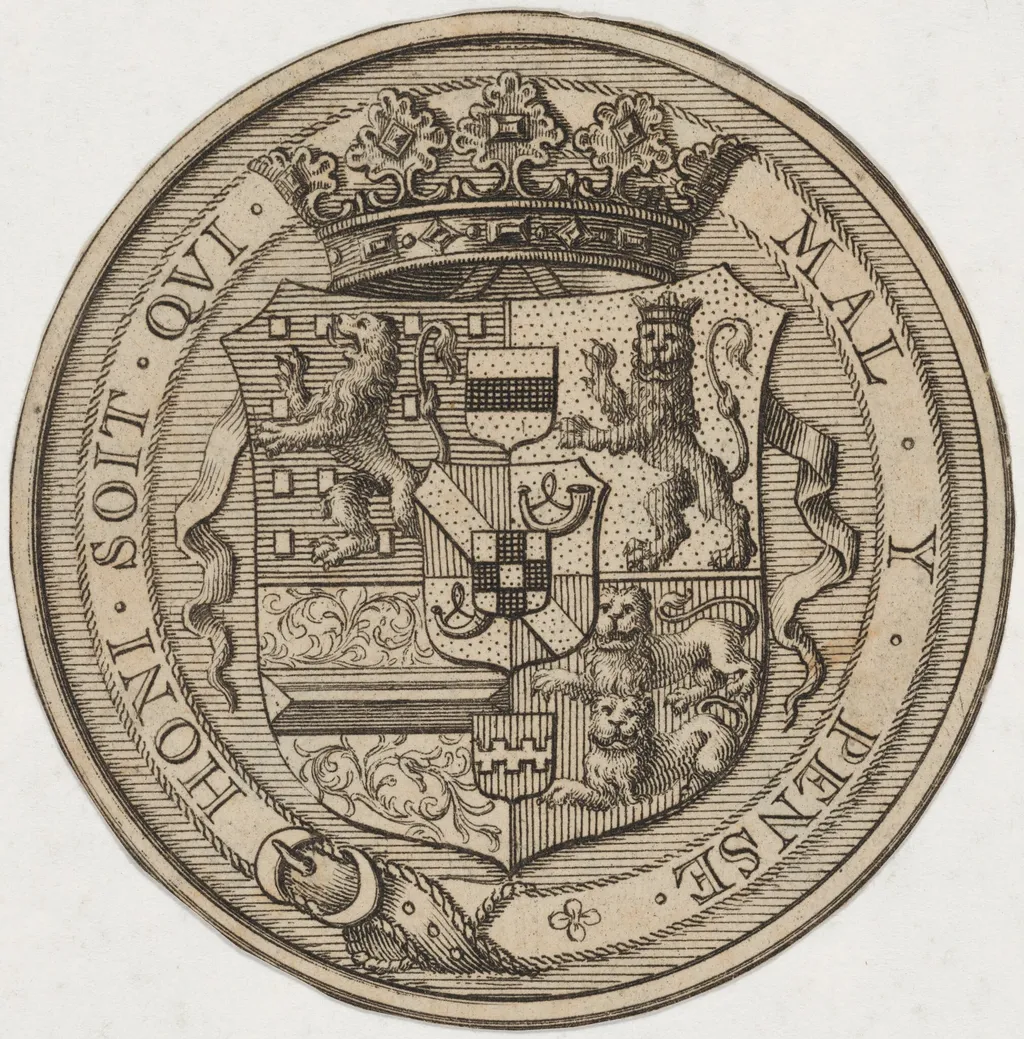
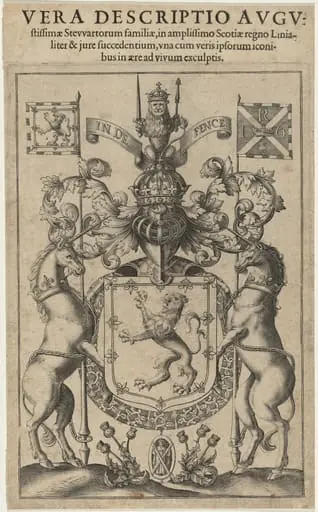
Coat of Arms in a Circle is an ink print by the Romanticist artist Unknown 19th Century. It dates from 1850 and is held in the collection of the National Gallery of Art. This engraving presents a heraldic emblem enclosed within a circular frame, rendered in fine linear detail.
About this work
Overview
The entire design is built using cross-hatching and stippling to suggest volume and texture, typical of detailed printmaking from the early modern period.
This engraving presents a heraldic emblem enclosed within a circular frame, rendered in fine linear detail. The composition centers on a shield bearing a coat of arms, flanked by two upright lions and crowned at the top. Surrounding elements include a floral wreath, scrollwork, and a banner with inscribed text. The entire design is built using cross-hatching and stippling to suggest volume and texture, typical of detailed printmaking from the early modern period.
Subject & Meaning
The imagery reflects traditional heraldic symbolism, where the shield represents lineage or authority, the lions signify courage or nobility, and the crown denotes sovereignty. The wreath and scrollwork may allude to honor or achievement, while the banner likely carries a motto or name. Such designs were often used to assert identity, status, or institutional legitimacy, commonly found in official documents or family seals.
Technique & Style
The artist employed meticulous cross-hatching and dotwork to model form and depth without color. Fine, intersecting lines build shadow and texture across the lions’ fur, the shield’s surface, and the background, creating a sense of three-dimensionality. Decorative borders and lettering are rendered with precision, reflecting the technical discipline of engraved prints. The style prioritizes clarity and symbolic legibility over naturalistic detail.
History & Provenance
This print likely originated in Europe during the 16th or 17th century, when heraldic engravings were widely produced for aristocratic, ecclesiastical, or civic use. Its circular format and ornamental framing suggest it may have been part of a larger series or used as a seal impression. Exact origin and maker remain undocumented, but similar works appear in archival collections from German, Dutch, or French workshops.
Context
Heraldic engravings like this were integral to early modern visual culture, serving as markers of identity in an era before widespread photography. They appeared in manuscripts, official seals, and printed broadsheets. The use of intricate line work reflects the influence of goldsmithing and metal engraving traditions, where precision and durability were valued over expressive brushwork.
Legacy
Though not attributed to a renowned artist, this engraving exemplifies the enduring role of heraldic imagery in institutional and familial representation. Its technical approach influenced later printmakers and remains a reference for studying pre-industrial methods of image-making. Such works continue to inform historical research into social hierarchy and visual communication in early modern Europe.
Artist & collection

Artist

![Shield of Queen Elizabeth [left half], by Simon van de Passe](https://artifactworldgallery.com/img/simon-van-de-passe--shield-of-queen-elizabeth-left-half--f4b61579dbc6b41d-w320.webp) Shield of Queen Elizabeth [left half]
Shield of Queen Elizabeth [left half]![Shield of James I [bottom half], by Simon van de Passe](https://artifactworldgallery.com/img/simon-van-de-passe--shield-of-james-i-bottom-half--5f78c9059311c27d-w320.webp) Shield of James I [bottom half]
Shield of James I [bottom half]![Shield of James I [bottom half], by Simon van de Passe](https://artifactworldgallery.com/img/simon-van-de-passe--shield-of-james-i-bottom-half--ba628f9c8498bd19-w320.webp) Shield of James I [bottom half]
Shield of James I [bottom half]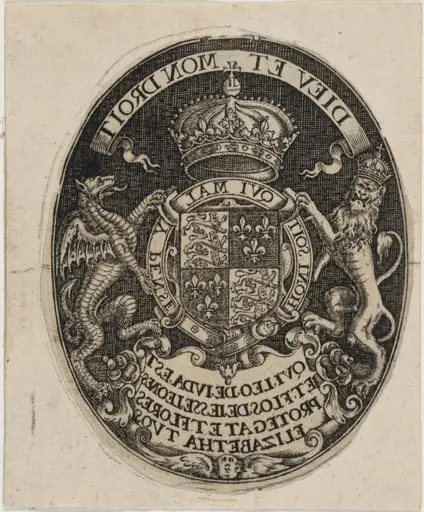 Shield of Queen Elizabeth
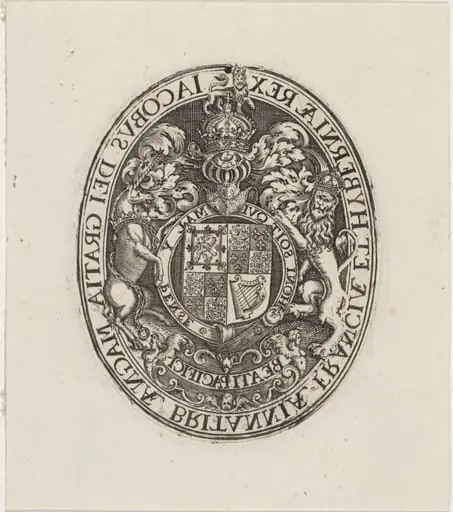 Shield of James I
![Shields of Henry IV and Maria de Medici [bottom half], by Simon van de Passe](https://artifactworldgallery.com/img/simon-van-de-passe--shields-of-henry-iv-and-maria-de-medici-bottom-half--bc9a63fd04d9aa1d-w320.webp) Shields of Henry IV and Maria de Medici [bottom half]
Shields of Henry IV and Maria de Medici [bottom half]![Shield of James I [bottom half], by Simon van de Passe](https://artifactworldgallery.com/img/simon-van-de-passe--shield-of-james-i-bottom-half--1018ac0722c9b8d5-w320.webp) Shield of James I [bottom half]
Shield of James I [bottom half]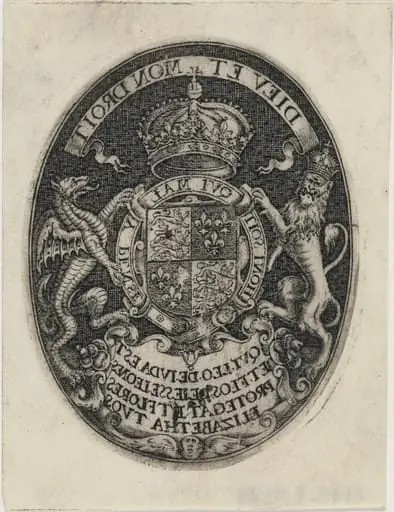 Shield of Queen Elizabeth
 Stuart Coat of Arms from Vera Descriptio by John Jonston