Artwork
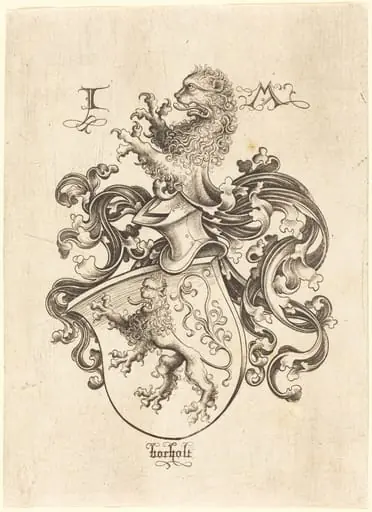
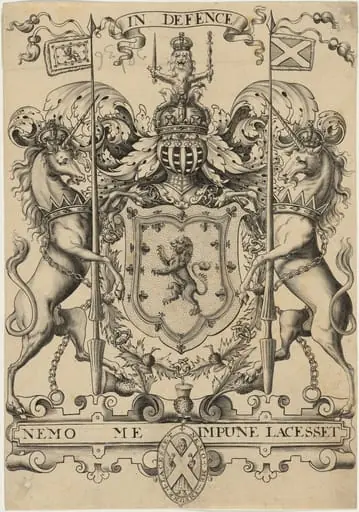
Stuart Coat of Arms from Vera Descriptio by John Jonston
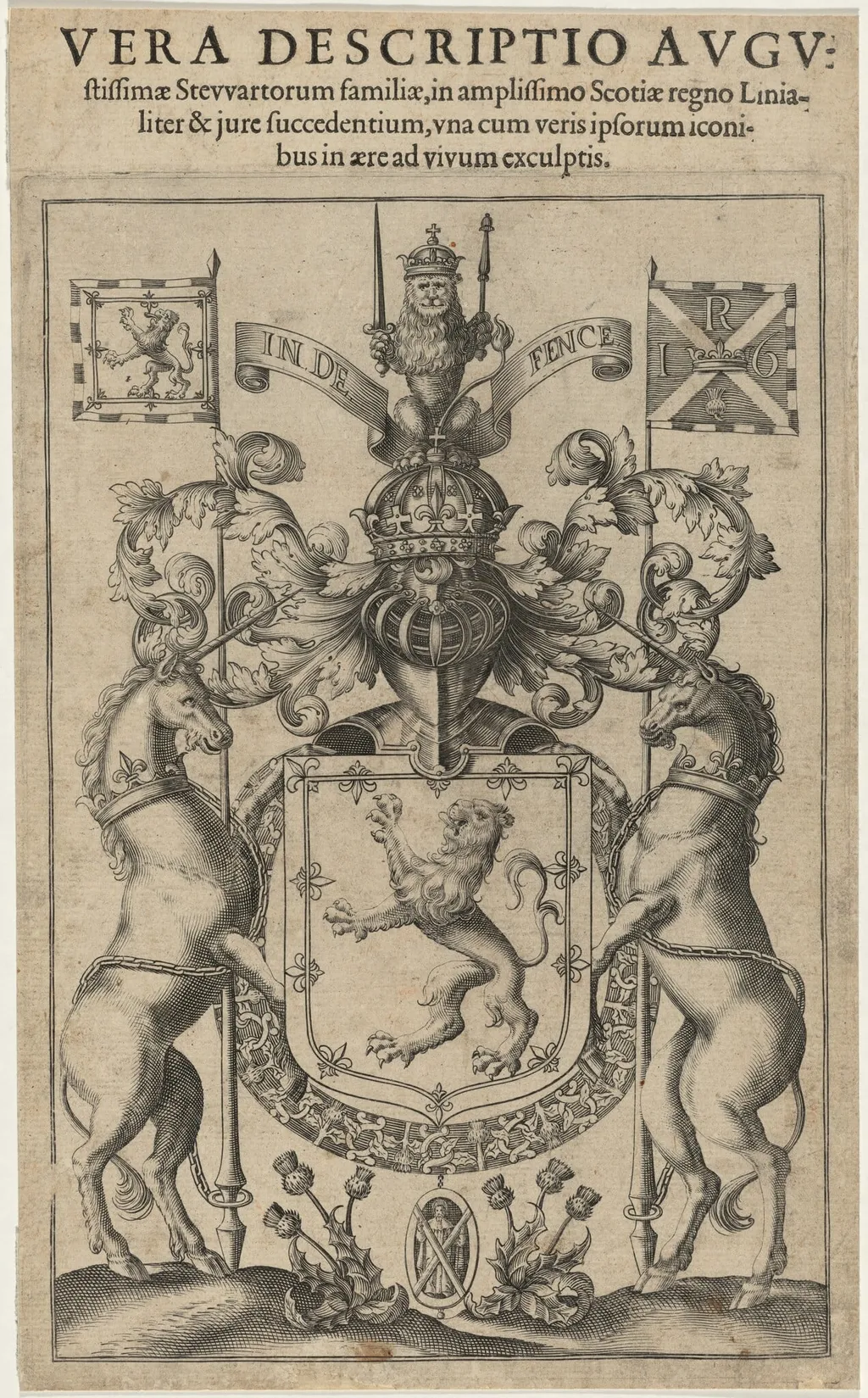
Stuart Coat of Arms from Vera Descriptio by John Jonston is an ink print by the Baroque artist Unknown 19th Century. It dates from 1603 and is held in the collection of the National Gallery of Art. The Stuart Coat of Arms, from John Jonston's *Vera Descriptio*, is a 1602 engraving featuring the heraldic emblem of the Stuart dynasty.
About this work
Overview
The Stuart Coat of Arms, from John Jonston's *Vera Descriptio*, is a 1602 engraving featuring the heraldic emblem of the Stuart dynasty. The intricate design centers on a lion, surrounded by symbolic elements within a symmetrical composition.
Subject & Meaning
At its core, the coat of arms showcases a lion on a shield, crowned and accompanied by the motto 'IN DE FENCE' (likely a variant of 'In Defense'). Flanking elements—a bearded figure with sword and scepter, and unicorns holding a lion-flag and a cross-flag—convey themes of sovereignty, protection, and possibly religious allegiance.
Technique & Style
Executed in a detailed, intricate style with fine lines and shading, the engraving exemplifies Baroque aesthetics through its elaborate ornamentation and depth. The symmetrical arrangement underscores the formality of heraldic art.
History & Provenance
First published in 1602 as part of *Vera Descriptio*, the engraving's provenance is tied to the publication's history. Specific ownership or exhibition histories beyond its initial publication are not detailed here.
Context
Created during the late Renaissance/early Baroque period, the piece reflects the era's penchant for symbolic, detailed artwork, particularly in heraldry, which was crucial for royal and noble identity.
Legacy
As a representation of the Stuart dynasty's emblem, the engraving serves as a historical artifact of their lineage and symbolic identity, contributing to the visual record of European royal heraldry.
Artist & collection

Artist