Artwork
Family of Frederick Henry, Prince of Orange
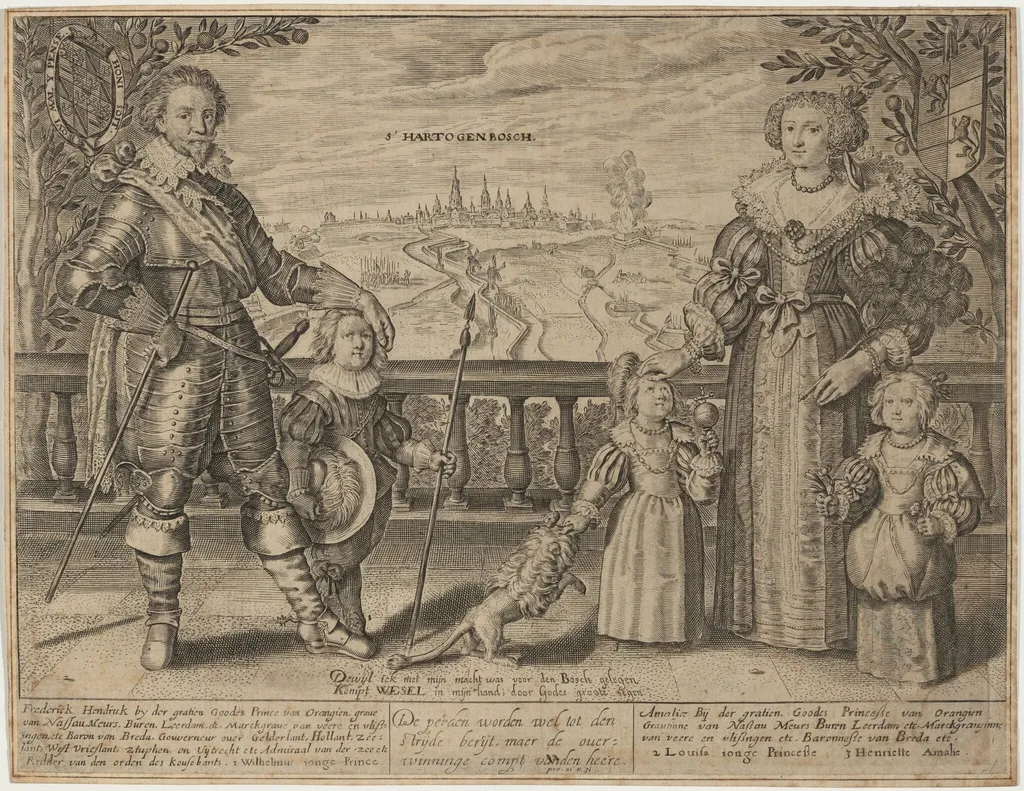
Family of Frederick Henry, Prince of Orange is an ink print by the Romanticist artist Unknown 19th Century. It dates from 1850 and is held in the collection of the National Gallery of Art.
About this work
Overview
The composition centers on the prince and his wife, flanked by their two children, set against a distant landscape that includes a fortified town and a battle.
This engraving depicts the family of Frederick Henry, Prince of Orange, arranged in a formal group portrait. The composition centers on the prince and his wife, flanked by their two children, set against a distant landscape that includes a fortified town and a battle. Fine linear detailing and controlled shading convey texture in fabric and terrain, while inscriptions identify each figure, reinforcing their status and roles within the Dutch Republic.
Subject & Meaning
The figures represent the ruling House of Orange, with the prince holding a sword to signify military leadership and his wife adorned with regal jewelry and a headdress symbolizing noble authority. The children are shown with symbolic objects: a lion on a leash alludes to strength and sovereignty, while flowers suggest innocence and continuity. The background battle scene subtly references the family’s role in the Eighty Years’ War, linking domestic stability to national defense.
Technique & Style
Executed in fine-line engraving, the work relies on precise incisions and cross-hatching to model form and depth. Clothing folds, facial features, and distant architecture are rendered with meticulous attention to detail, demonstrating the medium’s capacity for realism without color. The background landscape is simplified yet evocative, using atmospheric perspective to separate foreground figures from the action beyond.
History & Provenance
Created during Frederick Henry’s tenure as stadtholder in the early 17th century, the print likely served as a political statement or diplomatic gift. It was produced in the Dutch Republic, where printmaking flourished as a tool for disseminating images of leadership. The inclusion of names confirms its intent to document and legitimize the family’s public role, aligning with contemporary practices of dynastic representation.
Context
In the Dutch Republic, where monarchy was absent, noble families like the Oranges filled a quasi-royal role. Portraits and prints of their households were common, blending personal identity with civic duty. This engraving reflects the era’s emphasis on family as the foundation of political order, merging private life with public service in a visual language accessible to a growing literate public.
Legacy
The engraving exemplifies how print culture in the Netherlands transformed elite imagery into widely circulated symbols of authority. Its combination of portraiture, symbolism, and landscape influenced later generations of Dutch printmakers and contributed to the development of the family portrait as a genre tied to civic identity rather than royal lineage.
Artist & collection

Artist

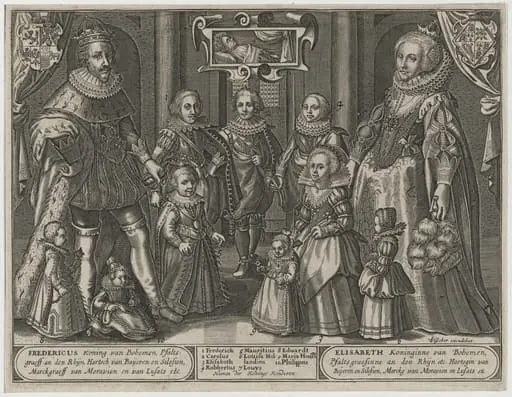 Frederick V, King of Bohemia, Elizabeth and Their Family
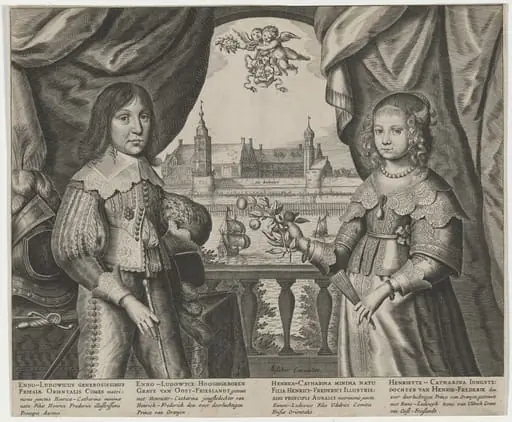 Enno Ludovick, Count of East Friesland and His Wife, Catherina Henriette
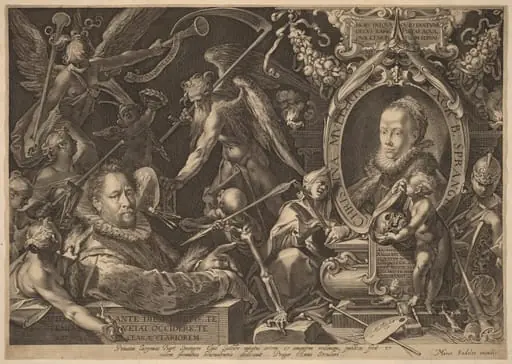 Bartholomaeus Spranger and his Late Wife Christina Muller
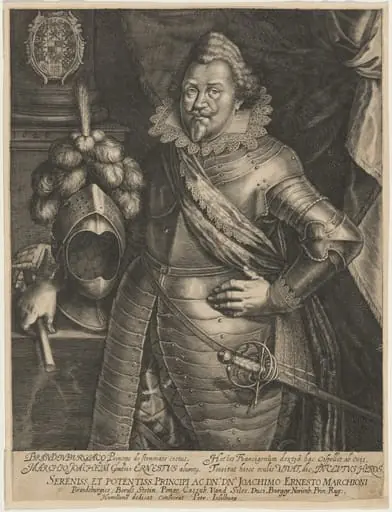 Joachim Ernest, Elector of Brandenburg
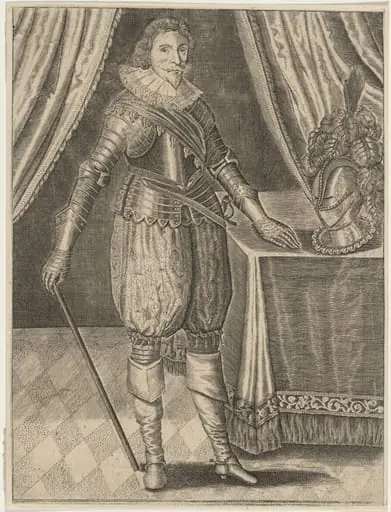 James, Second Marquis of Hamilton
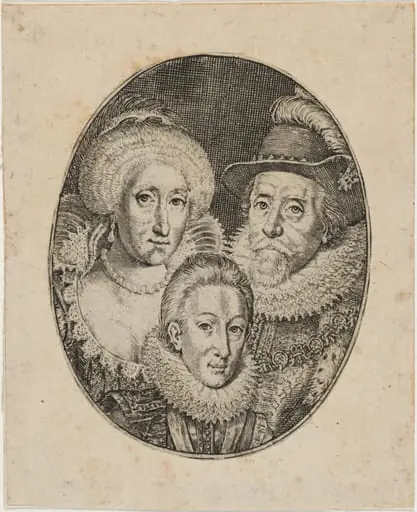 James I, Anne of Denmark, and Prince Charles
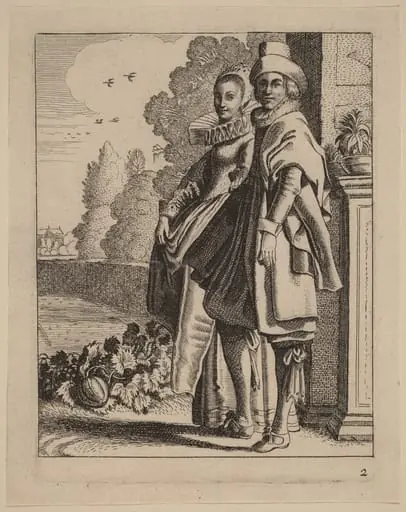 Two Figures in Costume