Artwork
Two Figures in Costume
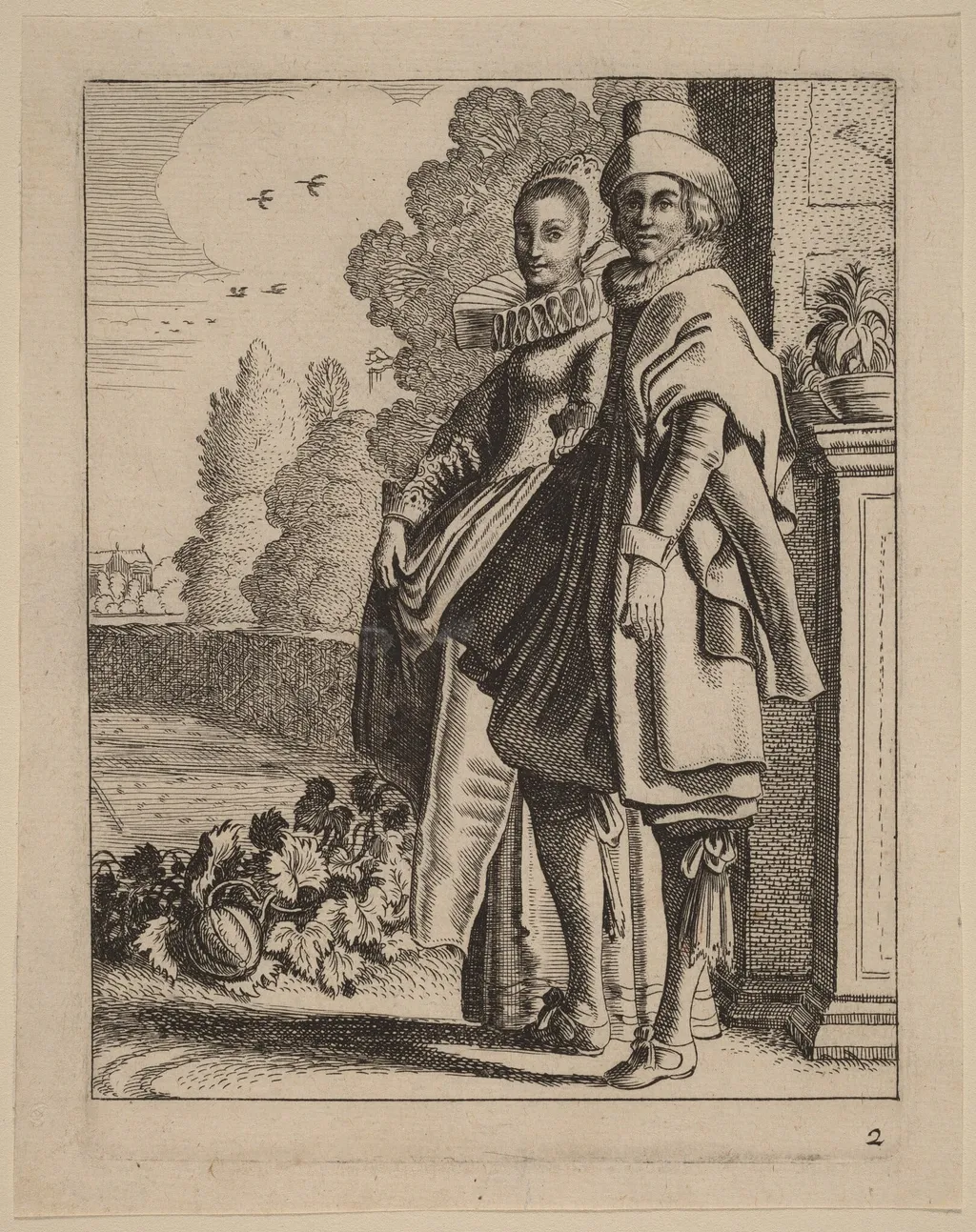
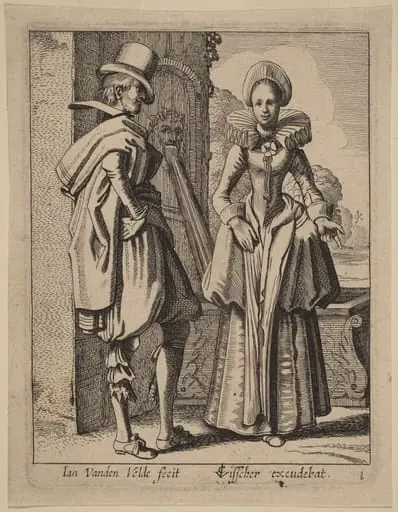
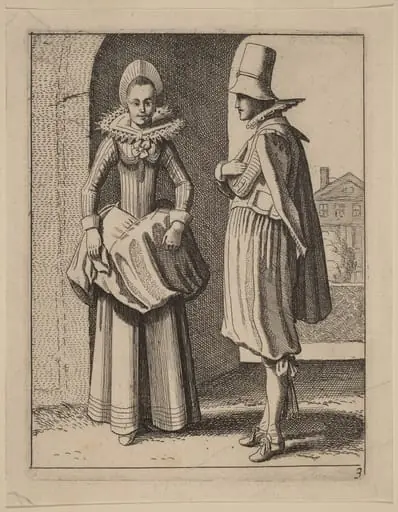
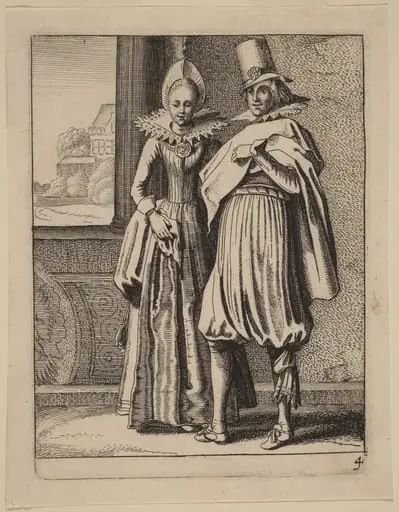
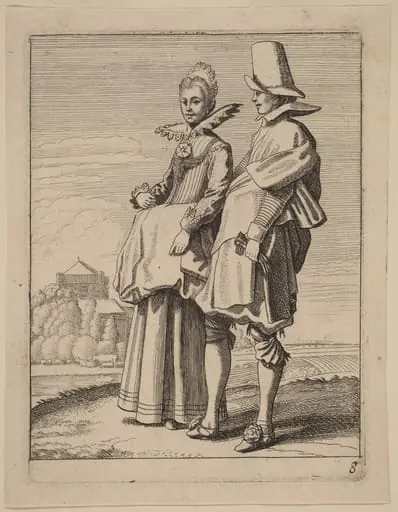
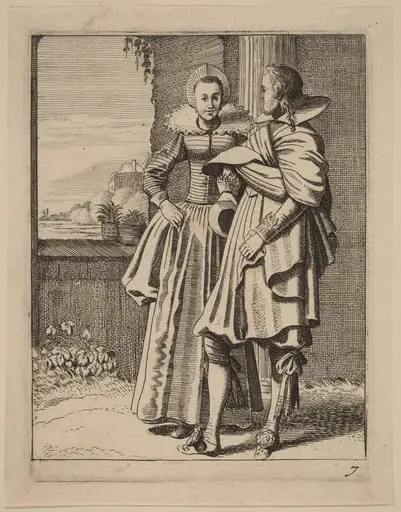
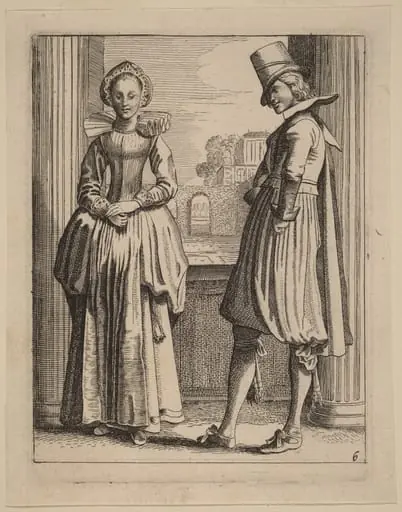
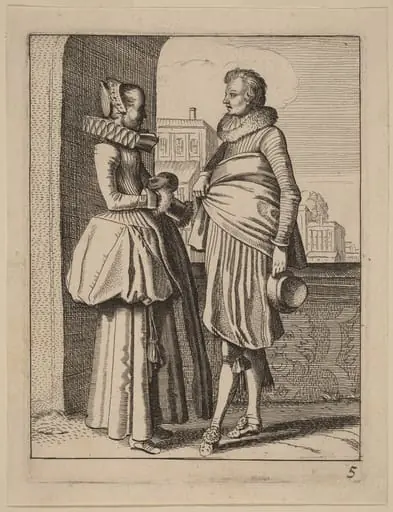
Two Figures in Costume is an ink print by the Renaissance artist Jan van de Velde. It dates from 1617 and is held in the collection of the National Gallery of Art.
About this work
Overview
Created in 1617 by Jan van de Velde the Younger, this etching is one of many prints produced during the Dutch Golden Age, a period when printmaking became a respected and widely practiced art form. Though van de Velde is better known for landscapes and still lifes, this work demonstrates his engagement with figure studies, capturing everyday individuals in period dress against a modest outdoor setting.
Subject & Meaning
The quiet setting, with its distant architecture and flying birds, adds a contemplative tone, distancing the scene from narrative drama.
The two figures, dressed in stylized, slightly archaic clothing, appear as types rather than specific individuals—perhaps actors, travelers, or figures from a theatrical or folk tradition. Their postures and attire suggest a moment of pause, possibly referencing contemporary masquerades or historical reenactments. The quiet setting, with its distant architecture and flying birds, adds a contemplative tone, distancing the scene from narrative drama.
Technique & Style
Van de Velde employed fine, controlled etching lines to render texture and volume: the ruffled collar, striped fabric, and wide-brimmed hat are defined by delicate cross-hatching and varying line weights. Shading suggests the fall of light on fabric and skin, while the background trees and building are rendered with looser, suggestive strokes. The composition balances detail in the figures with atmospheric simplicity in the landscape.
History & Provenance
Jan van de Velde the Younger came from a family of Dutch artists; his father, Jan van de Velde the Elder, was a renowned engraver, and his son continued the tradition with still-life works. This etching, dated 1617, aligns with van de Velde’s early career, when he was experimenting with figural subjects beyond his more common naturalistic themes. Its survival in museum and private collections reflects its value as a representative example of early 17th-century Dutch printmaking.
Context
In early 17th-century Holland, etching was a popular medium for artists seeking to reach broader audiences than painting allowed. While religious and mythological scenes dominated in other regions, Dutch artists often turned to genre subjects, costumes, and everyday life. Van de Velde’s choice of attire—neither contemporary nor clearly historical—hints at a fascination with costume as a visual device, common among Northern European printmakers of the time.
Legacy
Though not among van de Velde’s most celebrated works, this etching contributes to the understanding of his versatility and the broader culture of print production in the Dutch Republic. It exemplifies how artists used etching to explore human form and costume with precision and subtlety, influencing later generations who valued the medium for its intimacy and reproducibility.
Artist & collection
Artist
Jan van de Velde the younger (1593 – c. 1 November 1641) was a Dutch Golden Age painter and printmaker, mostly of animal, landscape and still-life subjects. He was the son of Jan van de Velde the Elder and the father of…