Artwork
Henry Frederick, Prince of Wales
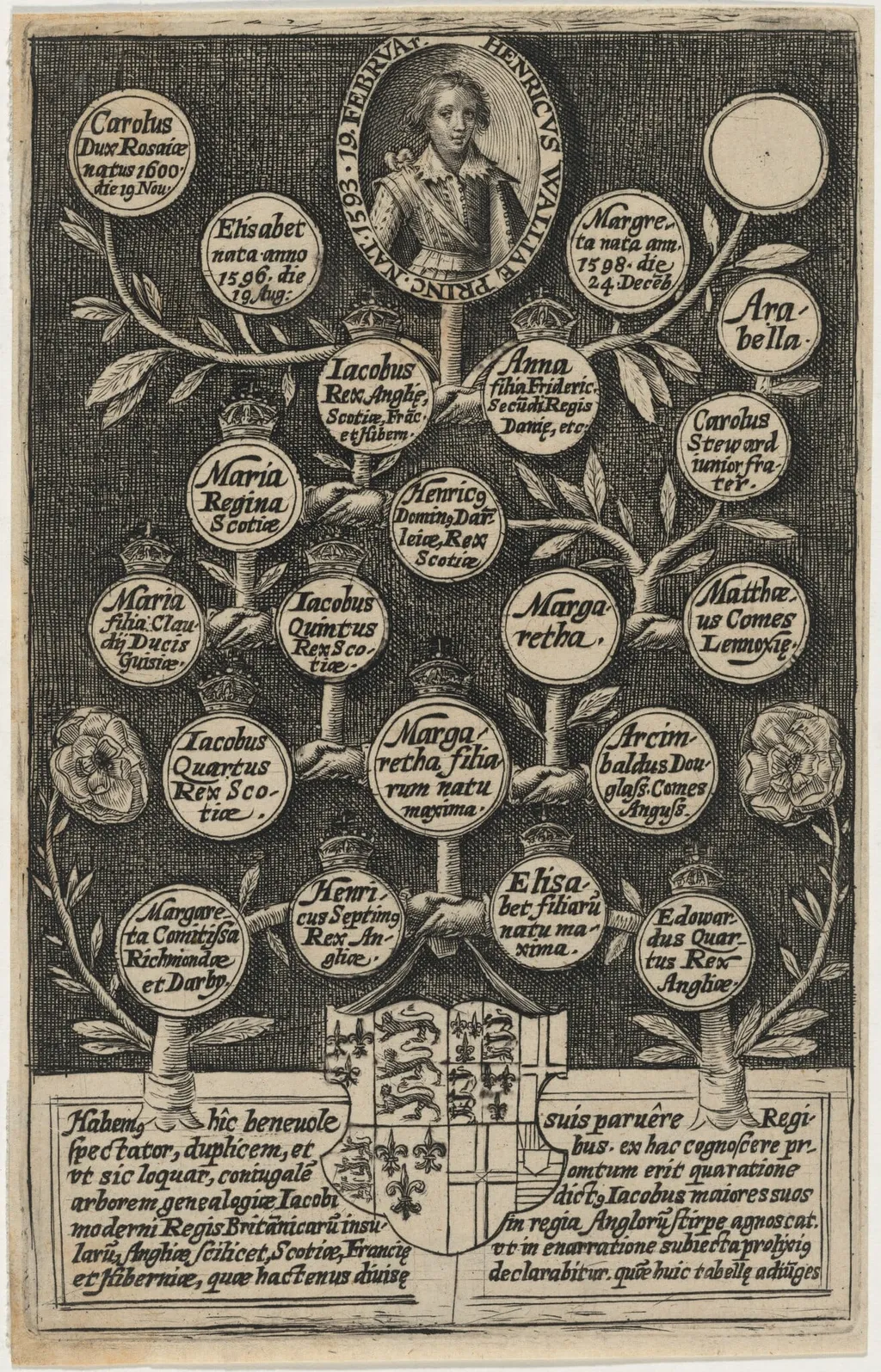
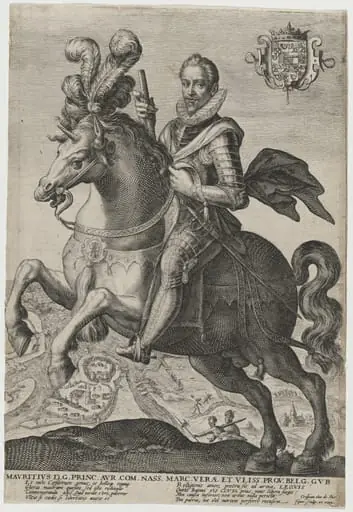
Henry Frederick, Prince of Wales is an ink print by the Baroque artist Crispijn van de Passe I. It dates from 1604 and is held in the collection of the National Gallery of Art.
About this work
Overview
An engraving by Crispijn van de Passe I, dated 1604, depicts Henry Frederick, Prince of Wales, as the central figure in a structured genealogical tree.
An engraving by Crispijn van de Passe I, dated 1604, depicts Henry Frederick, Prince of Wales, as the central figure in a structured genealogical tree. Rendered in fine linear detail, the composition organizes royal lineage through branching stems and oval portraits, each labeled in Latin. Decorative elements—crowns, floral motifs, and heraldic shields—frame the figures, reinforcing the familial hierarchy and dynastic legitimacy.
Subject & Meaning
The print presents the Stuart family tree with Henry Frederick at its apex, surrounded by siblings and cousins, all arranged to emphasize bloodline continuity. The inclusion of titles and coats of arms underscores the political significance of lineage in early modern monarchy. Latin inscriptions clarify the relationships, positioning the prince not merely as an individual but as the heir to a dynastic legacy.
Technique & Style
Van de Passe employed fine-line engraving on metal to achieve intricate detail, with delicate hatching defining facial features and ornamental borders. The composition is symmetrical and hierarchical, reflecting the formal conventions of heraldic portraiture. Each portrait is contained within an oval, creating a rhythmic structure that guides the viewer’s eye downward through generations.
History & Provenance
Created in 1604, the engraving was likely produced for circulation among European courts to affirm the Stuart claim to legitimacy. It circulated in print form, serving both as a family record and a political statement. Its survival in multiple institutional collections suggests it was widely reproduced and valued as a tool of dynastic propaganda.
Context
In the early 17th century, visual genealogies were common tools for asserting royal authority, especially amid succession anxieties. Henry Frederick, as the eldest son of James I, was a symbol of future stability. This print aligns with broader European trends in using print media to disseminate monarchical imagery, blending art with statecraft in an age of emerging public opinion.
Legacy
The engraving remains a key example of how print technology was harnessed to communicate lineage and power before the rise of photography. Its structured, symbolic format influenced later royal portraiture and genealogical charts. Though no longer widely known, it retains scholarly value as a document of early modern political iconography.
Artist & collection

Artist
Crispijn van de Passe I (1564–1637) was an artist, born in Arnemuiden.

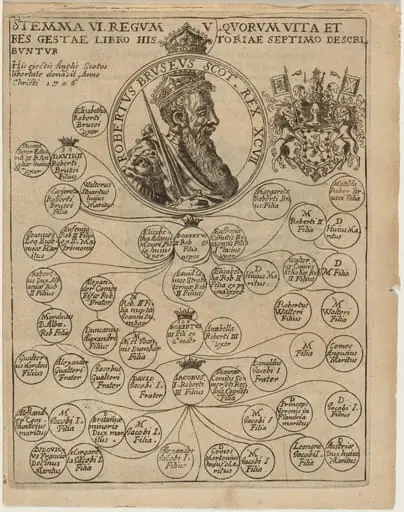 Robert de Bruce VIII, King of Scotland
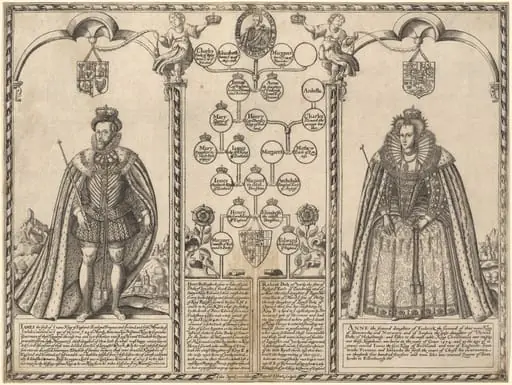 James I and Anne of Denmark
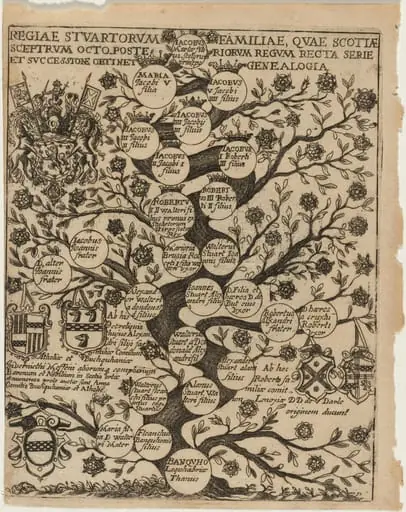 Family Tree of the Stuarts Stemming From Banquho
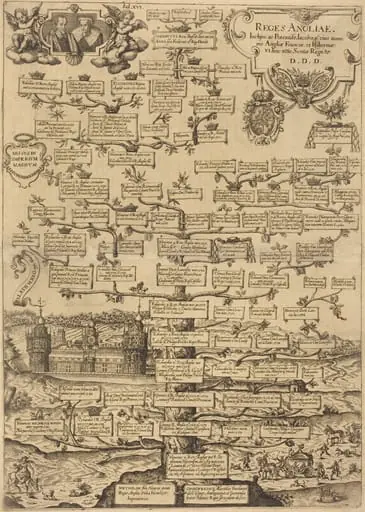 Reges Anglia
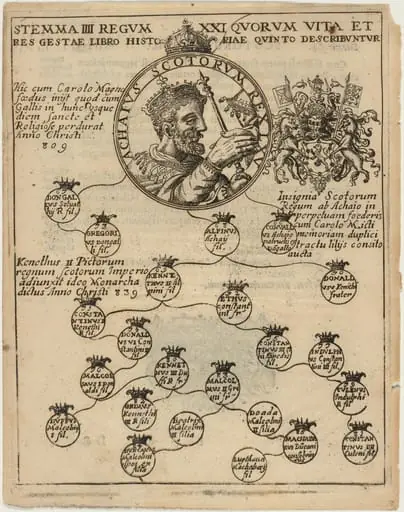 Achaius of Scotland, with Geneology
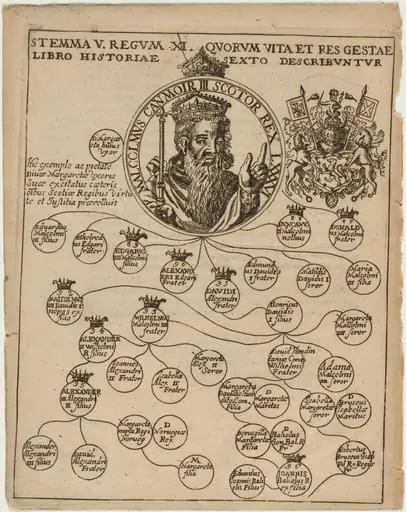 Malcolm III with Geneology
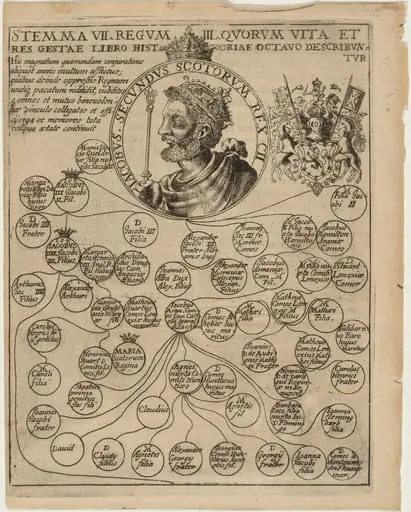 James II of Scotland with Geneology of the Stuarts
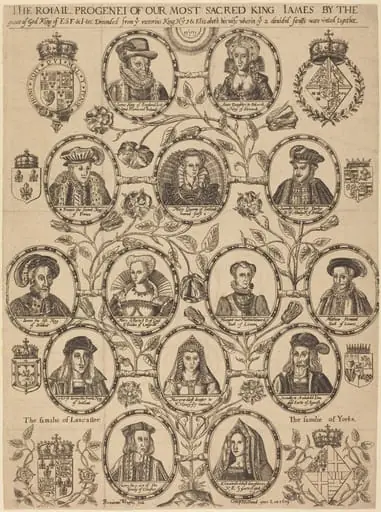 Royal Progeny of King James
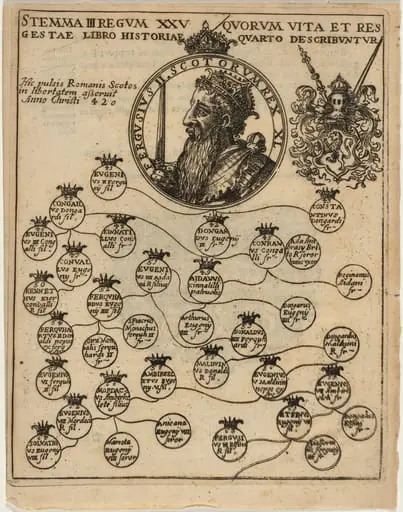 Fergus II of Scotland with Geneology
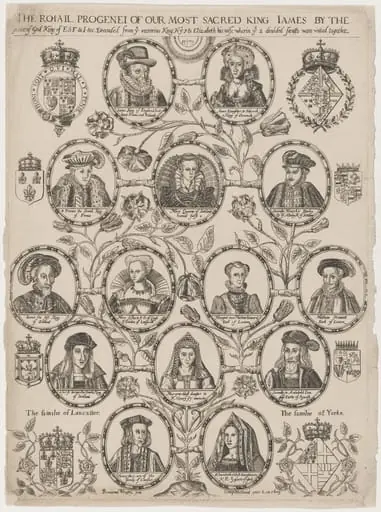 The Royal Progenei of our Most Sacred King James
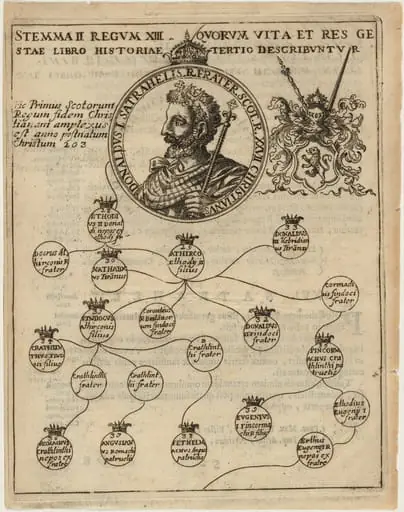 Donald I of Scotland with Geneology
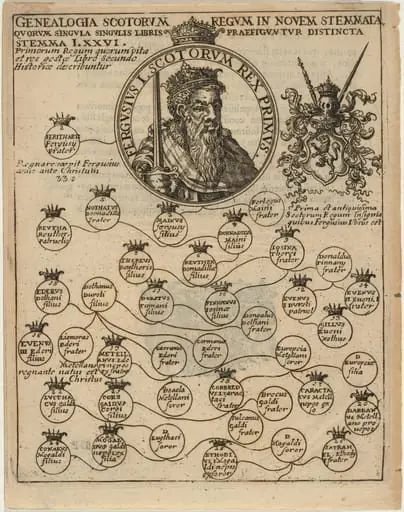 Fergus I of Scotland With Geneology