Artwork
Fernando Alvarez de Toledo, Duke of Alva
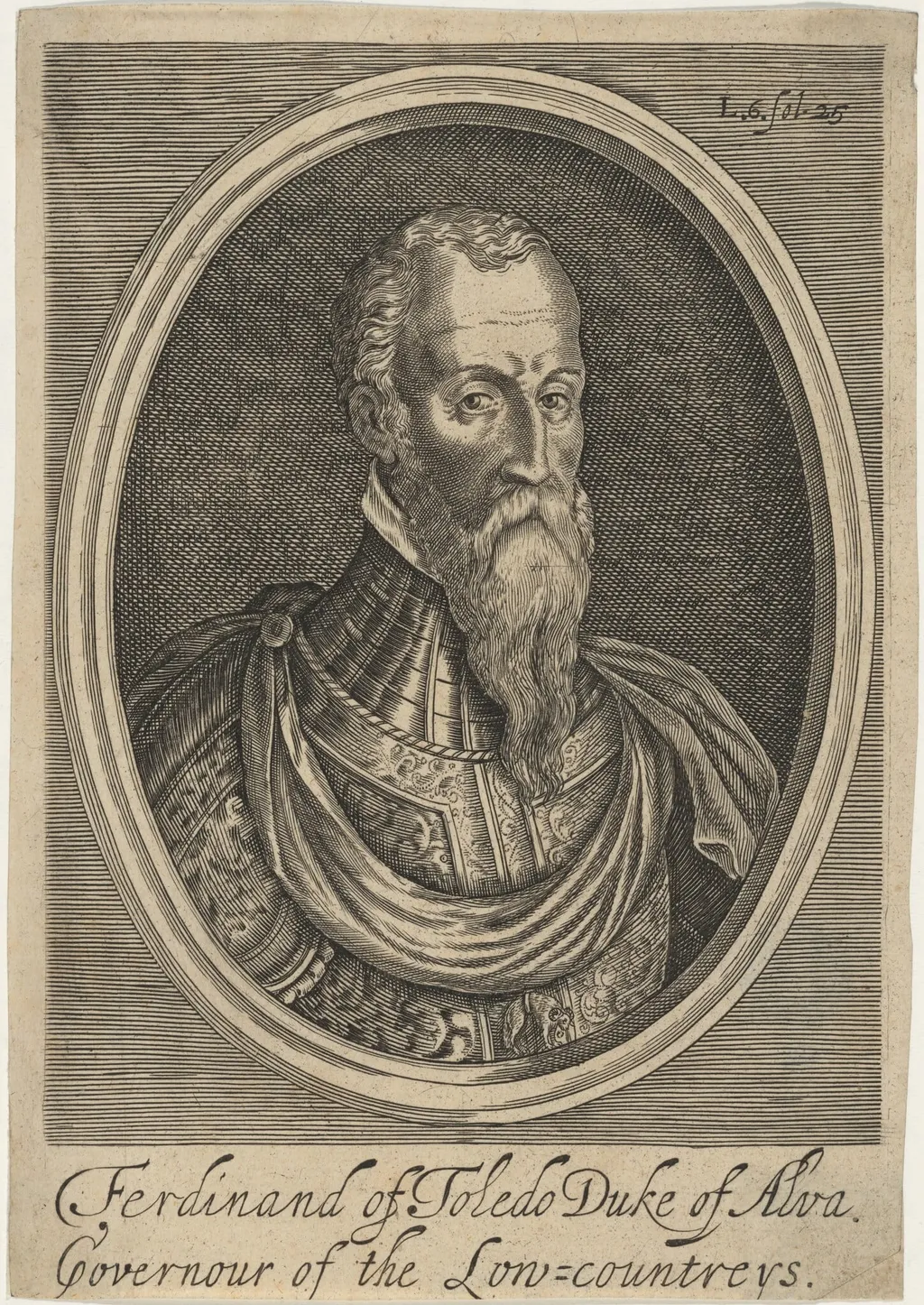
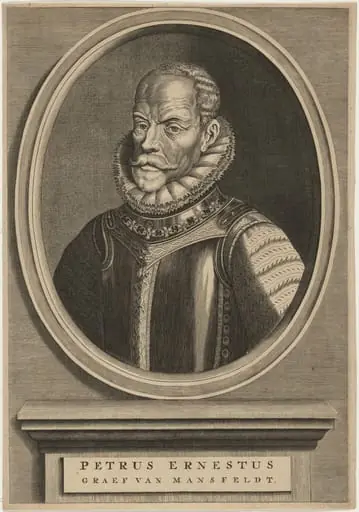
Fernando Alvarez de Toledo, Duke of Alva is an ink print by the Romanticist artist Unknown 19th Century. It dates from 1850 and is held in the collection of the National Gallery of Art. This black-and-white engraving depicts Fernando Álvarez de Toledo, Duke of Alba, a prominent Spanish noble and military commander.
About this work
Overview
Executed with fine, precise lines, the portrait captures his aged features without color, relying solely on ink and etching to convey form and texture.
This black-and-white engraving depicts Fernando Álvarez de Toledo, Duke of Alba, a prominent Spanish noble and military commander. Executed with fine, precise lines, the portrait captures his aged features without color, relying solely on ink and etching to convey form and texture. The plain background focuses attention on the face and attire, emphasizing his status through subtle details like the ruffled collar and neck chain.
Subject & Meaning
The subject is Fernando Álvarez de Toledo, Duke of Alba, known for his role as governor of the Spanish Netherlands during a period of intense political and religious conflict. His stern expression and formal attire reflect his authority and military bearing. The chain around his neck likely signifies a chivalric order, reinforcing his position within the Habsburg court and his service to the Spanish crown.
Technique & Style
The portrait is rendered in the traditional technique of engraving, where fine lines are incised into a metal plate and inked to produce prints. The artist uses controlled cross-hatching and delicate stippling to model the contours of the face, beard, and collar, creating depth and texture without shading or color. The precision of the lines highlights the sitter’s age and gravitas through meticulous detail.
History & Provenance
The engraving likely dates to the late 16th or early 17th century, produced during or shortly after Alba’s lifetime as part of a broader tradition of portraiture for political figures. Its inscription identifies him by title and role, suggesting it was made for circulation among elites or as documentation of his governance. The work may have originated in the Low Countries or Spain, regions central to his career.
Context
Alba’s image was widely disseminated during a time of upheaval in the Netherlands, where his harsh policies earned him notoriety. Engravings like this served both as official records and tools of political messaging, reinforcing the authority of Spanish rule. The medium’s reproducibility allowed such portraits to reach audiences beyond court circles, shaping public perception of powerful figures.
Legacy
This engraving endures as a visual record of one of Spain’s most controversial administrators. Its restrained style reflects the conventions of Renaissance portraiture, prioritizing dignity and clarity over embellishment. Though created for a specific historical moment, it continues to inform modern understanding of the visual culture of power in early modern Europe.
Artist & collection

Artist