Artwork
Sir Francis Bacon
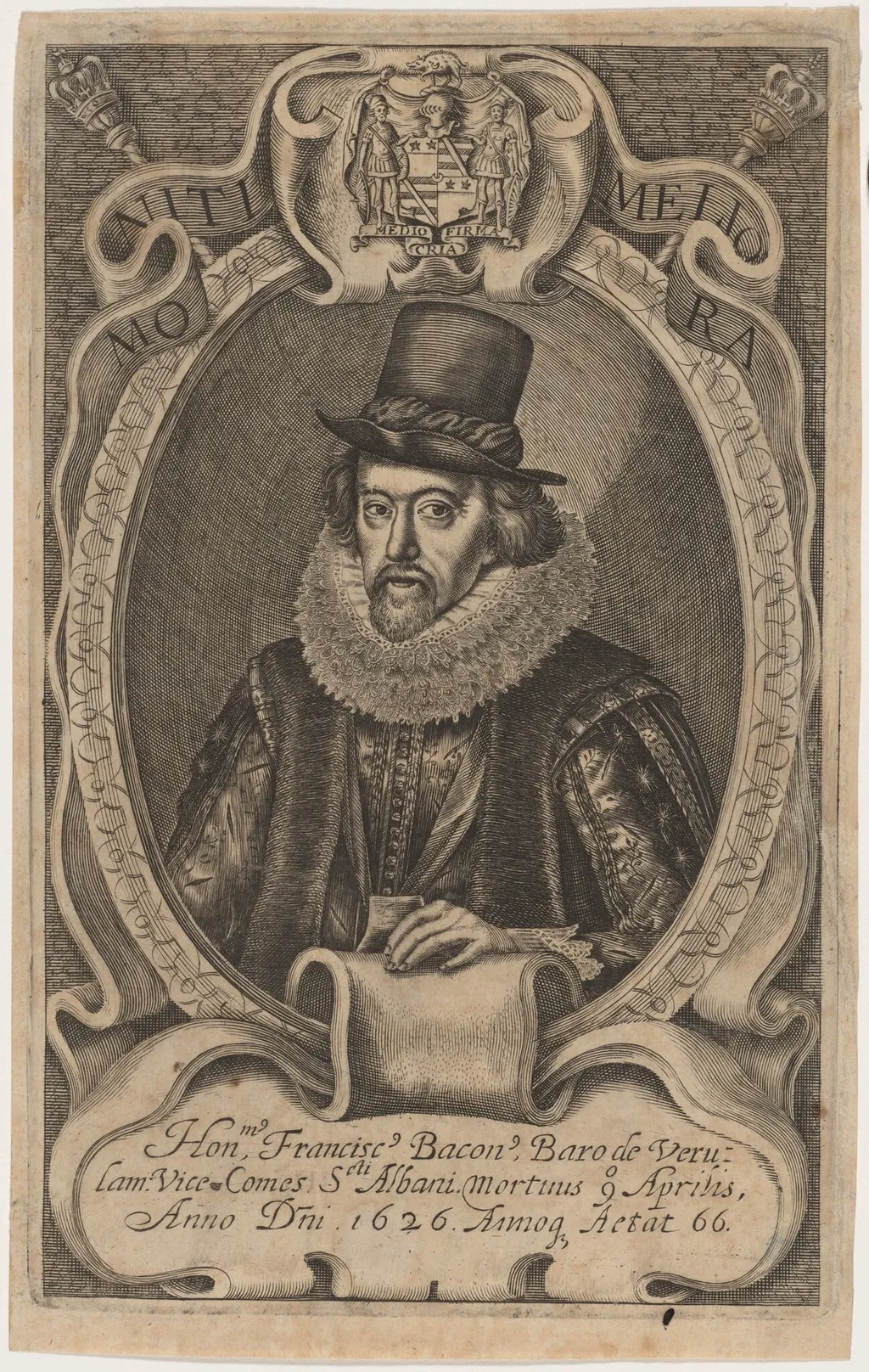
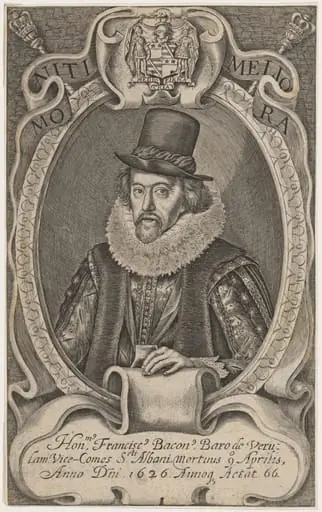
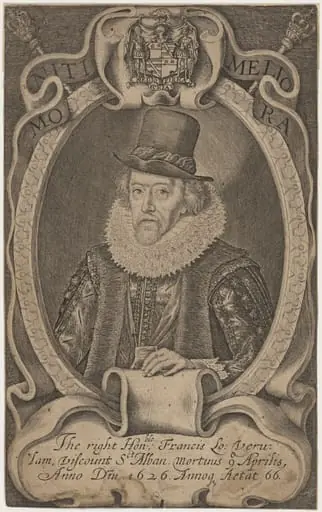
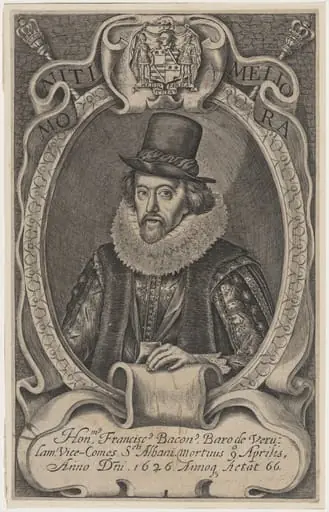
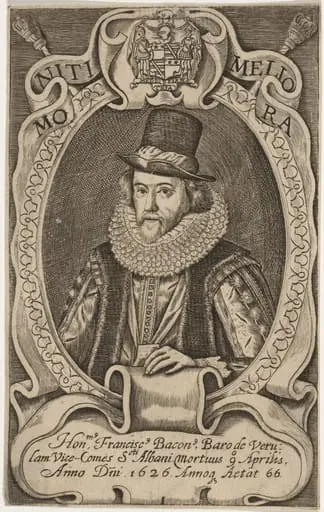
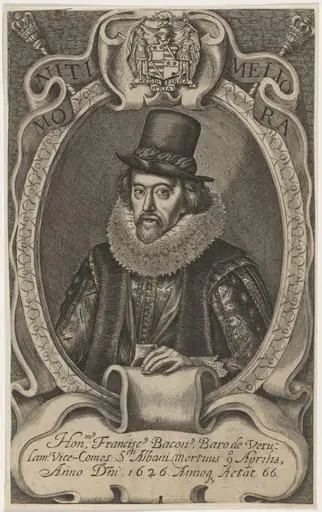
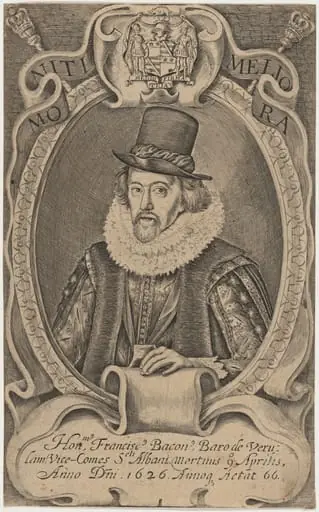
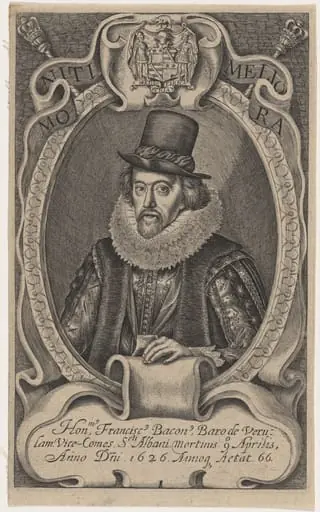
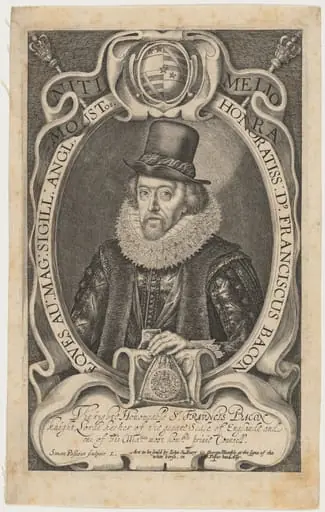
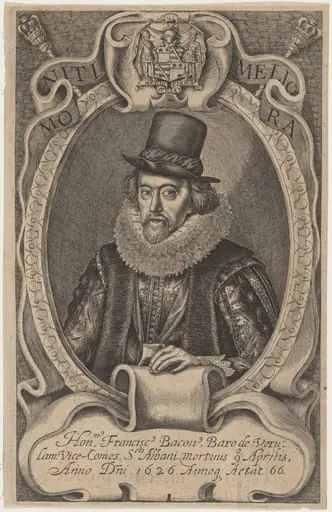
Sir Francis Bacon is an ink print by the Renaissance artist Simon van de Passe. It dates from 1621 and is held in the collection of the National Gallery of Art.
About this work
Overview
Executed with fine, precise lines, the portrait captures Bacon in formal attire, framed within an ornate border of decorative swirls.
This black-and-white print, made in 1621, depicts Sir Francis Bacon through the medium of engraving by Simon van de Passe. Executed with fine, precise lines, the portrait captures Bacon in formal attire, framed within an ornate border of decorative swirls. The technique relies on cross-hatching to model light and shadow, characteristic of early 17th-century printmaking. The composition is structured yet restrained, emphasizing dignity over flamboyance.
Subject & Meaning
The portrait presents Bacon as a statesman and scholar, dressed in a high-collared ruff and dark coat, with a chain of office around his neck. His hands rest upon a rounded object, likely a book or globe, symbolizing intellectual and administrative authority. Above him, a heraldic shield bearing two lions and a crown reinforces his status within the English establishment, aligning his identity with institutional power and lineage.
Technique & Style
Simon van de Passe employed engraving to render fine detail through incised lines on a metal plate, inked and pressed onto paper. Cross-hatching builds depth in Bacon’s clothing and facial features, while delicate contours define the texture of fabric and the sheen of metal. The elaborate border, filled with scrolling motifs, extends the frame’s visual weight, reflecting the period’s preference for ornamental framing in portraiture.
History & Provenance
Created in 1621, the engraving was produced during Bacon’s tenure as Lord Chancellor, shortly before his fall from favor. Van de Passe, a Dutch artist active in England, specialized in portrait prints of notable figures. This work likely served as a commissioned piece for dissemination among Bacon’s contemporaries, functioning as both a personal likeness and a public statement of his standing.
Context
In early 17th-century England, engraved portraits were key tools for disseminating the likenesses of influential individuals beyond court circles. Bacon, a philosopher and political figure, was a prominent subject of such imagery. The inclusion of heraldry and scholarly symbols reflects the era’s fusion of intellectual prestige with aristocratic identity, aligning Bacon’s legacy with both governance and learning.
Legacy
The engraving remains one of the most widely circulated visual records of Bacon’s appearance. Its formal composition and technical precision influenced later portrait prints of intellectuals. Though not a personal likeness in the modern sense, it codified an image of Bacon as a man of reason and authority, shaping perceptions of him for generations of readers and scholars.
Artist & collection