Artwork
Sir Francis Bacon
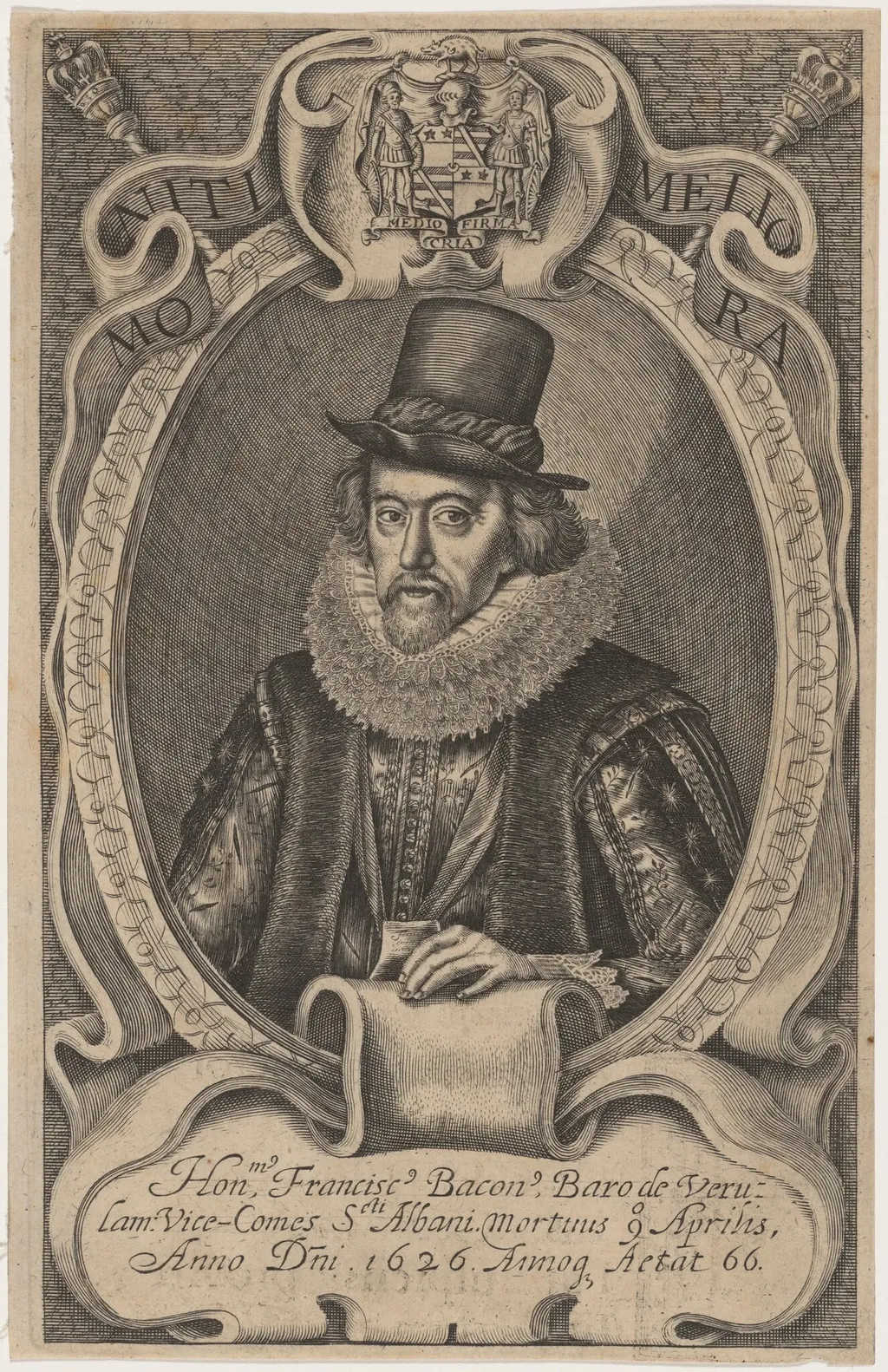
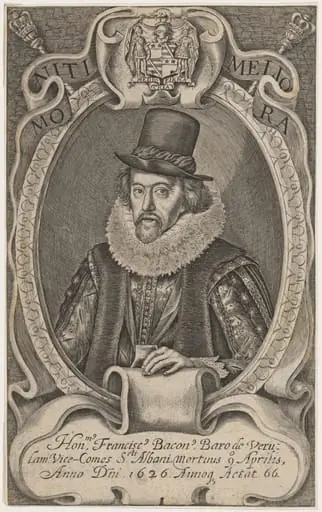
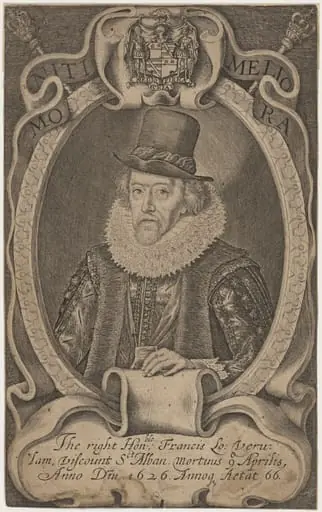
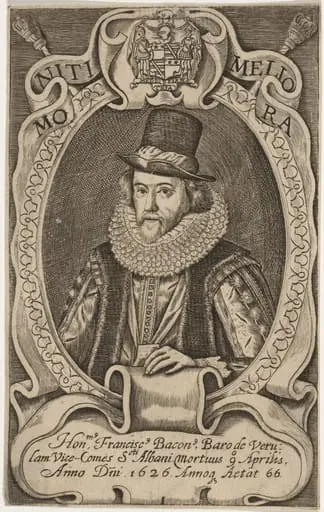
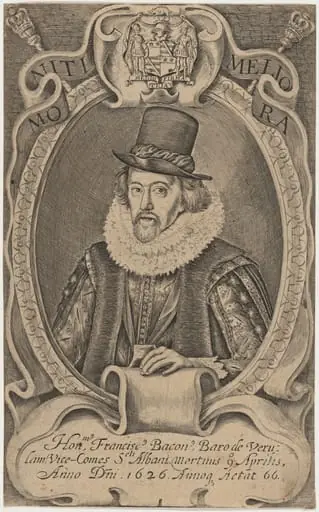
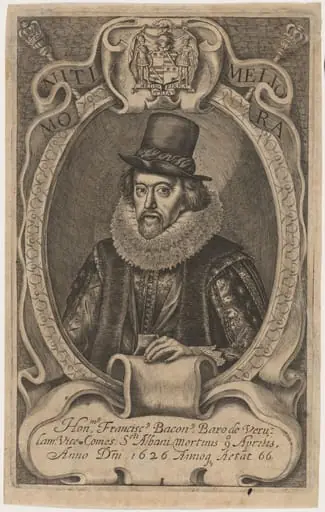
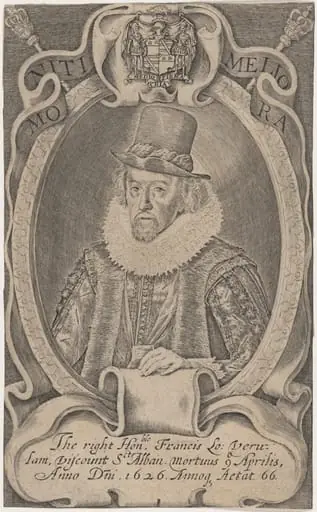
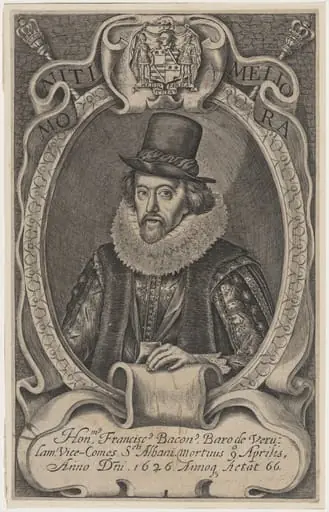
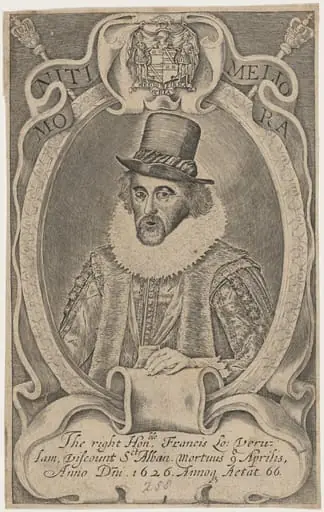
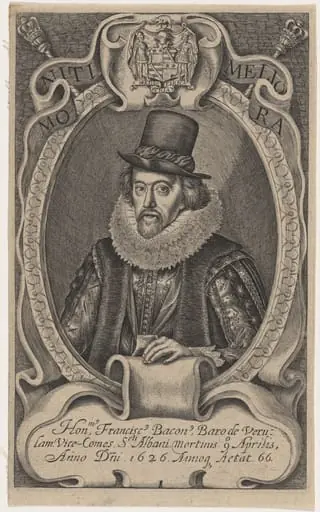
Sir Francis Bacon is an ink print by the Renaissance artist Simon van de Passe. It dates from 1621 and is held in the collection of the National Gallery of Art.
About this work
The artist used fine lines to create shadows and detail, which makes the image look three-dimensional.
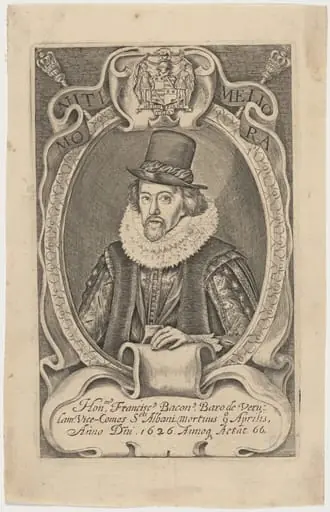
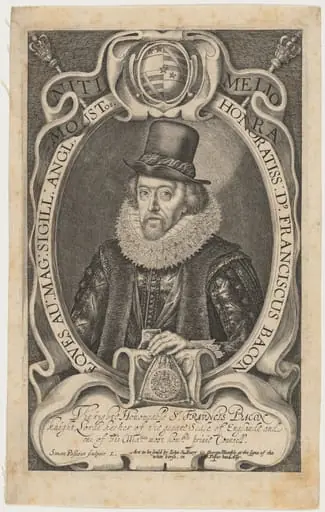
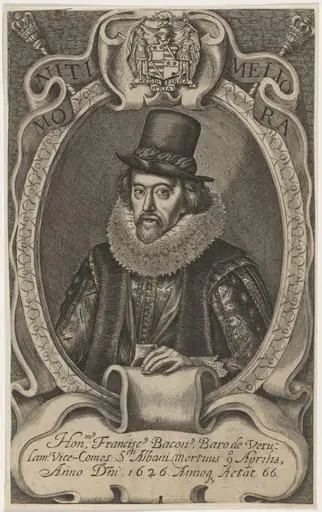
This is a black-and-white portrait of a serious-looking man in old-fashioned clothes. He wears a wide-brimmed hat, a ruffled collar, and a dark robe. His hands rest on a globe, and above his head is a coat of arms with two small figures. The edges of the picture are decorated with swirling lines and text.
The text at the bottom names the man and gives his death year—1626—at age 66. The artist used fine lines to create shadows and detail, which makes the image look three-dimensional.
Next, look up engraving to see how artists like this one carved images into metal plates.
Overview
Simon van de Passe's 1621 engraving, 'Sir Francis Bacon', is a detailed black-and-white portrait depicting the renowned figure in attire characteristic of his time, set against ornate decorative elements.
Subject & Meaning
The subject, Sir Francis Bacon, is portrayed with symbols of his stature: a globe under his hands, alluding to his intellectual reach, and a coat of arms above, flanked by two figures, emphasizing his heritage and status.
Technique & Style
The engraving showcases van de Passe's mastery of fine-line techniques to achieve three-dimensional depth through intricate shadows and details, characteristic of the medium's capabilities.
History & Provenance
Created in 1621, the engraving predates Bacon's death by five years, as noted in the inscription which also states his age at death as 66. Provenance details are not specified in the provided information.
Context
As an engraving, the work would have been reproduced from a metal plate, allowing for widespread distribution, reflecting the period's method of disseminating portraits of notable figures across distances.
Legacy
While specific legacy details of this engraving are not provided, it contributes to the visual record of Sir Francis Bacon's likeness during his lifetime and shortly before his death, preserving his image for posterity.
Artist & collection