Artwork
James IV of Scotland, Margaret, Daughter of Henry VII, Archibald Douglas, Earl of Angus, Henry VII, Elizabeth of York
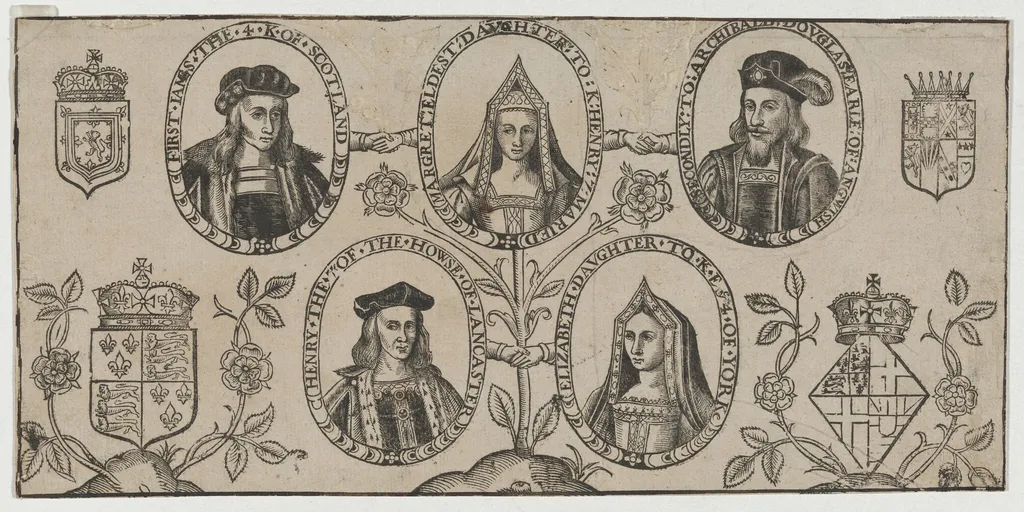
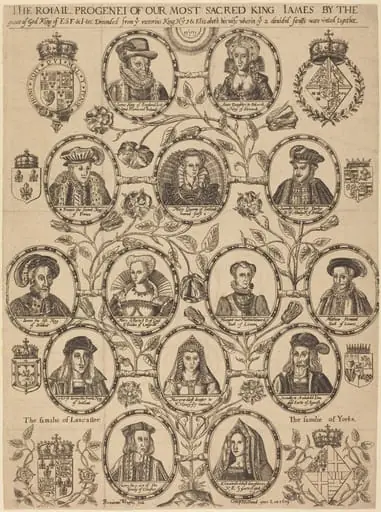
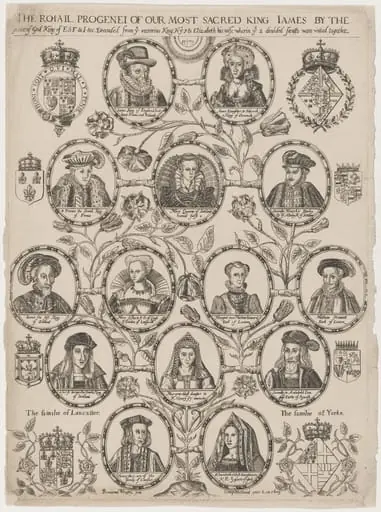
James IV of Scotland, Margaret, Daughter of Henry VII, Archibald Douglas, Earl of Angus, Henry VII, Elizabeth of York is an ink print by the Romanticist artist Unknown 19th Century. It dates from 1850 and is held in the collection of the National Gallery of Art. This woodcut print presents five royal figures arranged in a familial structure, with central emphasis on the Tudor lineage.
About this work
Overview
This woodcut print presents five royal figures arranged in a familial structure, with central emphasis on the Tudor lineage.
This woodcut print presents five royal figures arranged in a familial structure, with central emphasis on the Tudor lineage. Each portrait is enclosed in a circular frame, labeled with names and titles. Decorative elements such as crests and floral motifs frame the composition. Though the style evokes early Renaissance portraiture, the work was produced in the 19th century, reflecting a retrospective interest in dynastic history rather than contemporary representation.
Subject & Meaning
The figures include James IV of Scotland, his wife Margaret Tudor, their son Archibald Douglas, and Margaret’s parents, Henry VII and Elizabeth of York. The grouping asserts a genealogical link between the Scottish and English royal houses, highlighting Margaret’s role as a dynastic bridge. The label 'of the House of Tudor' reinforces English claims to legitimacy through marriage, despite the Scottish context of several subjects.
Technique & Style
Executed as a woodcut, the image relies on carved wooden blocks to produce bold, linear contrasts in black and white. Facial features are simplified, and clothing is rendered with stylized patterns rather than naturalistic detail. The uniform circular frames and symmetrical layout suggest a deliberate, formulaic approach typical of 19th-century historical illustrations, prioritizing clarity and symbolic order over individual expression.
History & Provenance
Created in the 1800s, the print likely originated as part of a published genealogy or historical text, intended for educational or antiquarian audiences. It draws on earlier portraits and heraldic sources but reinterprets them through a Victorian lens. No original Renaissance source is directly copied; instead, the image synthesizes known iconography into a cohesive, anachronistic family tree.
Context
During the 19th century, interest in royal genealogies surged amid rising nationalism and historical scholarship. This print reflects efforts to visually codify lineage, especially the union of Tudor and Stewart lines through Margaret Tudor’s marriage. Such images served to legitimize political narratives by anchoring them in perceived ancestral continuity, even when historical accuracy was secondary to symbolic coherence.
Legacy
The woodcut remains a representative example of how 19th-century publishers visualized early modern royalty. Though not contemporaneous with its subjects, it influenced popular perceptions of Tudor-Stewart connections. Its simplified form and clear hierarchy made it suitable for textbooks and prints, ensuring its endurance as a reference image despite its historical inaccuracies.
Artist & collection

Artist

 Royal Progeny of King James
 The Royal Progenei of our Most Sacred King James
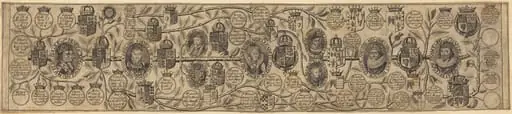 Family Tree with Portraits of Henry VII, Henry VIII, Elizabeth, James, and Charles
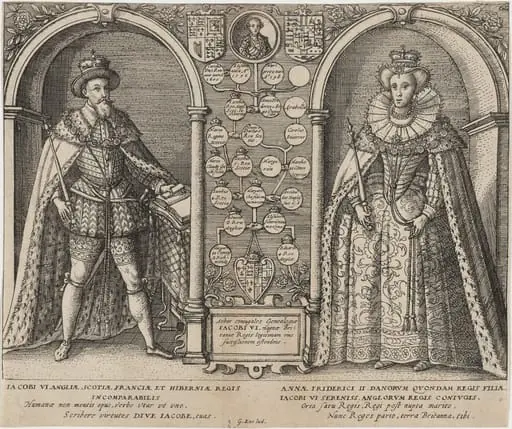 James I and Anne of Denmark with GeneologicalTree
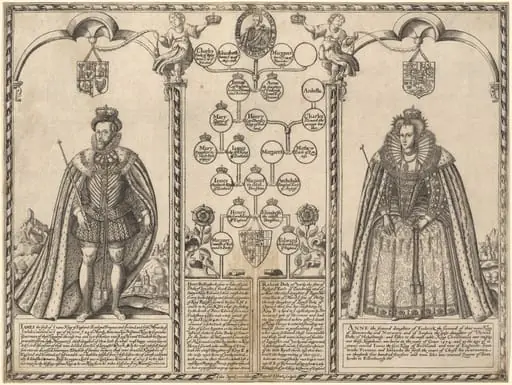 James I and Anne of Denmark
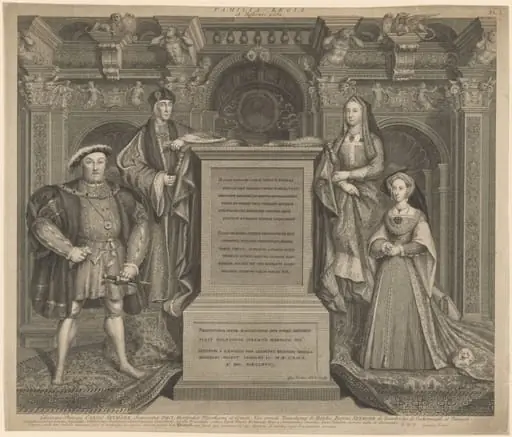 Henry VII and the Family of Henry VIII in Whitehall Palace
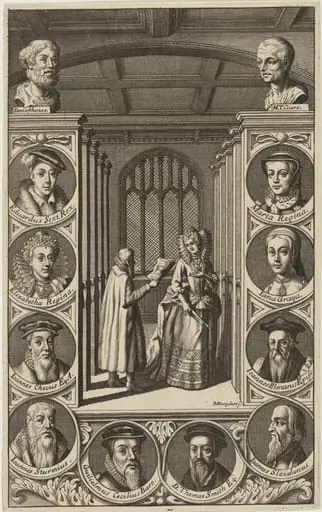 Roger Assham and Mary Surrounded by MedallianPortraits
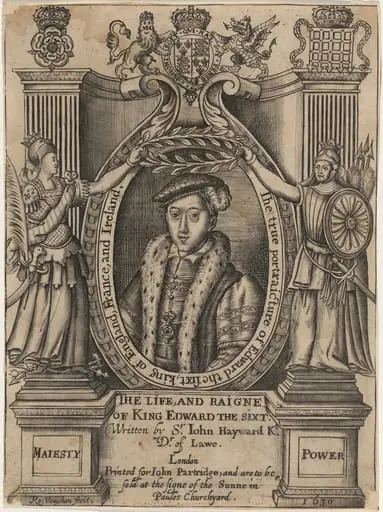 Title Plate to John Hayward, Life and Reigne of King Edward the Sixth