Artwork
Family Tree with Portraits of Henry VII, Henry VIII, Elizabeth, James, and Charles
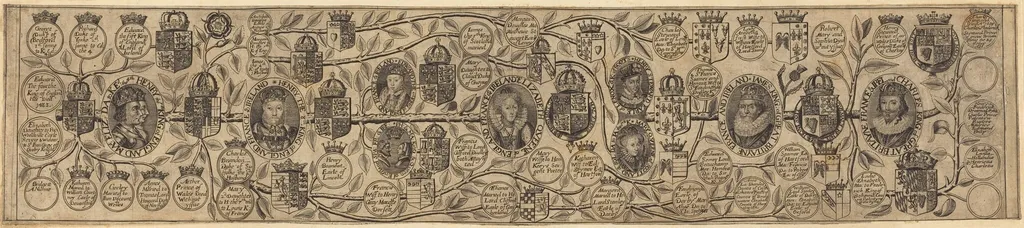
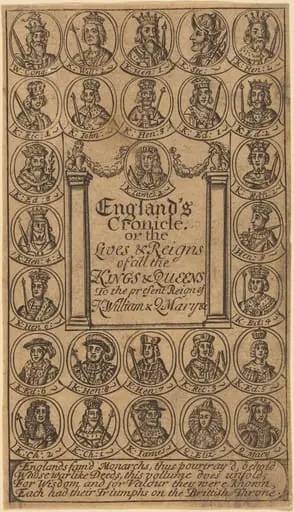
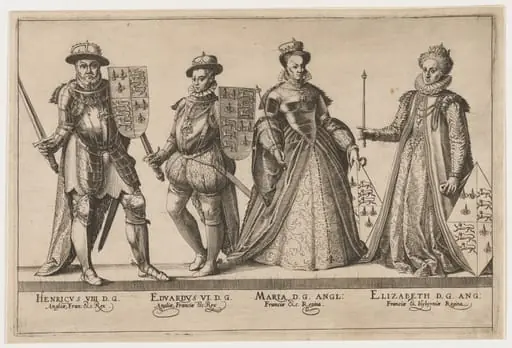
Family Tree with Portraits of Henry VII, Henry VIII, Elizabeth, James, and Charles is an ink print by the Baroque artist British 17th Century. It dates from 1650 and is held in the collection of the National Gallery of Art. The work is an elongated engraved print that arranges a succession of royal portraits within a stylized genealogical diagram.
About this work
Overview
The work is an elongated engraved print that arranges a succession of royal portraits within a stylized genealogical diagram.
The work is an elongated engraved print that arranges a succession of royal portraits within a stylized genealogical diagram. Central figures—Henry VII, Henry VIII, Elizabeth I, James I, and Charles I—are positioned prominently, while surrounding shields, branches and heraldic motifs map their familial connections. Small inscriptions identify each individual and title, creating a compact visual record of Tudor and early Stuart lineage.
Subject & Meaning
The image functions as both a historical record and a visual assertion of dynastic legitimacy. By linking the Tudor monarchs to their successors in the Stuart line, the print underscores continuity of sovereign authority. The inclusion of crowns, coats of arms and genealogical branches conveys the notion that political power is inherited and sanctioned by heraldic tradition.
Technique & Style
Executed in fine line engraving, the print displays the meticulous cross‑hatching and stippling typical of early modern printmaking. The portrait heads are rendered with careful attention to facial features and regalia, while the surrounding heraldic devices are delineated with crisp, geometric precision. The composition balances dense informational content with a clear, ordered layout, reflecting the period’s emphasis on clarity in documentary illustration.
History & Provenance
The engraving dates to the early seventeenth century, a period when printed genealogies were popular among courts and collectors. It likely originated in England, intended for a noble or royal audience interested in affirming lineage. Surviving copies appear in several institutional collections, indicating that the print was reproduced and circulated among the educated elite of the time.
Context
Produced shortly after the accession of James I, the work reflects the political climate of union between England and Scotland. By visually linking the Tudor dynasty with the new Stuart monarch, the print serves as propaganda reinforcing the legitimacy of the new regime. Similar genealogical prints were common tools for reinforcing dynastic narratives during periods of succession.
Artist & collection

Artist
This artist made detailed engravings and etchings in 17th-century Britain, often for book pages.

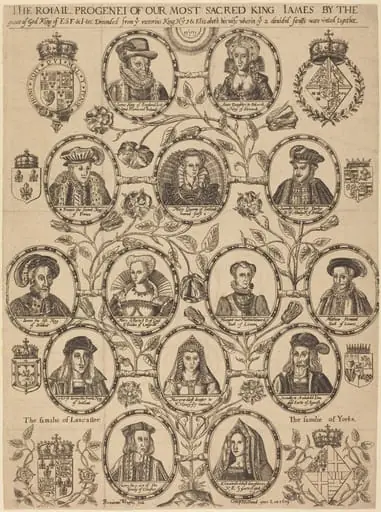 Royal Progeny of King James
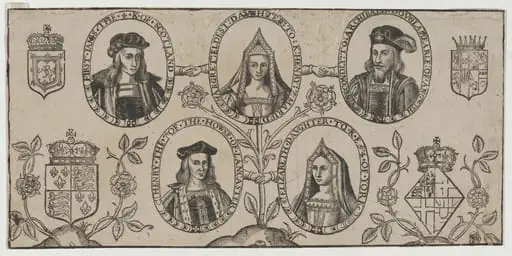 James IV of Scotland, Margaret, Daughter of Henry VII, Archibald Douglas, Earl of Angus, Henry VII, Elizabeth of York
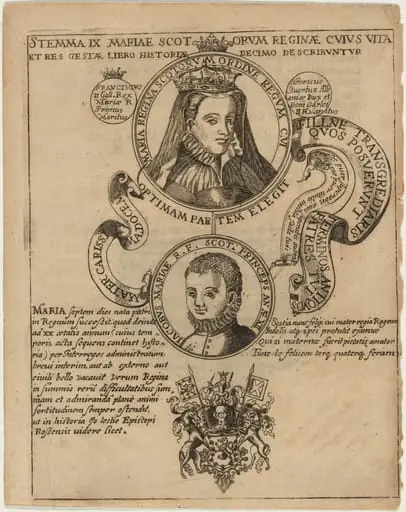 Mary Queen of Scots with James VI of Scotlandand I of England
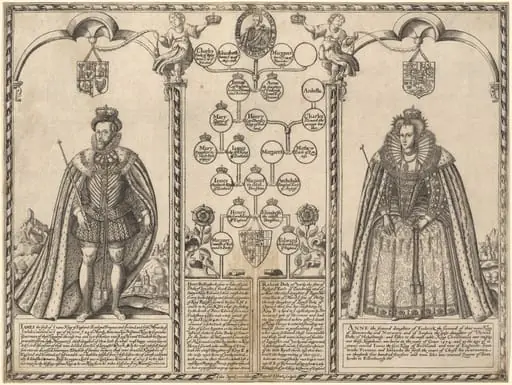 James I and Anne of Denmark
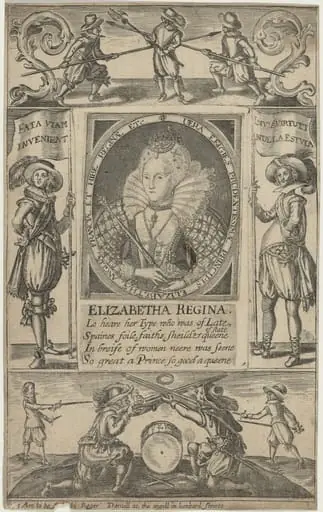 Queen Elizabeth
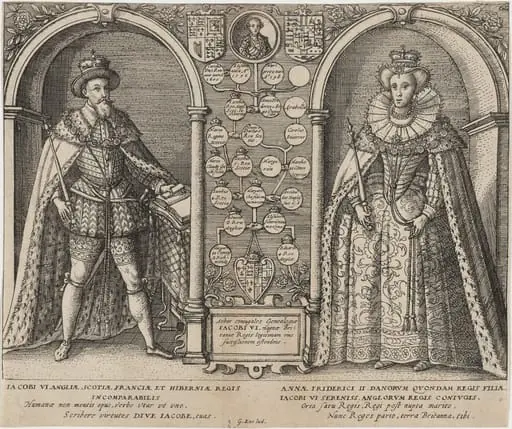 James I and Anne of Denmark with GeneologicalTree
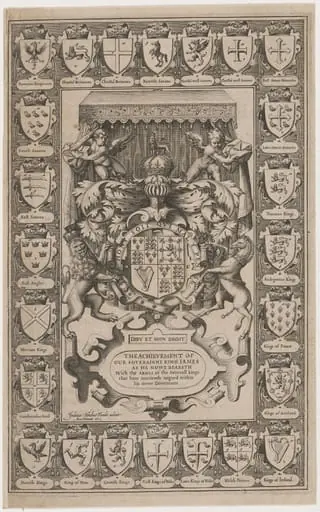 Title Page for the Achievement of our Soveraigne King James
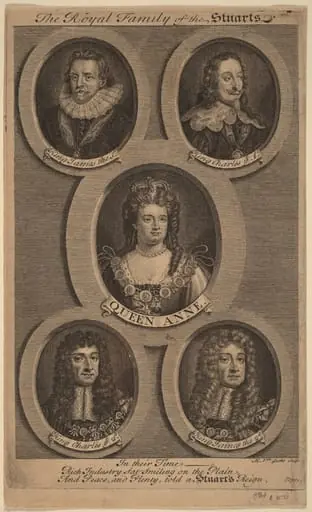 The Royal Family of the Stuarts
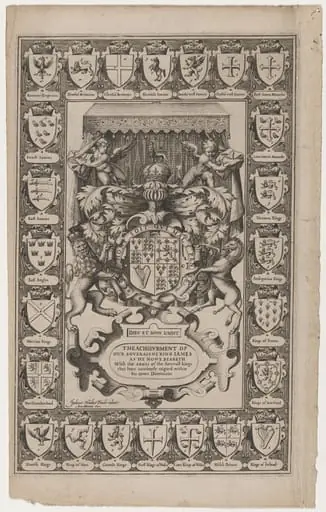 Title Page for the Achievement of our Soveraigne King James
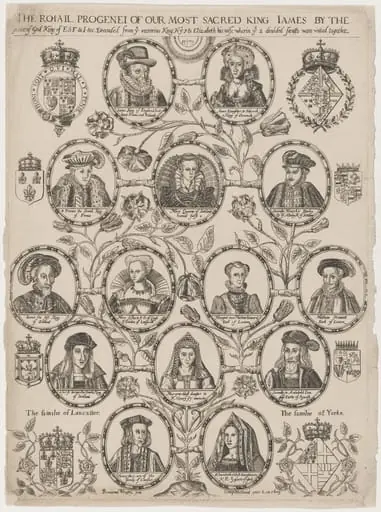 The Royal Progenei of our Most Sacred King James
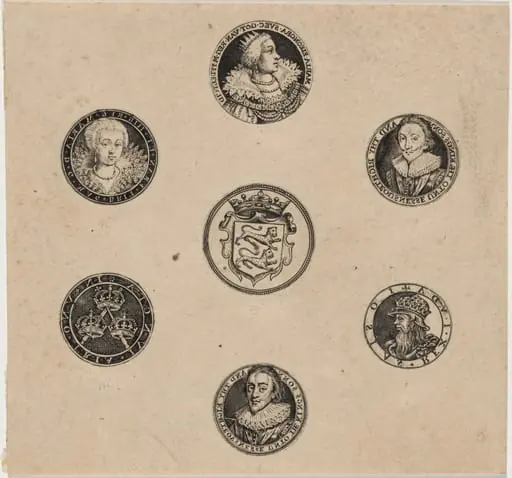 Sheet of Seven Roundels with Portraits
 Henry VIII, Edward VI, Mary I and Elizabeth