Artwork
Johan Ernest of Nassau
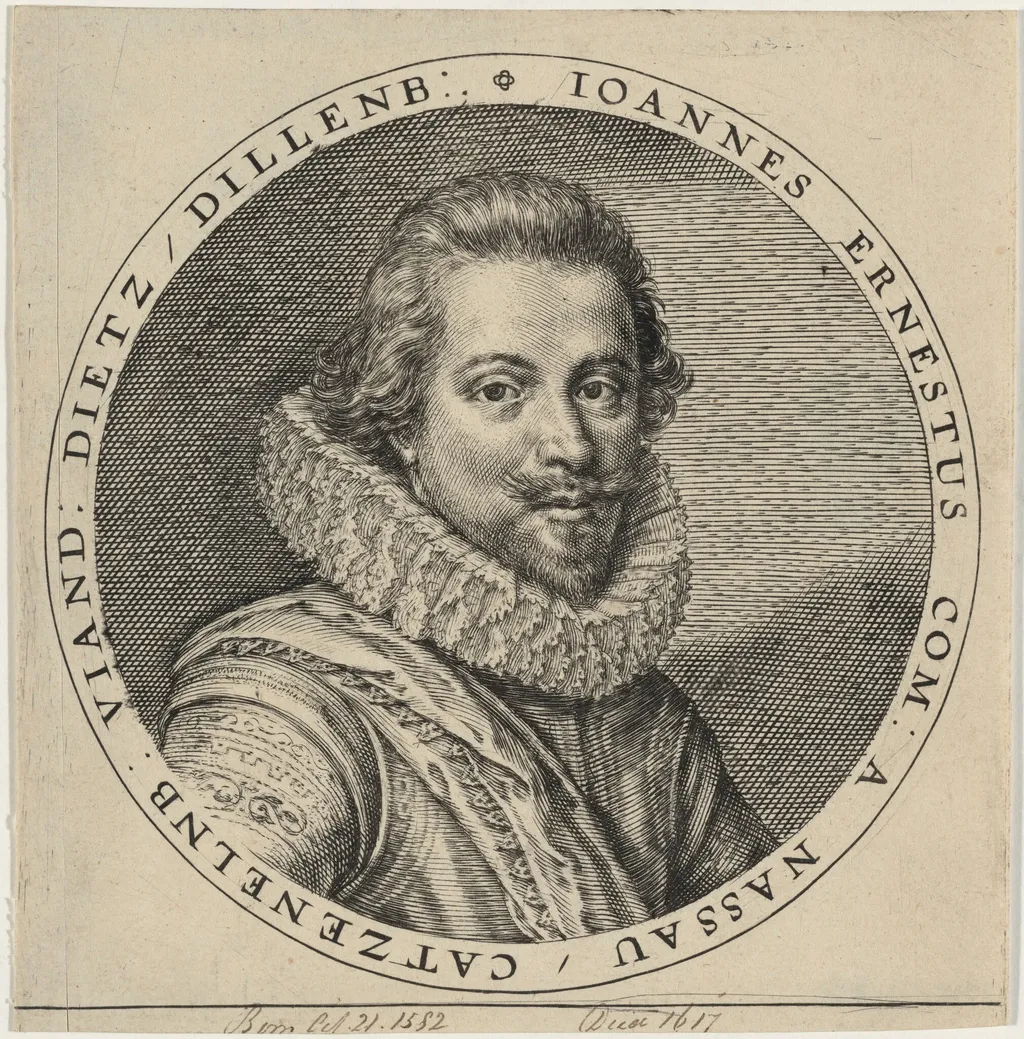
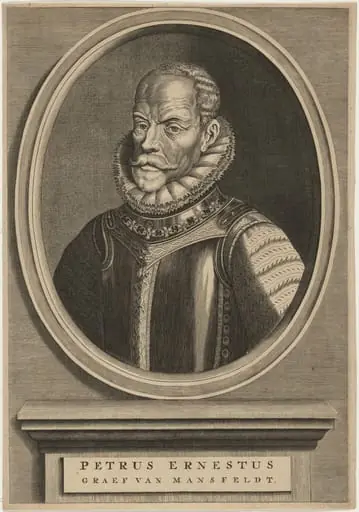
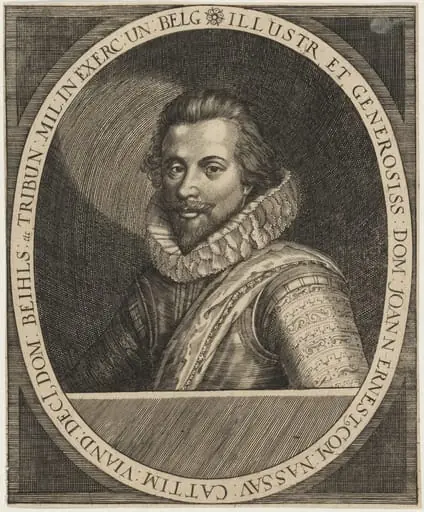
Johan Ernest of Nassau is an ink print by the Romanticist artist Unknown 19th Century. It dates from 1850 and is held in the collection of the National Gallery of Art.
About this work
Overview
This engraving depicts Johan Ernest of Nassau, rendered in fine linear detail with careful tonal gradations. The portrait focuses on the upper torso and head, set against a muted, textured gray background that isolates the figure. The subject’s direct gaze and composed demeanor suggest a formal, dignified representation typical of early modern portraiture in print form.
Subject & Meaning
Johan Ernest of Nassau, a member of the Dutch noble family, is portrayed with military attire, including ornate shoulder armor and a ruffled collar, signaling his status and role. His serious expression and unflinching gaze convey authority and restraint, aligning with ideals of noble conduct rather than personal emotion. The image functions as a visual record of lineage and social position.
Technique & Style
While the style exhibits realism, it lacks the dramatic intensity often associated with Romanticism, suggesting a more restrained, classical approach.
The work employs precise engraving techniques, using fine lines and controlled hatching to model facial features and fabric textures. The contrast between the detailed rendering of the face and the simplified background emphasizes the subject’s presence. While the style exhibits realism, it lacks the dramatic intensity often associated with Romanticism, suggesting a more restrained, classical approach.
History & Provenance
The engraving likely dates to the 17th century, produced during or shortly after Johan Ernest’s lifetime. It was probably commissioned for private circulation among noble circles or used to disseminate the family’s image. No definitive record of its original publisher or early owners is widely documented, though similar portraits from the period were often reproduced in genealogical collections.
Context
Portraits of nobility in print form were common in the Low Countries during the 1600s, serving both commemorative and political functions. Engravings allowed for wider distribution than painted portraits, reinforcing familial prestige across regions. This piece reflects the era’s emphasis on lineage, duty, and the visual language of aristocratic identity.
Legacy
Though not widely exhibited today, the engraving contributes to the broader corpus of early modern Dutch portraiture. It exemplifies how print media preserved the likenesses of lesser-known nobles, offering insight into the visual culture of elite identity beyond major artistic figures. Its survival underscores the importance of engraved portraiture in historical documentation.
Artist & collection

Artist